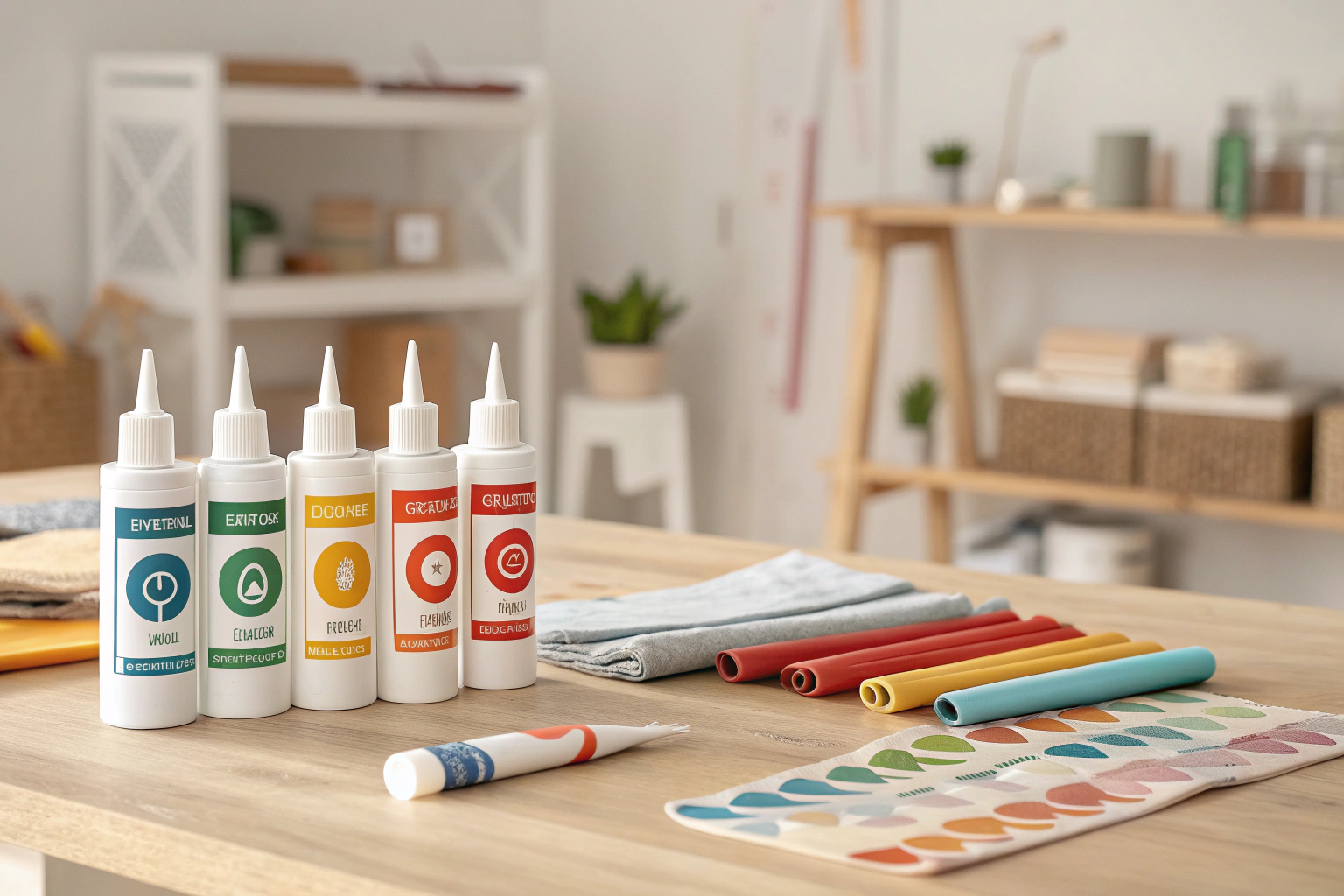
The best glue for fabric is a specialized adhesive designed to create a strong, permanent, or temporary bond between different textiles. Unlike regular craft glue, it is specifically formulated to remain flexible after drying and withstand the stress of movement, washing, and wear. Choosing the right one ensures your repairs, hems, or creative projects last without damaging the material, leaving stiff, visible residue, or falling apart in the laundry.
Key Benefits at a Glance
- Provides a Quick No-Sew Solution: Instantly repairs rips, secures hems, and attaches patches or appliques without needing a needle and thread, saving significant time on mending.
- Creates a Durable, Washable Finish: High-quality permanent formulas are designed to be machine washable and dryable, ensuring repairs hold up through regular use and cleaning cycles.
- Remains Flexible After Drying: Superior fabric glues dry clear and flexible, moving naturally with the fabric instead of creating a stiff, uncomfortable patch that can crack over time.
- Works on Diverse Materials: Effectively bonds a wide range of fabrics including cotton, denim, felt, leather, and synthetics, making it a versatile tool for any textile project.
- Simplifies Crafting & Embellishing: Makes it easy for beginners and experts to securely attach sequins, rhinestones, and other decorations without heat-setting, perfect for custom designs.
Purpose of this guide
This guide is for homeowners, crafters, and anyone needing a reliable no-sew solution for working with textiles. It helps you confidently choose the right fabric glue for your project, whether you are mending a torn seam, hemming pants, or creating unique fabric art. By following this guide, you will learn the key differences between permanent and temporary adhesives, how to apply them for a clean and invisible bond, and crucial mistakes to avoid, like using too much product or selecting a glue that isn’t compatible with your fabric type.
Types of Fabric Adhesives I've Used Over the Years
After years of working with countless fabric projects, I've discovered that understanding the different types of fabric adhesives is crucial for achieving professional results. Each type of fabric glue serves specific purposes, and choosing the right adhesive can make the difference between a project that lasts for years and one that falls apart after the first wash.
The world of fabric adhesives has evolved significantly, offering solutions for every conceivable textile application. From traditional liquid glues to modern hot-melt adhesive formulations, each category brings unique characteristics that suit different project requirements. Understanding these variations helps you select the most appropriate bonding solution for your specific needs.
| Type | Bond Strength | Drying Time | Best For |
|---|---|---|---|
| Permanent | Strong | 24 hours | Repairs, upholstery |
| Temporary | Light | 5-10 minutes | Positioning, hemming |
| Spray | Medium | 15-30 minutes | Large surfaces, quilts |
| Hot Glue | Medium | 30 seconds | Quick fixes, decorative |
| Specialty | Varies | Varies | Waterproof, heat-activated |
Permanent Fabric Glue When I Need a Lasting Bond
When durability is paramount, permanent fabric glues become my go-to solution. These adhesives create strong, lasting bonds that withstand repeated washing cycles and heavy use. The key characteristic of permanent fabric glue is its exceptional bond strength, which develops fully over a 24-hour curing period.
I've found permanent adhesives particularly effective on cotton fabrics, where the natural fibers provide excellent adhesion surfaces. These glues penetrate the fabric structure, creating mechanical bonds that complement their chemical adhesion properties. For upholstery projects, permanent glues offer the durability needed to handle daily wear and stress.
- Clothing repairs that need to withstand washing
- Heavy-duty upholstery projects
- Outdoor fabric applications
- Hemming thick materials like denim
- Attaching patches permanently
The chemical composition of permanent fabric glues typically includes synthetic polymers that crosslink as they cure, creating irreversible bonds. While this means repairs are truly permanent, it also requires careful application since mistakes cannot be easily corrected once the adhesive sets.
Temporary Fabric Adhesives How I Use Them for Positioning and Hemming
Temporary fabric glue serves as an invaluable positioning tool in my crafting workflow. These adhesives offer the flexibility to hold fabric pieces in place without permanent commitment, making them perfect companions to traditional sewing techniques.
The washability attribute of temporary adhesives sets them apart from their permanent counterparts. Most dissolve completely in warm water, allowing for easy repositioning or removal when projects change direction. I've learned to appreciate their flexibility, which allows fabrics to move naturally even when bonded.
- Hemming pants before sewing
- Positioning appliqués for layout testing
- Holding fabric layers during cutting
- Creating temporary pleats
- Basting substitute for quilting
These adhesives work particularly well as sewing aids rather than replacements. They hold pieces steady while you work, eliminating pins that can shift or create holes in delicate fabrics. The quick drying time, typically 5-10 minutes, means you can proceed with your project without long delays.
Spray Adhesive My Approach for Large Surface Areas
When working with large fabric surfaces, traditional fabric glue application becomes impractical. Spray adhesives excel in these situations, providing even coverage across expansive areas that would be tedious to cover with liquid applications.
The spray application method offers unique advantages for quilting projects and large decorative pieces. Coverage remains consistent, and the working time allows for precise positioning of large fabric sections. However, managing overspray requires careful preparation and ventilation.
- Work in well-ventilated area
- Use cardboard to protect surrounding surfaces
- Apply in thin, even coats
- Allow proper tack time before positioning
- Clean nozzle after each use
The medium bond strength of spray adhesives provides sufficient holding power for most applications while maintaining some repositioning capability during the initial tack period. This balance makes spray adhesives particularly valuable for projects requiring precise alignment of large components.
Hot Glue My Secret Weapon for Quick Projects and Special Effects
Hot-melt adhesive technology brings unmatched speed to fabric projects. The rapid drying time, often just 30 seconds, makes hot glue my secret weapon for quick fixes and creative applications that would be impossible with traditional fabric glue.
The high application temperature of hot-melt adhesive requires careful handling, but this same characteristic enables unique decorative techniques. I've discovered that hot glue can create textural effects and faux stitching patterns that add visual interest to projects beyond simple bonding.
Creative applications extend far beyond emergency repairs. Hot glue excels at securing embellishments, creating dimensional effects, and providing instant bonds for time-sensitive projects. The medium bond strength proves sufficient for most decorative applications while allowing removal when needed.
However, the flexibility limitations of hot glue become apparent in applications requiring fabric movement. The rigid nature of cured hot glue can create stress points in flexible fabrics, making it less suitable for items that experience regular flexing or stretching.
Specialty Fabric Adhesives Solutions I've Found for Unique Projects
Beyond standard categories, specialty fabric glues address specific challenges that arise in unique projects. These adhesives incorporate specialized formulations designed for particular applications or challenging materials like waterproof fabric.
Heat-activated adhesives represent one specialty category that has proven invaluable in my toolkit. These products remain inactive until heated, providing unlimited working time followed by instant bonding when iron-activated. This characteristic makes them perfect for precise positioning work.
Waterproof formulations solve bonding challenges with waterproof fabric materials that resist standard adhesive penetration. These specialized adhesives use modified chemistries that create mechanical bonds with coated surfaces while maintaining water resistance properties.
Fabric-specific adhesives target particular material types, optimizing bond chemistry for materials like leather, vinyl, or technical fabrics. These formulations acknowledge that different fabric structures require different adhesive approaches for optimal performance.
My Top 8 Fabric Glue Recommendations
Through extensive testing and real-world application, I've identified eight fabric glue products that consistently deliver professional results across various textile applications. Each recommendation reflects specific attribute combinations that excel in particular situations.
These products represent the best balance of bond strength, drying time, washability, and flexibility that I've encountered. Whether working with cotton, polyester, or specialized textile materials, these adhesives provide reliable performance across diverse project requirements.
“Gorilla Fabric Glue is a 100% waterproof, no sew solution for hems, embellishments, trim and more!”
— Gorilla Tough, 2025
Source link
“Gorilla Fabric Glue: Survives 30+ wash cycles, waterproof, strong on denim and cotton.”
— Hoop Talent, 2024
Source link
Aleene's Fabric Fusion provides flexible, machine-washable bonds ideal for most fabrics, while fabric fusion options excel in DIY repairs. For heavy-duty needs like denim, Gorilla Fabric Glue offers superior strength and wash resistance. Check glue types for water-soluble versus industrial formulas to match your project.
| Product | Bond Strength | Flexibility | Drying Time | Washability |
|---|---|---|---|---|
| Fabric Fusion | Strong | High | 24 hours | Machine wash |
| Aleene’s Fabric Fusion | Medium | High | 2-4 hours | Hand wash |
| E6000 Fabri-Fuse | Very Strong | Medium | 24 hours | Waterproof |
| Dritz Liquid Stitch | Medium | High | 30 minutes | Machine wash |
| Beacon Fabri-Tac | Strong | Medium | 15 minutes | Dry clean |
| Gutermann HT2 | Medium | High | Iron activated | Machine wash |
| Tear Mender | Strong | High | 24 hours | Machine wash |
| Loctite Vinyl Fabric | Strong | Low | 24 hours | Waterproof |
Each product addresses specific textile applications with optimized attribute combinations. Fabric Fusion leads in overall versatility, combining strong bonds with high flexibility and machine washability. E6000 Fabri-Fuse excels in demanding applications requiring maximum bond strength and waterproof performance.
For quick repairs, Dritz Liquid Stitch offers the fastest cure time while maintaining machine washability. Gutermann HT2 provides heat-activated convenience for precise positioning applications. These varied characteristics ensure appropriate solutions for diverse project requirements.
How I Choose the Right Glue for My Fabric Projects
Selecting appropriate fabric glue requires systematic evaluation of project requirements against adhesive characteristics. Over the years, I've developed a framework that considers textile properties, intended use, and performance expectations to guide selection decisions.
The chemical composition of different adhesives directly impacts their compatibility with various fabric types and applications. Understanding these relationships prevents disappointing results and ensures optimal performance from your chosen bonding solution.
Fabric Types and Compatible Adhesives What I've Learned Through Trial and Error
Different fabric types present unique challenges that require specific adhesive approaches. Cotton fabrics, with their natural fiber structure and absorbent properties, work well with most fabric glue formulations. The porous nature of cotton allows adhesive penetration, creating both chemical and mechanical bonds.
Always prewash fabric before applying glue to ensure adhesion: Turn Prewash Into the Essential Laundry Step.
Polyester and other synthetic fabrics require different considerations. Their smooth, non-porous surfaces rely primarily on chemical adhesion, making formulation compatibility crucial. Some adhesives specifically target synthetic materials with modified chemistries that bond effectively to these challenging surfaces.
Leather presents the most specialized requirements, often needing adhesives formulated specifically for its unique properties. Standard fabric glue formulations frequently fail on leather due to its density and surface treatments. Specialized leather adhesives provide the penetration and flexibility needed for successful bonds.
| Fabric Type | Recommended Adhesives | Avoid |
|---|---|---|
| Cotton | Permanent, temporary, spray | Hot glue on delicates |
| Polyester | Flexible permanent, spray | Heat-activated on thin fabrics |
| Leather | Leather-specific, E6000 | Water-based adhesives |
| Felt | Hot glue, permanent | Spray on thin felt |
| Denim | Heavy-duty permanent | Temporary for hems |
| Silk | Temporary, gentle permanent | Hot glue, strong solvents |
Fabric weight also influences adhesive selection. Heavy fabrics like denim require strong bonds that can handle the material's weight and thickness. Delicate fabrics need gentler formulations that won't damage fibers or show through thin materials.
Project Requirements How I Assess Washability Flexibility and Durability
Understanding project requirements guides fabric glue selection more effectively than fabric type alone. The washability attribute becomes crucial for items that will undergo regular laundry cycles. Adhesives that survive machine washing must maintain bond integrity despite detergent exposure, agitation, and temperature cycling.
Flexibility requirements vary dramatically between applications. Garments need adhesives that flex with fabric movement without creating stress concentration points. Rigid applications like decorative elements may benefit from less flexible formulations that provide dimensional stability.
- Will this item be washed regularly?
- Does the bond need to flex with fabric movement?
- How quickly do I need the bond to set?
- Should the adhesive be invisible when dry?
- Will the item be exposed to moisture or heat?
- Is this a temporary or permanent application?
The relationship between fabric glue performance and laundry processes requires careful consideration. Washing machine agitation, detergent chemistry, and temperature cycles all stress adhesive bonds differently. Understanding these interactions helps predict long-term performance and select appropriate formulations.
Drying time considerations affect project workflow significantly. Quick-setting adhesives enable rapid project completion but offer limited repositioning time. Longer working times provide positioning flexibility but extend overall project duration.
How Long Does Fabric Glue Take to Dry My Experience with Different Products
Drying time represents one of the most variable characteristics among fabric glue products. Understanding these timing differences enables better project planning and prevents premature handling that can compromise bond quality. My experience reveals significant variations that impact workflow decisions.
Standard fabric glue formulations typically require 5-10 minutes for initial set, allowing repositioning during this window. Full cure develops over 24 hours, reaching maximum bond strength and wash resistance. This extended cure time requires patience but delivers optimal performance.
Hot-melt adhesive provides the opposite timing profile, with bonds setting in 10-30 seconds but reaching full strength within 2-3 minutes. This rapid cure eliminates repositioning opportunities but enables immediate project progression.
| Adhesive Type | Initial Set | Full Cure | Working Time |
|---|---|---|---|
| Permanent fabric glue | 5-10 minutes | 24 hours | 2-3 minutes |
| Temporary adhesive | 1-2 minutes | Wash-away | 30 seconds |
| Spray adhesive | 30 seconds | 2-4 hours | 5-10 minutes |
| Hot glue | 10-30 seconds | 2-3 minutes | 5-10 seconds |
| Heat-activated | Instant with heat | Cool down time | Until heated |
Temperature and humidity significantly affect drying times across all adhesive categories. Higher temperatures accelerate curing while high humidity can extend drying times. Understanding these environmental factors helps predict actual performance in your workspace conditions.
Spray adhesives offer extended working time, typically 5-10 minutes, allowing precise positioning of large components. This characteristic makes them particularly valuable for complex layouts requiring multiple adjustments before final positioning.
Is Your Fabric Glue Waterproof Here's How I Test It
Waterproof claims require verification since performance varies significantly between products and applications. My testing methodology has evolved to provide reliable assessment of fabric glue water resistance, particularly important for projects using waterproof fabric or items exposed to moisture.
True waterproof performance must withstand not just static water exposure but also the dynamic stresses of laundry cycles. Testing protocols should simulate real-world conditions including temperature cycling, detergent exposure, and mechanical agitation.
- Create test samples using scrap fabric
- Allow full cure time per manufacturer instructions
- Submerge in water for 30 minutes
- Gently agitate to simulate washing action
- Check bond integrity after drying
- Test with actual washing machine cycle if needed
Projects involving waterproof fabric present unique challenges since these materials resist adhesive penetration. Specialized formulations designed for coated fabrics typically perform better than standard fabric glue products on these challenging surfaces.
The relationship between waterproof fabric glue and laundry resistance requires understanding that washing machines create more severe conditions than simple water immersion. Detergent chemistry, temperature cycling, and mechanical action combine to stress bonds beyond static water exposure.
My Application Techniques for Professional Results
Proper application technique significantly impacts fabric glue performance regardless of product quality. Years of experience have taught me that adhesive preparation, application method, and curing procedures directly influence final bond quality and durability.
Surface preparation represents the foundation of successful bonding. Textile surfaces must be clean, dry, and free from finishes that interfere with adhesion. Many fabric failures result from inadequate preparation rather than adhesive limitations.
- Clean fabric surfaces of lint and oils
- Test adhesive on hidden area first
- Apply thin, even layer using appropriate tool
- Position pieces within working time window
- Apply firm, even pressure for recommended time
- Allow full cure time before handling
Application method varies with adhesive type and project requirements. Thin, even layers typically outperform thick applications by providing better fabric penetration and more uniform stress distribution. Excess fabric glue creates weak spots and visible residue.
Tool selection affects application precision and final appearance. Small brushes enable precise placement for detailed work, while spreaders provide even coverage for larger areas. The application method directly impacts attributes like bond strength and opacity in the finished project.
Pressure application during initial cure helps eliminate air bubbles and ensures intimate contact between adhesive and textile surfaces. Consistent pressure across the entire bond area prevents weak spots that compromise overall performance.
Common Mistakes I Made When I Started Using Fabric Glue
Learning to use fabric glue effectively involves overcoming common misconceptions and application errors. My early mistakes provide valuable lessons for avoiding disappointing results and achieving professional-quality bonds from the beginning.
The most frequent error involves using excessive amounts of adhesive. More glue does not create stronger bonds; instead, thick applications cure unevenly and create rigid spots that concentrate stress. Proper application uses minimal amounts spread evenly across bonding surfaces.
- Using too much adhesive creates messy, weak bonds
- Not allowing proper cure time before washing
- Choosing wrong adhesive type for fabric weight
- Skipping surface preparation steps
- Ignoring manufacturer’s temperature recommendations
- Expecting permanent results from temporary adhesives
Drying time misconceptions lead to premature handling and compromised bonds. Initial tackiness does not indicate full cure; fabric glue requires complete chemical crosslinking for maximum performance. Rushing this process invariably leads to bond failure.
Adhesive selection errors often stem from focusing on brand names rather than product characteristics. Understanding bond strength, flexibility, and washability requirements helps match products to applications more effectively than relying on marketing claims.
Temperature considerations become critical with heat-sensitive adhesives. Ignoring manufacturer recommendations regarding application and cure temperatures can prevent proper bonding or damage fabric surfaces.
Fabric Glue vs Sewing When I Choose Each Method
The relationship between fabric glue and sewing has evolved from competition to complementary techniques in my crafting approach. Each method offers distinct advantages that suit different project requirements and skill levels.
For permanent, washable bonds, hand sewing is often superior—start with basic stitches: Hand Sewing Stitches.
Sewing provides superior durability and reversibility, making it ideal for structural seams and high-stress applications. The mechanical interlocking of stitches distributes loads effectively across textile surfaces while allowing easy alterations when needed.
| Factor | Fabric Glue | Sewing |
|---|---|---|
| Speed | Very fast | Slower |
| Durability | Good to excellent | Excellent |
| Visibility | Can be invisible | Visible stitches |
| Skill required | Minimal | Moderate to high |
| Flexibility | Varies by type | High |
| Reversibility | Limited | Easy to remove |
Fabric glue excels in applications requiring invisible bonds, quick completion, or minimal skill investment. Hemming, appliqué attachment, and decorative elements often benefit from adhesive application where stitching would be visible or impractical.
Combining both techniques often produces superior results to either method alone. Fabric glue can position pieces for accurate sewing, while stitching can reinforce critical areas of adhesive bonds. This hybrid approach leverages the strengths of each method.
Textile weight and intended use guide method selection. Heavy fabrics and high-stress applications favor sewing for its proven durability. Delicate materials and decorative applications often perform better with carefully selected adhesives.
Creative Uses for Fabric Glue I've Discovered Beyond Basic Bonding
Beyond traditional bonding applications, fabric glue enables creative techniques that expand design possibilities. These innovative uses leverage specific adhesive characteristics to achieve effects impossible through conventional textile construction methods.
Use glue to temporarily hold patches before sewing them permanently: How to Sew on a Patch.
Hot-melt adhesive creates unique textural effects when applied in patterns or lines. The dimensional quality of cured hot glue can simulate decorative stitching, create raised designs, or add tactile interest to otherwise flat surfaces.
- Creating faux decorative stitching with colored glue
- Adding texture with hot glue patterns
- Securing sequins and beads without sewing
- Making temporary costume modifications
- Creating fabric collages and mixed media art
- Repairing tears with invisible mending technique
Opacity characteristics of certain fabric glues enable visible decorative applications. Colored adhesives can create contrasting design elements while providing functional bonding. This dual-purpose approach reduces construction steps while adding visual interest.
Flexibility attributes allow adhesive bonds to become design elements rather than hidden construction details. Strategic placement of flexible bonds can create controlled gathering, pleating, or draping effects that would be difficult to achieve through traditional methods.
Textile art applications benefit from fabric glue's ability to secure non-traditional materials like paper, metal, or found objects to fabric surfaces. These mixed-media possibilities expand creative expression beyond conventional fiber arts boundaries.
Safety Considerations I Always Follow When Working with Adhesives
Working safely with fabric glue requires understanding the chemical composition and application requirements of different adhesive types. Many products contain solvents or chemicals that require specific handling precautions to prevent health risks or accidents.
Toxicity levels vary significantly between fabric glue formulations. Water-based products typically present minimal health risks, while solvent-based adhesives may require ventilation and protective equipment. Reading safety data sheets provides essential information for safe handling.
- Work in well-ventilated area
- Wear protective gloves when handling strong adhesives
- Keep hot glue guns away from children
- Store adhesives in cool, dry place
- Read safety data sheets for chemical information
- Have first aid supplies readily available
Hot-melt adhesive presents unique safety challenges due to high application temperatures. Burns from hot glue guns represent the most common adhesive-related injury. Proper tool handling and workspace organization prevent most accidents.
Chemical composition considerations become important for individuals with sensitivities or allergies. Some adhesives contain latex, formaldehyde, or other compounds that can trigger reactions. Testing products on small areas helps identify potential issues before extensive use.
Storage requirements vary by product type but generally favor cool, dry conditions with secure container sealing. Proper storage maintains adhesive performance while preventing accidental exposure or spills.
Conclusion Choosing Your Fabric Glue with Confidence
Mastering fabric glue selection requires understanding the relationship between product characteristics and project requirements. The framework of bond strength, drying time, washability, flexibility, opacity, and toxicity provides a systematic approach to adhesive selection that eliminates guesswork.
Experience with different adhesive types builds confidence in matching products to applications. Each project teaches valuable lessons about performance expectations and technique refinement that improve future results.
The evolving landscape of fabric glue technology continues expanding possibilities for textile crafting. New formulations address traditional limitations while opening creative opportunities that weren't possible with earlier products. Staying informed about these developments enhances your crafting toolkit.
Experimentation within the established framework of adhesive characteristics leads to personal discoveries and technique development. Every crafter's needs and preferences differ, making hands-on testing the ultimate guide to product selection and application methods.
Frequently Asked Questions
The best adhesive for fabric depends on the project, but options like Aleene’s Original Tacky Glue or Beacon Fabri-Tac are highly recommended for their strong hold and flexibility. For clothing repairs, such as fixing seams on pants, combining fabric glue with knowledge of how to measure waist for men ensures a proper fit. Always test on a small area first to avoid damage.
To permanently glue fabric, clean the surfaces, apply a thin layer of permanent fabric glue like Fabri-Tac, and press the pieces together firmly. Allow it to dry for at least 24 hours before washing or using, which is ideal for projects like hemming trousers where understanding how to measure waist for men helps achieve accurate results. Use clamps or weights for better adhesion if needed.
Fabric glues come in types like permanent, temporary, washable, and spray adhesives, each suited for different needs such as crafting or repairs. Permanent glues like E6000 offer strong bonds for long-lasting fixes, while temporary ones are great for positioning before sewing. When working on men’s clothing, knowing how to measure waist for men can complement glue applications for custom fits.
Many fabric glues are designed to be washable once fully cured, holding up well in machine washing and drying. Check the product label for specifics, as some like Aleene’s Fabric Fusion are machine-washable after 48 hours. This makes them useful for garment alterations, where learning how to measure waist for men ensures the glued areas fit comfortably post-wash.
Fabric glue can replace sewing for simple projects like hems or appliques, providing a quick no-sew alternative with durable results. However, for high-stress areas or heavy fabrics, sewing is often more reliable. In men’s fashion fixes, using glue alongside tips on how to measure waist for men can create seamless, fitted repairs without needles.
Glues like Beacon Fabri-Tac or Aleene’s Tacky Glue are excellent for sticking fabric to fabric, offering strong, flexible bonds without soaking through. Apply evenly and let dry completely for best results. For tailoring men’s wear, this method pairs well with knowing how to measure waist for men to maintain shape and fit.