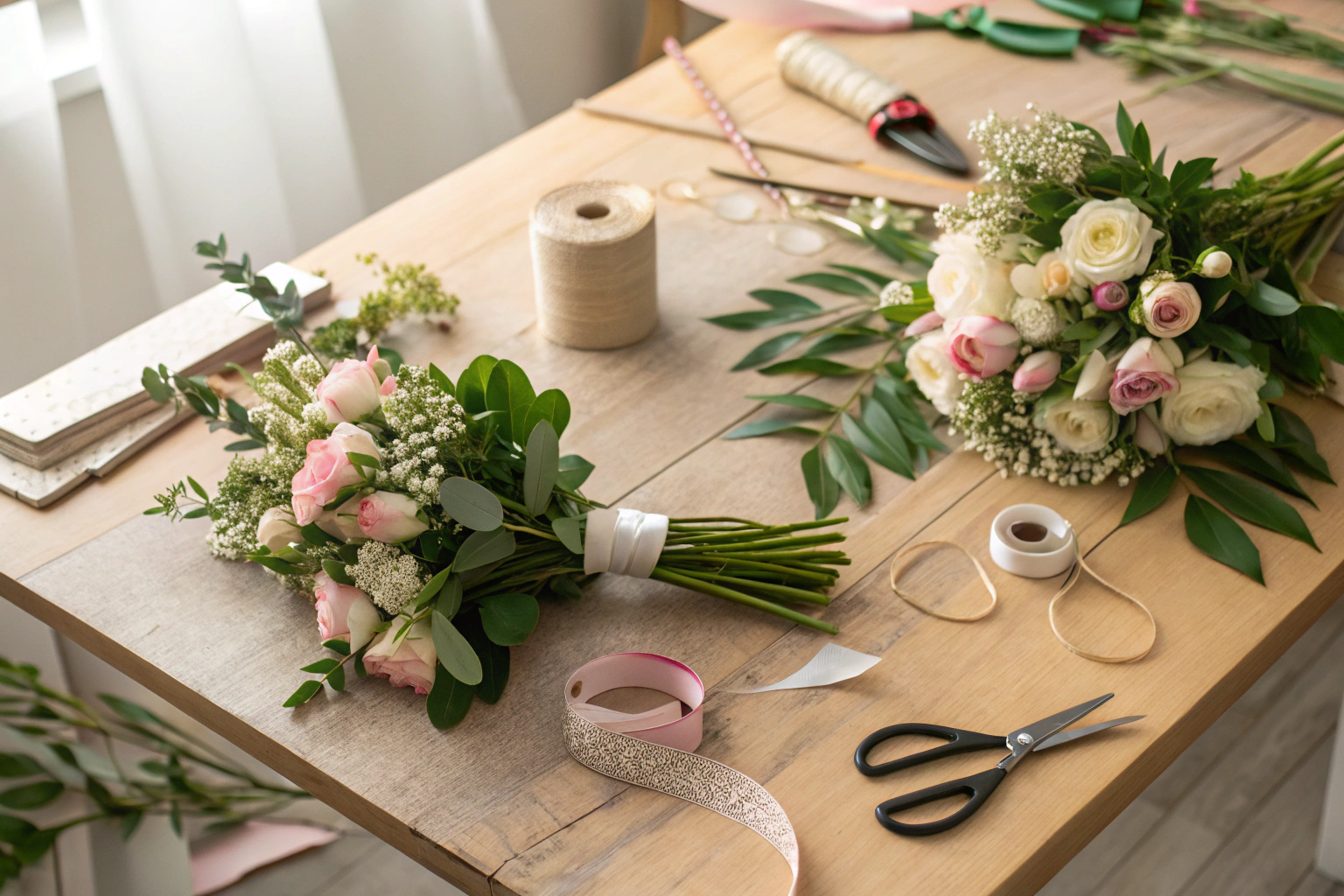
Learning how to make a corsage is a great way to add a personal touch to a special occasion like a prom or wedding. A corsage is a small floral arrangement worn on the wrist or pinned to clothing, and it can be made with fresh or artificial flowers. The process typically involves selecting blooms, wiring them with floral tape, arranging them with ribbon and greenery, and attaching the finished piece to a wristlet or pin. A primary concern is ensuring it is sturdy and stays fresh.
Key Benefits at a Glance
- Cost Savings: Crafting your own corsage is significantly more affordable than purchasing a custom one from a florist, saving you money.
- Perfect Customization: You gain complete control over the flower types, colors, and ribbon to perfectly match an outfit or event theme.
- Guaranteed Freshness: By assembling it yourself close to the event date, you ensure the flowers are fresh and vibrant all night long.
- Creative & Fun: The process is an enjoyable and rewarding DIY project that allows you to express your creativity and learn a new skill.
- Sentimental Value: A handmade corsage is a thoughtful, personal gift that carries more meaning and becomes a cherished keepsake.
Purpose of this guide
This guide is for anyone wanting to create a beautiful, custom corsage, even with no prior floral experience. It solves the problem of high florist costs and limited design options by breaking down the DIY process into simple, manageable steps. You will learn what materials you need, how to prepare your flowers, and the techniques for assembling a durable and professional-looking arrangement. We will also cover common mistakes to avoid, like choosing fragile flowers or not securing them properly, ensuring your creation looks stunning and lasts throughout your event.
Introduction
After twenty-three years as a professional florist, I still remember the first corsage I created for my high school prom. What should have been a simple white rose arrangement turned into a wilted disaster by the time photos were taken. That early failure taught me everything I needed to know about the importance of proper technique, timing, and flower selection—lessons that have guided my professional career ever since.
“Making a DIY corsage is simpler than you think, especially with wrist corsages!”
— FiftyFlowers, Unknown Date
Source link
Corsages represent one of floristry's most enduring traditions, connecting generations through the simple act of gifting flowers for special occasions. From prom nights to wedding ceremonies, these miniature floral arrangements carry deep emotional significance while requiring precise technical skill to execute properly. Throughout my career, I've created thousands of corsages for every imaginable occasion, refining my techniques and developing systems that ensure consistent, professional results.
In this comprehensive guide, I'll share the exact methods I use to create stunning corsages that last throughout entire events. You'll learn my professional approach to flower selection, discover the tools and materials that make the difference between amateur and expert results, and master the step-by-step process I've perfected over decades of experience. Whether you're creating your first corsage or looking to improve your technique, this guide will give you the confidence and knowledge to create beautiful, lasting floral arrangements.
Understanding corsages types occasions and my design principles
The world of corsages extends far beyond the simple wrist arrangements most people envision. Throughout my career, I've watched corsage styles evolve from purely traditional pin-on designs to embrace modern preferences for comfort and versatility. My design philosophy centers on creating arrangements that enhance rather than overwhelm, complementing the wearer's outfit while maintaining structural integrity throughout extended wear.
Traditional corsages served primarily ceremonial purposes, with elaborate pin-on designs marking important social occasions. Today's corsages must balance this ceremonial significance with practical considerations like fabric protection, wearer comfort, and contemporary aesthetic preferences. I've adapted classic techniques to accommodate modern fabrics, developed new securing methods for delicate materials, and created designs that photograph beautifully under various lighting conditions.
- Prom corsages typically use bold, vibrant colors
- Wedding corsages should complement bridal party palette
- Homecoming corsages can be more playful and trendy
- Mother-of-bride corsages require elegant, sophisticated designs
The evolution of corsage styles reflects changing fashion trends and social customs. Early in my career, pin-on corsages dominated special events, with elaborate designs featuring multiple flowers and extensive greenery. Modern preferences lean toward cleaner lines, smaller profiles, and designs that won't compete with contemporary fashion's minimalist aesthetic. I've learned to read these trends while maintaining the timeless elegance that makes corsages special.
| Corsage Type | Best For | Comfort Level | Outfit Compatibility |
|---|---|---|---|
| Wrist Corsage | Delicate fabrics, strapless dresses | High | All dress styles |
| Pin-On Corsage | Traditional events, structured garments | Medium | Jackets, thick fabrics |
| Magnetic Corsage | Delicate fabrics, no damage | High | Thin to medium fabrics |
My design principles emphasize proportion, balance, and wearability above all else. Every corsage must pass what I call the "movement test"—remaining secure and attractive through normal activities like walking, sitting, dancing, and embracing. This practical approach has led me to develop specific techniques for flower placement, stem management, and attachment methods that ensure corsages maintain their beauty throughout entire events.
When to choose wrist vs pin on corsages
The decision between wrist and pin-on corsages involves multiple factors that I evaluate with every client consultation. Dress fabric plays the primary role in this decision—delicate materials like chiffon, silk, or lace can be permanently damaged by corsage pins, making wrist corsages the obvious choice. However, structured garments with thick fabrics or built-in corsage loops can showcase pin-on designs beautifully.
I remember working with a bride whose vintage lace gown had belonged to her grandmother. The delicate fabric couldn't support a traditional pin, but a wrist corsage would have looked out of place with the formal style. We solved this challenge by creating a magnetic corsage that provided the traditional placement without risking fabric damage. This experience taught me to always have multiple attachment options available for challenging situations.
Comfort considerations extend beyond simple preference to include the wearer's activities throughout the event. Wrist corsages work exceptionally well for dancing, as they move naturally with arm movements and won't shift position. Pin-on corsages can feel heavy during extended wear, particularly for older wearers or those with sensitive skin. I always discuss the event timeline with clients to ensure their corsage choice supports their comfort throughout the entire celebration.
| Style | Pros | Cons |
|---|---|---|
| Wrist Corsage | No fabric damage, comfortable, secure | Limited design size, may slide |
| Pin-On Corsage | Larger design options, traditional placement | Can damage delicate fabrics, may feel heavy |
Body type and personal style also influence corsage selection. Petite wearers often prefer smaller wrist designs that won't overwhelm their frame, while taller individuals can carry larger pin-on arrangements with confidence. I guide clients through these considerations during consultation, often showing examples of both styles to help them visualize the final result. The goal is always to enhance the wearer's natural beauty while ensuring their complete comfort throughout the event.
Essential materials and tools I use for creating the perfect corsage
Quality materials make the difference between corsages that last through entire events and those that disappoint within hours. After decades of testing various suppliers and products, I've developed strong preferences for specific brands and materials that consistently deliver professional results. My material selection focuses on durability, ease of use, and the ability to create secure, long-lasting arrangements.
A thimble protects your finger when hand-sewing through dense floral stems or wiring—especially if you’re securing heavy blooms like roses or orchids.
Floral tape remains the backbone of corsage construction, but not all tapes perform equally. I exclusively use Oasis floral tape in both green and white, as it provides superior adhesion when properly stretched and maintains flexibility throughout wear. Cheaper alternatives often fail during humid conditions or lose adhesion when exposed to body heat. The investment in quality tape pays dividends in corsage longevity and professional appearance.
Wire selection requires matching gauge to specific applications—22-gauge wire for main stems and structural support, 24-gauge for medium flowers, and 26-gauge for delicate blooms and detail work. I keep multiple gauges readily available, as using incorrect wire weights leads to either insufficient support or visible bulk that detracts from the arrangement's natural appearance.
- Fresh flowers (2-3 main blooms, 3-5 filler stems)
- Floral tape (½ inch width, green or white)
- Floral wire (22-24 gauge for stems, 26-28 gauge for delicate work)
- Corsage wristlet or corsage pins
- Ribbon (⅜ to ½ inch width)
- Sharp floral scissors or wire cutters
- Floral adhesive or hot glue gun
- Spray bottle for misting
- Small decorative elements (pearls, crystals)
- Refrigerator space for storage
Making a corsage involves prepping flowers, adding greenery, and securing to a wristlet with glue or wire. Essential supplies include ribbon, floral glue, shears, and a wristlet. For detailed steps, check the wrist method. See also supplies at Flower Moxie.
Ribbon quality significantly impacts the final appearance and durability of corsage accents. I prefer satin ribbons for their lustrous finish and ability to hold crisp bows, while grosgrain ribbons provide texture and casual elegance for less formal events. Ribbon width should complement corsage size—narrow ribbons for delicate designs, wider ribbons for substantial arrangements. I always purchase extra ribbon to allow for practice bows and potential repairs.
Tool quality affects both work efficiency and final results. Sharp floral scissors prevent stem crushing that can impede water uptake, while precision wire cutters create clean cuts that hide more effectively within arrangements. A quality hot glue gun with variable temperature settings allows for secure attachment without heat damage to delicate petals. These tools represent long-term investments that improve with every corsage creation.
How I select the right flowers and greenery for my corsages
Flower selection for corsages requires balancing aesthetic appeal with practical durability considerations that many florists overlook. Throughout my career, I've learned which flowers consistently perform under the stress of body heat, handling, and extended wear, while others that appear beautiful initially fail within hours of wearing. My selection criteria prioritize flower structure, petal thickness, and natural resilience over purely visual considerations.
Roses remain my go-to choice for corsage work due to their exceptional durability and year-round availability. Garden roses offer the most romantic appearance, while standard roses provide consistent size and reliable performance. The key lies in selecting roses at the proper stage of opening—buds that are just beginning to show color will continue opening throughout the event, while fully opened roses may drop petals under stress.
“Cut the stems off the flowers so that only a small amount remains, about ½ to 1 inch of stem directly underneath the bud.”
— Wildflower Stem & Sundry, Unknown Date
Source link
Orchids present another excellent corsage option, particularly cymbidium and dendrobium varieties that withstand handling beautifully. Their exotic appearance elevates any corsage design, while their natural waxy coating provides protection against moisture and heat. However, orchids require gentle handling during construction and should never be misted, as water spots on petals create permanent damage.
| Flower Type | Durability | Best Season | Special Considerations |
|---|---|---|---|
| Roses | Excellent | Year-round | Remove thorns, condition stems |
| Orchids | Excellent | Year-round | Handle gently, avoid water on petals |
| Carnations | Very Good | Year-round | Long-lasting, affordable option |
| Stephanotis | Good | Spring/Summer | Fragrant, traditional for weddings |
| Freesia | Fair | Spring | Fragrant but delicate petals |
Greenery selection requires equal attention to durability and appearance. Italian ruscus provides excellent structure and longevity, while remaining flexible enough for corsage construction. Eucalyptus offers beautiful color and texture but can become brittle when wired. Leather leaf fern creates dramatic backdrop effects but requires careful handling to prevent breakage. I test all greenery for flexibility before incorporating it into corsage designs.
Seasonal availability influences both flower selection and pricing throughout the year. Spring offers the greatest variety with reasonable pricing, while winter selections often require higher budgets for quality blooms. I maintain relationships with multiple suppliers to ensure access to premium flowers regardless of season, and I educate clients about seasonal alternatives that can achieve their desired aesthetic while respecting budget constraints.
Color combinations and seasonal considerations in my designs
Color selection for corsages involves understanding both color theory principles and practical considerations unique to wearable floral arrangements. My approach begins with analyzing the wearer's outfit, considering not just the primary color but also undertones, fabric texture, and any metallic accents that should be complemented or echoed in the corsage design. I've learned that exact color matching often appears flat in photographs, while complementary or analogous color schemes create more dynamic, visually interesting results.
- Match corsage to dress undertones, not exact color
- Use complementary colors for vibrant contrast
- Monochromatic schemes create elegant sophistication
- Add white or cream flowers to soften bold colors
- Consider venue lighting when selecting colors
Seasonal trends influence color preferences throughout the year, and I've observed distinct patterns in client requests. Spring corsages favor pastel palettes with soft pinks, lavenders, and buttery yellows that complement the season's renewal energy. Summer designs embrace bold, saturated colors that photograph beautifully in bright outdoor lighting. Fall corsages incorporate rich burgundies, deep oranges, and golden tones that echo autumn foliage, while winter designs often feature dramatic contrasts with deep reds, pure whites, and metallic accents.
Venue lighting significantly impacts color appearance and should influence corsage color selection. Indoor venues with warm lighting enhance yellow and orange tones while potentially washing out cool blues and purples. Outdoor ceremonies in natural light provide the most accurate color representation, allowing for broader color choices. Evening events under artificial lighting require careful consideration of how colors will appear in photographs, often necessitating slightly more saturated tones than might seem appropriate in daylight.
I maintain a color reference system using fabric swatches and paint samples that help clients visualize how different flower combinations will appear against their outfits. This system has prevented numerous color disappointments and helps clients understand why certain combinations work better than others. The investment in this reference system has paid dividends in client satisfaction and repeat business throughout my career.
My step by step corsage creation process
Creating professional-quality corsages requires a systematic approach that ensures consistent results regardless of design complexity or time constraints. My process has evolved over decades of experience, incorporating lessons learned from both successes and failures into a reliable workflow that minimizes waste while maximizing efficiency. This systematic approach allows me to maintain quality standards even during busy seasons when I'm creating dozens of corsages weekly.
The foundation of my process lies in thorough preparation and organization before beginning any floral work. I prepare all materials, condition flowers properly, and organize my workspace to support efficient workflow. This preparation phase often takes longer than the actual construction but prevents delays and mistakes that can compromise final results. Rushing through preparation invariably leads to problems during construction that require time-consuming corrections.
My workflow follows a logical progression from flower preparation through final attachment, with quality checkpoints at each stage. This systematic approach ensures that problems are identified and corrected early rather than discovered after significant time investment. Each step builds upon the previous one, creating a strong foundation for the next phase of construction.
How I prepare flowers and materials
Flower preparation begins the day before corsage construction with proper conditioning to ensure maximum longevity. I start by unpacking flowers carefully and inspecting each bloom for damage, discarding any specimens that show signs of stress or damage that could compromise the final arrangement. This initial quality control prevents disappointment during construction and ensures that only the best materials enter my workflow.
- Unpack flowers and inspect for damage
- Cut stems at 45-degree angle under running water
- Remove lower leaves and thorns carefully
- Condition in lukewarm water for 2 hours
- Pat flowers dry and organize by type
- Prepare workspace with all tools within reach
Prep flowers by trimming stems and hydrating them the day before for freshness. Layer with Italian ruscus, parvifolia, and filler like wax flower.
Stem cutting technique significantly impacts flower longevity and should be performed under running water to prevent air bubbles from entering the vascular system. I cut stems at a sharp angle to maximize surface area for water uptake, then immediately place flowers in lukewarm water. This conditioning period allows flowers to fully hydrate before construction begins, creating the best possible foundation for corsage longevity.
Thorn removal requires careful attention to avoid damaging stems while ensuring wearer safety. I use specialized thorn strippers that remove thorns cleanly without creating rough spots that could snag fabric or skin. This process cannot be rushed, as improper thorn removal often leads to stem damage that compromises flower performance. I examine each stem carefully after thorn removal to ensure smooth surfaces throughout.
Workspace organization contributes significantly to construction efficiency and final quality. I arrange all tools within easy reach, organize flowers by type and size, and prepare adequate workspace for assembly. Good lighting is essential for accurate color assessment and precise work. I keep a spray bottle nearby for maintaining flower moisture throughout the construction process and ensure adequate refrigeration space for storing completed corsages.
My wiring and taping technique for sturdy corsages
Proper wiring technique forms the structural foundation of durable corsages that maintain their shape throughout extended wear. My approach varies based on flower type, stem strength, and intended use within the overall design. The goal is creating sufficient support without adding unnecessary bulk that detracts from the arrangement's natural appearance.
If you’re new to hand sewing, practice basic hand sewing stitches first—like the whip stitch or backstitch—so you can securely attach ribbons or reinforce wiring without frustration.
- Insert wire through flower head at natural break point
- Bend wire down alongside natural stem
- Wrap floral tape from flower head downward
- Stretch tape slightly while wrapping for adhesion
- Continue wrapping to cover all wire
- Test stability before proceeding
Wire insertion points vary by flower type and require understanding each flower's natural structure. For roses, I insert wire through the calyx at the natural break point where petals meet the green sepals. This provides maximum support while remaining invisible in the finished arrangement. Delicate flowers like stephanotis require gentler techniques with finer wire inserted through the flower's natural opening rather than piercing the bloom.
Floral tape application requires proper stretching to activate the adhesive qualities that bind the tape to itself. I begin wrapping at the flower head and work downward, overlapping each wrap by approximately half the tape width. The tape must be stretched slightly during application—insufficient stretching results in loose wrapping that unravels during wear, while excessive stretching can break the tape or create visible stress marks.
Testing wire stability before proceeding prevents construction problems and ensures that each wired element will perform properly within the finished corsage. I gently flex each wired stem to verify secure attachment and proper flexibility. Any elements that feel loose or unstable receive additional taping before incorporation into the design. This quality control step prevents failures during final assembly when corrections become much more difficult.
How I arrange and secure my corsage design
The arrangement phase requires balancing aesthetic considerations with practical wearability requirements unique to corsages. Unlike larger arrangements where flowers can be positioned purely for visual impact, corsages must maintain their beauty when viewed from multiple angles while remaining comfortable and secure during wear. My design approach considers the corsage's orientation when worn and ensures that the most attractive view faces outward.
- Position largest flower as focal point
- Add secondary flowers at varying heights
- Fill gaps with smaller blooms and greenery
- Check design from multiple angles
- Secure all stems with floral tape
- Trim excess wire and tape neatly
Focal flower placement establishes the design's visual anchor and determines the overall arrangement's character. I position the primary bloom slightly off-center to create visual interest while ensuring it remains the dominant element when worn. The focal flower's orientation should face outward when the corsage is properly positioned on the wearer, creating the most flattering presentation angle.
Secondary flower placement requires careful attention to height variation and spacing to create depth and visual interest within the corsage's compact dimensions. I avoid placing flowers at identical heights, instead creating a natural cascade that draws the eye through the arrangement. Each secondary element should complement rather than compete with the focal flower while contributing to the overall design balance.
Greenery and filler flowers serve both aesthetic and practical functions within corsage design. Visually, they provide color contrast and textural interest while filling gaps between major elements. Practically, they help support and protect more delicate blooms during wear. I position greenery to frame rather than overwhelm the floral elements, creating a balanced composition that enhances rather than competes with the primary flowers.
Assembling the primary blooms in my corsages
The assembly of primary blooms requires careful attention to balance and proportion to prevent the finished corsage from appearing top-heavy or unstable. I group flowers based on their visual weight and color intensity, ensuring that the arrangement maintains equilibrium when worn. This phase determines the corsage's overall character and requires the most critical design decisions.
Flower grouping follows principles of visual balance that account for both size and color intensity. Dark or bright flowers carry more visual weight than pale or small blooms, requiring careful positioning to maintain design equilibrium. I often use the "triangle rule" for three-flower arrangements, positioning blooms to create an invisible triangle that provides stable visual foundation.
Binding technique for primary blooms must provide security without creating excessive bulk at the attachment point. I gather all primary stems at approximately the same level and wrap with floral tape, ensuring that each stem contributes to the bundle's strength. The binding point should be positioned to allow for comfortable attachment to either wristlet or pin without creating pressure points against the wearer.
Visual appeal from multiple angles requires constant evaluation during assembly. I rotate the corsage frequently to ensure that it appears attractive from all viewing angles, adjusting flower positions as needed to eliminate visual gaps or awkward angles. The finished arrangement should present a pleasing appearance whether viewed from above, below, or from either side.
My techniques for attaching ribbons and decorative elements
Ribbon and decorative element attachment requires balancing enhancement with restraint to avoid overwhelming the natural beauty of the flowers. My approach emphasizes complementing rather than competing with the floral elements, using ribbons and decorations to add polish and sophistication without creating visual clutter. The key lies in selecting appropriate scale and positioning elements to enhance rather than distract from the primary design.
Bow creation technique significantly impacts the corsage's overall appearance and requires practice to achieve consistent, professional results. I prefer creating bows separately before attachment, allowing for precise shaping and positioning without disturbing the floral arrangement. The bow size should complement the corsage scale—too small appears insignificant, while too large overwhelms the flowers.
Ribbon selection involves considering both color coordination and material properties that affect bow formation and longevity. Satin ribbons create lustrous, formal bows but can be challenging to work with due to their slippery nature. Grosgrain ribbons hold their shape better and provide textural contrast to smooth flower petals. I maintain an inventory of various ribbon types and widths to accommodate different design requirements.
Decorative element placement requires careful consideration of balance and restraint. Pearl accents can add elegance when used sparingly, while excessive decoration appears gaudy and detracts from the flowers' natural beauty. I position decorative elements to enhance the design's flow rather than creating focal points that compete with the primary blooms. Each element should appear intentional and contribute to the overall design cohesion.
How I attach flowers to the wristlet or create a pin on corsage
The final attachment phase requires precision and attention to comfort considerations that ensure the corsage remains beautiful and comfortable throughout extended wear. My technique varies based on attachment method but always prioritizes security and wearer comfort while maintaining the arrangement's visual integrity. Proper attachment technique prevents shifting, tilting, or loosening that can compromise the corsage's appearance during the event.
Wristlet attachment requires positioning the floral arrangement to face outward when the wrist is in its natural position. I secure the arrangement using both mechanical attachment and floral adhesive to prevent movement during wear. The attachment point should distribute weight evenly across the wristlet to prevent tilting or sliding that could affect the corsage's appearance or the wearer's comfort.
Pin-on corsage attachment demands careful consideration of fabric type and garment construction to prevent damage while ensuring security. I use multiple pin points for heavier arrangements, distributing weight to prevent sagging or pulling. Pin placement should follow the garment's natural lines and avoid areas that experience significant stress during movement. I always test pin placement before final attachment to ensure comfort and security.
Comfort considerations extend beyond simple attachment to include weight distribution and positioning that accommodates normal movement and activities. The finished corsage should feel secure without restricting movement or creating pressure points that become uncomfortable during extended wear. I provide clients with wearing instructions that help them maintain their corsage's appearance throughout their event.
My corsage care tips keeping it fresh throughout the event
Proper corsage care begins before the event and continues throughout the wearing period to ensure maximum freshness and beauty. My care system has evolved through years of client feedback and observation of how different flowers and construction techniques perform under various conditions. The goal is maintaining the corsage's initial beauty throughout events that may last many hours under challenging conditions.
- DO refrigerate until 30 minutes before wearing
- DO mist lightly if flowers appear dry
- DO handle by the wristlet or pin, not flowers
- DON’T expose to direct sunlight or heat
- DON’T spray with perfume or hairspray
- DON’T store in plastic bags
Temperature control plays the most critical role in maintaining corsage freshness throughout events. I recommend removing corsages from refrigeration approximately thirty minutes before wearing to prevent condensation that can damage petals and create water spots. During events, corsages should be kept away from direct heat sources, including car heaters, outdoor sun exposure, and warm indoor lighting that can accelerate flower deterioration.
Handling technique significantly impacts corsage longevity and appearance throughout wear. I instruct clients to handle corsages by the wristlet or pin rather than touching the flowers directly, as oils from skin contact can damage delicate petals and accelerate deterioration. Gentle handling during activities like dancing or embracing helps prevent mechanical damage that can compromise the arrangement's appearance.
Moisture management requires balancing flower hydration needs with practical wearing considerations. Light misting can refresh flowers that appear dry, but excessive moisture can damage petals and create unsightly water spots. I recommend misting only when absolutely necessary and using distilled water to prevent mineral deposits that can discolor flowers. The spray should be directed at stems and greenery rather than directly onto flower petals.
Storage between wearing periods should maintain proper humidity and temperature while preventing mechanical damage. I provide clients with storage instructions for multi-day events, including proper positioning to prevent crushing and appropriate containers that maintain humidity without creating condensation. Proper storage can extend corsage life significantly when events span multiple days or when corsages need to be preserved for sentimental reasons.
Common mistakes I've seen when making corsages
Throughout my career, I've observed consistent patterns of mistakes that compromise corsage quality and durability. These errors often stem from inexperience with flower behavior, inadequate preparation, or rushing through critical construction phases. Learning to recognize and avoid these common pitfalls can dramatically improve corsage success rates and client satisfaction.
- Using flowers that wilt quickly under body heat
- Making corsage too large or heavy for comfort
- Insufficient wiring leading to drooping flowers
- Creating corsage too far in advance
- Forgetting to remove thorns completely
- Poor color coordination with outfit
Flower selection mistakes represent the most common cause of corsage failure, particularly choosing varieties that cannot withstand the stress of wearing conditions. Flowers like hydrangeas, while beautiful in arrangements, wilt rapidly when exposed to body heat and handling. Similarly, fully opened roses may appear perfect initially but drop petals throughout the event. I learned this lesson early in my career when a beautiful peony corsage completely collapsed within two hours of a wedding ceremony.
Timing errors frequently compromise otherwise well-constructed corsages. Creating corsages too far in advance, even with proper storage, can result in flowers that appear tired or wilted by the event date. Conversely, last-minute construction often leads to rushed work that lacks the attention to detail necessary for professional results. I've developed specific timing protocols based on flower type and event requirements that optimize freshness while allowing adequate construction time.
Construction technique errors often become apparent only during wear, when inadequate wiring causes flowers to droop or poor attachment methods allow the corsage to shift position. These problems are particularly disappointing because they affect the corsage's appearance throughout the entire event. Proper technique requires patience and attention to detail that cannot be rushed, regardless of time constraints or deadline pressure.
Color coordination mistakes can significantly impact the overall aesthetic success of corsages, even when construction technique is flawless. I've seen beautifully made corsages that clash terribly with outfits because color selection was based on personal preference rather than coordination principles. This taught me the importance of always seeing the actual outfit or receiving detailed color information before beginning design work.
Creative variations and personal touches I add to my corsages
Innovation within corsage design requires balancing creativity with the practical constraints of wearable floral arrangements. Throughout my career, I've developed signature techniques and design variations that set my work apart while maintaining the functionality essential to successful corsages. These creative elements often become talking points that enhance the wearer's experience and create memorable moments.
Non-traditional color schemes can create stunning visual impact when executed thoughtfully. I once created a series of black and silver corsages for a gothic-themed prom that challenged conventional expectations while maintaining elegant sophistication. The key lay in selecting flowers with interesting textures and forms that remained beautiful despite the unusual color palette. These unconventional designs often photograph dramatically and create unique memories for special occasions.
Themed corsages allow for creative expression while celebrating specific interests or commemorating meaningful connections. I've incorporated miniature sports equipment for athletic achievements, tiny musical notes for music students, and even small photographs sealed in waterproof capsules for memorial purposes. These personalized elements require careful integration to maintain design balance while adding meaningful significance.
Seasonal variations extend beyond simple flower selection to incorporate textural elements that celebrate specific times of year. Fall corsages might include small pinecones or autumn leaves, while winter designs could feature silvered branches or crystalline elements. Spring corsages can incorporate pussy willow or other budding branches, while summer designs might include small shells or beach glass for coastal celebrations.
Innovative attachment methods have allowed me to create corsages for challenging situations where traditional methods won't work. Magnetic attachments for vintage or rental gowns, detachable elements for multi-event wear, and convertible designs that transform from corsages to boutonnieres have all solved specific client challenges while expanding creative possibilities.
How I time my corsage creation for maximum freshness
Timing corsage creation requires balancing flower longevity with construction requirements and storage capabilities. My timing protocols have evolved through years of experience with different flower types, storage methods, and event requirements. The goal is delivering corsages at peak freshness while allowing adequate time for construction and any necessary adjustments.
- Purchase flowers 1-2 days before event
- Create corsage 4-6 hours before event
- Refrigerate immediately after completion
- Remove from refrigeration 30 minutes before wearing
- Have backup plan for flower emergencies
Flower purchasing timing depends on variety and seasonal availability but generally occurs one to two days before construction. This timing allows for proper conditioning while ensuring optimal freshness. Some flowers, like orchids, can be purchased several days in advance due to their exceptional longevity, while others, like gardenias, require same-day purchase and construction for best results.
Construction timing varies based on flower selection and event requirements but typically occurs four to six hours before the event. This schedule allows flowers to settle after construction while maintaining peak freshness for wearing. Earlier construction risks flower deterioration, while later construction may not allow adequate time for problem-solving if issues arise during assembly.
Storage protocols following construction are critical for maintaining corsage quality until wearing time. Immediate refrigeration at proper temperature and humidity levels preserves flower freshness while preventing condensation that can damage petals. I use specialized storage containers that maintain optimal conditions while protecting corsages from mechanical damage during transport.
Emergency contingency planning acknowledges that flower work involves living materials that can sometimes fail despite proper technique and timing. I maintain relationships with multiple suppliers to ensure access to replacement flowers if needed, and I keep emergency supplies available for last-minute repairs or adjustments. This preparation has saved numerous events when unexpected problems arose close to deadlines.
Additional resources and related projects I recommend
Corsage creation serves as an excellent introduction to broader floral design skills that can lead to rewarding hobby pursuits or even professional opportunities. My own career began with simple corsage work that gradually expanded into wedding design, event floristry, and eventually my own shop. The fundamental skills learned through corsage creation—flower selection, wiring, taping, and design principles—form the foundation for virtually all floral work.
Boutonniere creation represents the natural next step for those interested in expanding their floral skills. The techniques used in corsage construction translate directly to boutonniere work, with modifications for scale and attachment methods. Learning both skills allows for creating complete sets for special events while understanding the relationship between these complementary accessories.
Advanced floral design courses can provide structured learning opportunities for those interested in pursuing floristry more seriously. Many community colleges and craft schools offer beginning floral design classes that build upon basic corsage skills while introducing larger arrangement techniques. Professional associations also provide continuing education opportunities for those considering career transitions into floristry.
Online resources have expanded dramatically in recent years, providing access to technique videos, design inspiration, and supplier information that wasn't available when I began my career. However, hands-on practice remains essential for developing the muscle memory and intuitive understanding necessary for consistent results. I recommend combining online learning with practical experience for the most effective skill development.
Related projects that utilize similar skills include hair flowers, small gift bouquets, and table centerpieces that can provide practice opportunities while creating useful items for various occasions. Each project builds upon fundamental floral skills while introducing new challenges and creative possibilities that enhance overall competency and confidence in floral work.
Frequently Asked Questions
To make a wrist corsage, you’ll need fresh or silk flowers, a wristlet base like an elastic band or bracelet, floral wire, tape, ribbon for bows, and optional accents like greenery or beads. Scissors, hot glue, and floral adhesive are essential tools for assembly. These supplies ensure a sturdy and attractive corsage for events like proms or weddings.
Start by wiring the flower stems with floral wire for stability, then wrap them with floral tape. Secure the wired flowers to the wristlet base using hot glue or additional tape, layering them for a balanced look. Finish by adding ribbon or bows to cover any visible attachments and enhance the design.
Prepare flowers by trimming stems to about 1-2 inches and removing any damaged petals or leaves. Dip the cut ends in water or floral preservative to keep them fresh, then wire and tape them for structure. Allow prepared flowers to hydrate in a cool place before assembling the corsage.
Roses, orchids, and carnations are popular for corsages due to their durability and variety of colors. Smaller blooms like baby’s breath or spray roses work well as fillers for added texture. Choose flowers that match the event’s theme and hold up well without wilting quickly.
DIY corsages typically cost between $10 and $30, depending on flower quality and additional supplies like ribbons or wristlets. Fresh flowers might increase the price slightly compared to silk options. This is often more affordable than buying pre-made corsages, which can range from $20 to $50.
Cut a length of ribbon and form loops by folding it back and forth, securing the center with floral wire. Twist the wire tightly and fluff the loops for fullness, then attach tails by wiring another ribbon piece below. Glue or wire the bow to the corsage base for a polished finish.