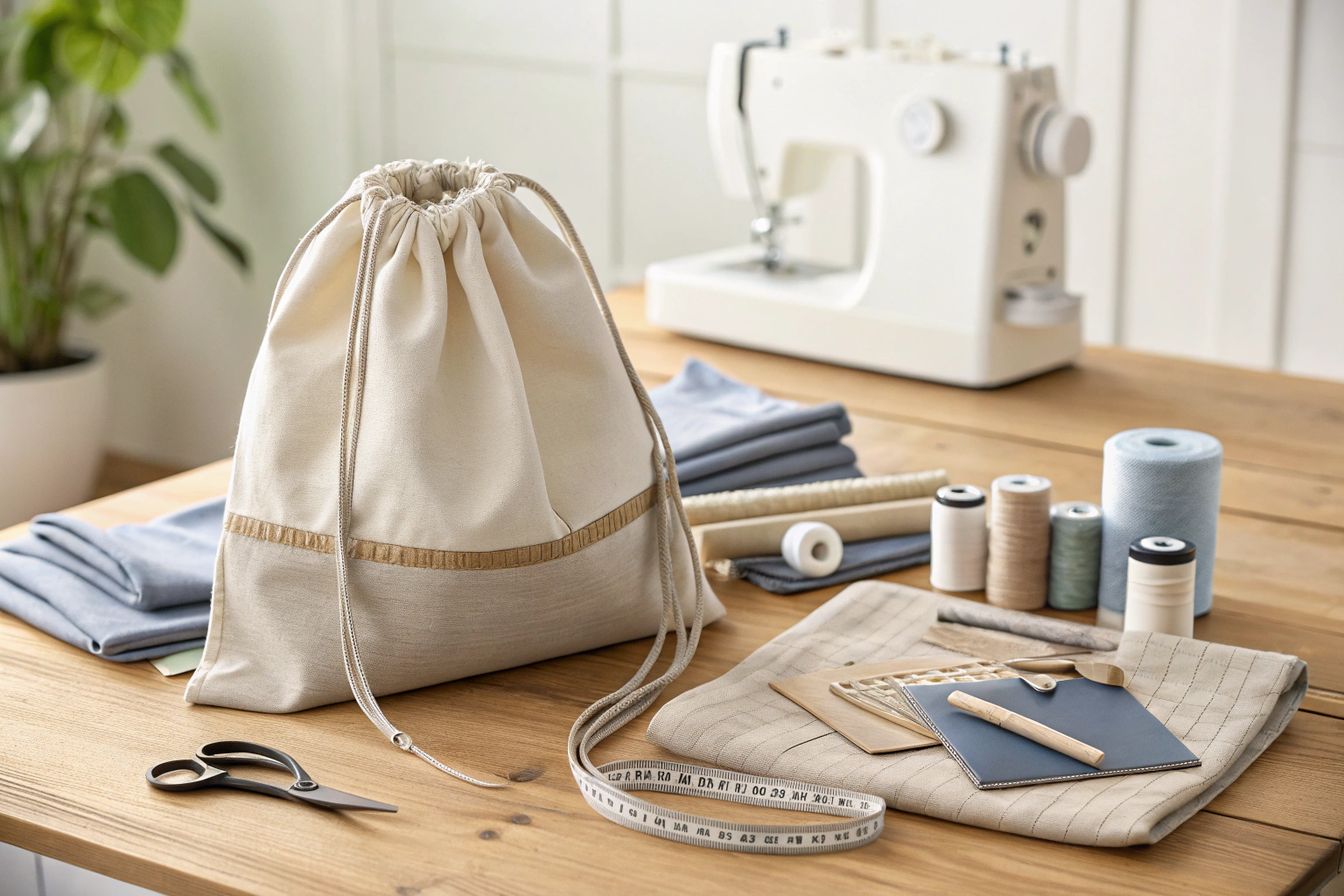
Learning how to sew a drawstring bag is a classic beginner project that teaches fundamental sewing skills. The process involves stitching a simple fabric pouch and creating a channel, or casing, at the top for a cord to slide through, which allows the bag to be cinched shut. It’s a fast, satisfying craft perfect for creating reusable gift bags, travel organizers, or toy storage. User concerns often involve creating the casing correctly, but a few simple steps make it easy.
Key Benefits at a Glance
- Uses Minimal Fabric: A budget-friendly project perfect for using up leftover fabric scraps instead of buying new material.
- Quick to Complete: Simple drawstring bags can be sewn in under 30 minutes, offering instant gratification for new sewers.
- Develops Core Skills: Master essential techniques like sewing straight lines, finishing seams, and creating a casing for future projects.
- Completely Customizable: Easily alter the dimensions, choose your favorite fabric, and select a matching cord for a fully personalized item.
- Sustainable and Reusable: Create a durable, washable alternative to single-use gift wrap or plastic bags, making it an eco-conscious choice.
Purpose of this guide
This guide is designed for beginner sewers, parents, and eco-conscious crafters who want a practical, handmade solution for storage or gifting. It solves the problem of finding the right-sized bag by teaching you how to make your own in any dimension you need. You’ll learn the entire process step-by-step, from accurately measuring and cutting the fabric to threading the drawstring for a clean, professional finish. This walkthrough specifically highlights how to create a sturdy casing for the drawstring and avoid common mistakes, like an uneven opening or accidentally sewing the channel shut, ensuring your finished bag is both functional and durable for long-term use.
How to sew a drawstring bag
After teaching hundreds of students to sew over the past decade, I've discovered that drawstring bags are the perfect gateway project for anyone wanting to learn sewing skills. These versatile bags combine fundamental techniques with practical results, giving beginners the confidence boost they need to tackle more complex projects. Whether you're looking to organize your home, create thoughtful handmade gifts, or simply develop new skills, learning how to sew a drawstring bag opens up endless creative possibilities.
Through years of guiding students from complete beginners to confident sewists, I've refined this tutorial to eliminate common frustrations while building essential sewing foundations. The beauty of drawstring bags lies in their simplicity – with just basic straight stitching and a few clever techniques, you'll create professional-looking bags that rivals store-bought versions.
- Master fundamental sewing techniques through one practical project
- Complete your first drawstring bag in 2-3 hours
- Learn skills applicable to advanced sewing projects
- Create versatile storage solutions for home organization
- Build confidence with beginner-friendly construction methods
Why I recommend drawstring bags as the perfect beginner sewing project
In my sewing classes, I've watched countless beginners transform from nervous first-timers to confident creators through this single project. Drawstring bags excel as teaching tools because they incorporate nearly every fundamental sewing skill without overwhelming complexity. The forgiving nature of the construction means small imperfections won't ruin the final result, while the quick completion time provides immediate satisfaction.
New to sewing? Start by learning how to thread a needle correctly: How to Thread a Needle.
What makes these bags particularly valuable for skill development is how they introduce essential techniques in a logical sequence. Students learn fabric preparation, accurate cutting, seam construction, and finishing methods – skills that form the foundation of all advanced sewing projects. The straight-line construction eliminates the intimidation factor of curves or complex shaping, allowing beginners to focus on developing consistent stitch quality and proper technique.
“Learn how to make a drawstring bag in minutes with this easy DIY tutorial. There are instructions to sew them in any size you like! The steps are incredibly easy and I bet you can’t just stop at one!”
— Sew Crafty Me, Unknown 2024
Source link
The versatility of drawstring bags also means students immediately see practical applications for their new skills. Unlike practice samples that end up in drawers, these bags become useful household items, encouraging continued sewing exploration. I've seen students progress from their first simple bag to creating entire organizational systems, decorative gift bags, and eventually tackling complex garment projects.
- Straight stitching – foundation of all sewing projects
- Hemming technique for professional-looking edges
- Creating casings for drawstrings and elastic
- Seam construction and finishing methods
- Fabric handling and cutting accuracy
- Threading and operating a sewing machine
Materials and tools I recommend for drawstring bags
Success in any sewing project begins with quality materials and proper tools. Through years of teaching and personal projects, I've identified specific supplies that consistently produce excellent results while remaining budget-friendly for beginners. The key is choosing materials that are forgiving to work with while still creating durable, attractive finished bags.
- Fabric: 1/2 yard for small bag, 3/4 yard for large bag
- Thread: All-purpose polyester matching fabric color
- Drawstring cord: 1 yard of cotton rope or ribbon
- Sewing machine with universal needle size 14/90
- Fabric scissors for clean, accurate cuts
- Measuring tape and ruler for precise dimensions
- Pins or clips for holding fabric in place
- Safety pin for threading drawstring through casing
For fabric selection, I always recommend starting with medium-weight cotton for your first bag. Cotton provides the perfect balance of stability and forgiveness – it doesn't slip around during cutting like slippery fabrics, yet it's not so thick that it creates bulk in seams. The natural fiber also responds well to pressing, which is crucial for achieving professional-looking results.
Thread choice matters more than many beginners realize. All-purpose polyester thread offers superior strength compared to cotton thread, and its slight stretch accommodates the stress points in drawstring bags. I've seen too many student projects fail at the casing area because they used weak or old thread. Invest in quality thread that matches your fabric color for nearly invisible seams.
| Fabric Type | Best For | Difficulty Level | Durability |
|---|---|---|---|
| Cotton | Beginners, everyday bags | Easy | Good |
| Canvas | Heavy-duty storage, outdoor use | Easy | Excellent |
| Linen | Gift bags, decorative use | Medium | Good |
| Denim | Sturdy bags, casual use | Medium | Excellent |
How I select the best fabric for drawstring bags
Fabric selection can make or break your drawstring bag project, and I've learned this lesson through years of experimentation with different materials. The ideal fabric combines ease of handling with durability and visual appeal. After working with dozens of fabric types, I've developed a systematic approach to fabric selection that ensures project success.
“This is a super easy beginner project. You just need fabric– cotton, linen or canvas work best– and some (para)cord, ribbon, leather strips, or thick twine for the drawstring.”
— Madam Sew, Unknown 2024
Source link
Cotton fabric remains my top recommendation for beginners because of its predictable behavior during construction. It cuts cleanly without fraying excessively, holds creases when pressed, and feeds smoothly through sewing machines. Medium-weight cotton prints offer the added advantage of camouflaging small imperfections in stitching, making them particularly confidence-building for first-time sewists.
Canvas provides exceptional durability for bags intended for heavy use or outdoor activities. While slightly more challenging to sew due to its weight, canvas creates bags that withstand years of regular use. I often recommend canvas for students planning to make gym bags, tool storage, or garden supply bags where durability outweighs ease of construction.
Linen offers a premium appearance that elevates simple drawstring bags to gift-worthy status. The natural texture and elegant drape of linen create sophisticated bags perfect for special occasions or thoughtful presents. However, linen requires more careful handling during construction and benefits from pre-washing to prevent shrinkage in the finished bag.
My system for planning your bag size and dimensions
Proper planning prevents frustration and fabric waste, which is why I've developed a foolproof system for calculating cutting dimensions. Many beginners struggle with translating their desired finished size into the fabric pieces they need to cut, especially when accounting for seam allowances and the unique requirements of drawstring construction.
The foundation of my planning system starts with the finished bag dimensions you want to achieve. From there, I add specific allowances for seams, hems, and the drawstring casing. This mathematical approach eliminates guesswork and ensures consistent results across different bag sizes.
| Bag Size | Finished Dimensions | Fabric Cutting Size | Best Uses |
|---|---|---|---|
| Small | 8″ x 10″ | 10″ x 14″ | Jewelry, small gifts, travel items |
| Medium | 10″ x 12″ | 12″ x 16″ | Shoes, toys, craft supplies |
| Large | 12″ x 16″ | 14″ x 20″ | Laundry, sports equipment, storage |
My formula accounts for 1/2-inch seam allowances on three sides plus 2.5 inches at the top for the drawstring casing. This casing allowance includes both the folded hem and the channel space needed for smooth cord operation. I've tested this formula across hundreds of student projects and consistently achieved the desired finished dimensions.
For custom sizes, simply add 2 inches to your desired width (1/2 inch seam allowance on each side) and 4 inches to your desired height (1/2 inch bottom seam allowance plus 3.5 inches for the casing). This system works for any size bag while maintaining proper proportions and functionality.
My step by step guide for sewing a basic drawstring bag
This comprehensive tutorial represents years of refinement based on teaching experience and student feedback. I've organized the process into logical stages that build skills progressively while maintaining momentum toward the finished project. Each step includes the specific techniques and troubleshooting tips I've developed through countless hours of classroom instruction.
The construction process typically takes 2-3 hours for beginners, though this varies based on individual pace and chosen techniques. I encourage students to work steadily but not rush, as developing good habits early prevents problems in future projects. The satisfaction of completing a fully functional bag in a single session provides tremendous motivation for continued sewing exploration.
How I prepare and cut fabric for drawstring bags
Proper preparation sets the foundation for professional results, and this stage often determines the success of the entire project. I've seen too many beautiful bags ruined by inadequate preparation, which is why I insist on thorough fabric prep before cutting begins.
Pre-washing fabric prevents disappointing shrinkage after the bag is completed. Even pre-shrunk fabrics can contract slightly, and natural fibers like cotton and linen benefit from this initial treatment. I wash fabric in the same manner I expect the finished bag to be cared for, then dry and press it smooth before cutting.
- Pre-wash and dry fabric to prevent shrinkage
- Press fabric smooth with iron on appropriate heat setting
- Calculate cutting dimensions using finished size plus seam allowances
- Mark cutting lines with fabric marker or chalk
- Cut fabric using sharp scissors in single, smooth strokes
- Check cut pieces for accuracy before proceeding to sewing
Accurate cutting requires sharp scissors and careful measurement. I use fabric scissors exclusively for fabric to maintain their edge, and I cut in long, smooth strokes rather than choppy cuts that can create jagged edges. The key is cutting confidently once measurements are verified, as hesitant cutting often leads to uneven edges that compromise the final appearance.
My technique for sewing the main bag structure
The main construction phase transforms flat fabric pieces into a three-dimensional bag through careful seam construction. This stage introduces beginners to fundamental sewing machine operation while building confidence through visible progress. My approach emphasizes consistent seam allowances and proper stitch formation over speed.
For beginners, start with medium-weight cotton and grosgrain ribbon about 44 inches long, using 3/8-inch seams.
I begin by placing fabric pieces right sides together, which creates seams that finish on the interior of the bag. Proper alignment at this stage prevents shifting during sewing and ensures even seam allowances. I pin frequently, especially at corners, to maintain alignment throughout the sewing process.
- Place fabric pieces right sides together, aligning edges
- Pin along side and bottom edges, leaving top open
- Set sewing machine to straight stitch, 2.5mm length
- Sew 1/2 inch seam allowance along pinned edges
- Backstitch at beginning and end to secure seams
- Trim seam allowances to 1/4 inch to reduce bulk
- Turn bag right side out and push corners out gently
Machine settings significantly impact seam quality, and I've found specific settings that work consistently across different fabric weights. A 2.5mm stitch length provides durability without creating overly dense seams, while moderate tension prevents puckering. Backstitching at seam beginnings and ends prevents unraveling during use and handling.
How I create professional looking boxed corners (optional)
Boxed corners transform a flat bag into a structured container with a defined base, significantly improving functionality for storage applications. This optional technique adds minimal complexity while dramatically enhancing the bag's practical value. I recommend boxed corners for bags intended for heavy items or when a more structured appearance is desired.
The technique involves creating triangular folds at the bottom corners and sewing across them to form a flat base. This modification works best with medium to heavy-weight fabrics that hold their shape well. I typically create 2-inch boxed corners, which provide good structure without excessive bulk.
- With bag inside out, flatten one bottom corner into triangle
- Measure 2 inches from corner point along triangle edge
- Draw line perpendicular to seam at 2-inch mark
- Sew along marked line, backstitching to secure
- Trim excess fabric 1/4 inch from sewn line
- Repeat process for opposite corner
- Turn bag right side out to see structured bottom
The measurement precision at this stage determines the final bag proportions, so I double-check dimensions before cutting. Consistent measurements on both corners ensure the bag sits level when filled. This technique has become increasingly popular among my students after they see how professional it makes their finished bags appear.
My secret to creating a perfect drawstring casing
The drawstring casing requires the most precision of any construction step, as it must provide smooth cord operation while maintaining structural integrity. My approach differs from many tutorials by creating a double-fold hem that completely encloses raw edges while providing adequate space for cord movement.
Use fusible interfacing to stabilize the casing and prevent sagging: What Is Fusible Interfacing.
I've discovered that the casing width significantly affects functionality – too narrow and the cord binds, too wide and the gathering becomes ineffective. Through extensive testing, I've determined that a 1.5-inch finished casing works optimally for most cord types while providing professional appearance.
- Fold top edge down 1/4 inch and press to create clean edge
- Fold down again 1.5 inches to create casing channel
- Pin folded edge in place, ensuring even width around bag
- Sew close to bottom fold, leaving 2-inch gap for cord insertion
- Backstitch at gap openings to prevent tearing
- Press casing flat for professional appearance
The insertion gap placement requires strategic thinking – I position it at a side seam where it's less noticeable while remaining accessible for cord threading. The gap must be large enough for easy cord insertion but not so large that it weakens the casing structure. Backstitching at gap edges prevents stress tears during cord insertion and use.
How I add and secure the drawstring
The final assembly step brings the bag to life through drawstring insertion and securing. This seemingly simple process requires technique to avoid frustration and ensure smooth operation. My method uses a safety pin as a threading guide, which proves more reliable than other insertion techniques I've tried.
Cord length affects both functionality and appearance, and I've found that cords measuring 1.5 times the bag's perimeter provide optimal operation. This length allows complete closure while leaving sufficient cord for comfortable handling. Different cord materials offer varying aesthetics and durability characteristics.
- Attach safety pin to one end of drawstring cord
- Insert safety pin into casing opening
- Work pin through entire casing channel back to starting point
- Remove safety pin and tie knots at both cord ends
- Test drawstring operation by pulling to close bag
- Adjust cord length if needed for comfortable use
The threading process requires patience, especially with longer cords or narrow casings. I work the safety pin through gradually, gathering fabric behind it to prevent binding. Once threaded, testing the operation reveals any construction issues that need addressing before final finishing.
How I create professional lined drawstring bags
Adding a lining transforms a simple drawstring bag into a professional-quality item worthy of gifts or special occasions. This advanced technique introduces students to more complex construction while dramatically improving the finished product's appearance and durability. The lining protects contents from rough seam edges while adding visual interest through contrasting fabrics.
My approach to lined bags modifies the basic construction sequence to accommodate the additional fabric layer. While more complex than single-layer bags, the technique remains accessible to beginners willing to work carefully. The results justify the extra effort through significantly enhanced appearance and functionality.
The lining also provides opportunities for creative expression through fabric combinations. I've guided students through striking color contrasts, subtle tonal variations, and playful pattern mixing that creates truly unique bags. The interior surprise of a beautiful lining adds delight to both maker and user.
My guide to choosing the perfect lining fabric
Lining fabric selection requires balancing visual appeal with practical considerations like weight, drape, and care requirements. The lining should complement rather than compete with the exterior fabric while providing appropriate structure and durability. Through years of experimentation, I've identified combinations that consistently produce outstanding results.
Weight compatibility between exterior and lining fabrics affects construction ease and finished drape. Pairing heavy canvas with lightweight cotton creates handling challenges, while two medium-weight fabrics work together smoothly. I consider both individual fabric characteristics and their interaction when making recommendations.
| Exterior Fabric | Recommended Lining | Effect | Skill Level |
|---|---|---|---|
| Cotton print | Solid cotton | Classic contrast | Beginner |
| Canvas | Cotton flannel | Soft interior | Beginner |
| Linen | Silk or cotton lawn | Luxurious feel | Intermediate |
| Denim | Bright cotton print | Fun surprise | Beginner |
Color relationships between exterior and lining create different emotional responses in the finished bag. Subtle tonal variations produce sophisticated elegance, while high contrast creates dramatic impact. I encourage students to consider the bag's intended use when selecting color combinations – professional settings might call for understated contrast while gift bags can embrace bold combinations.
My special method for joining the lining to the outer bag
Joining lining to exterior fabric without creating bulk or puckering requires specific techniques I've developed through trial and error. Traditional methods often result in uneven edges or shifting during construction, which is why I've modified the approach for more reliable results. My method ensures smooth attachment while maintaining clean finishing.
The key innovation in my approach involves constructing the exterior bag and lining as separate units before joining them. This technique provides better control over individual construction quality while simplifying the final assembly. Each component can be perfected independently before combining.
- Sew exterior bag and lining separately following basic instructions
- Keep both bags inside out after construction
- Slip lining inside exterior bag, right sides together
- Align top edges and pin around entire opening
- Sew around top edge, leaving 4-inch gap for turning
- Turn entire bag right side out through gap
- Push lining down inside exterior bag
- Hand stitch gap closed with invisible stitches
The turning gap size affects both ease of turning and final appearance. A 4-inch gap provides adequate space for turning without creating excessive hand-sewing work. I position the gap along a straight edge rather than at corners to minimize stress concentration and ensure clean closure.
My professional techniques for turning and finishing
The turning and finishing stage determines whether a lined bag looks homemade or professionally manufactured. Proper technique creates crisp edges, smooth curves, and invisible closures that elevate the overall appearance. These finishing skills transfer to many other sewing projects, making this an valuable learning investment.
Turning requires patience and gentle manipulation to avoid stressing seams or creating wrinkles. I use specific tools and techniques developed through experience with different fabric combinations. The pressing stage following turning sets the final shape and appearance permanently.
Pressing lined bags requires modified technique to accommodate multiple fabric layers without creating impressions or shine. I use pressing cloths and adjusted temperature settings based on the most delicate fabric in the combination. Proper pressing transforms good construction into exceptional results.
Creative variations I have developed over the years
After creating hundreds of drawstring bags, I've developed numerous variations that address specific needs or aesthetic preferences. These modifications range from simple embellishments to functional additions that significantly expand the basic bag's utility. Each variation represents solutions to real-world challenges or creative opportunities I've encountered.
Decorate your bag with sewn-on patches for a personalized touch: How to Sew on a Patch.
The beauty of drawstring bags lies in their adaptability to personal style and functional requirements. Simple pattern modifications create dramatically different appearances while maintaining the fundamental construction approach. I encourage students to view the basic pattern as a starting point for creative exploration.
- Use contrasting thread for decorative topstitching effects
- Add fabric loops or tabs for hanging storage
- Create different sizes for organizing systems
- Use waterproof fabric for beach or sports bags
- Add snap closures for extra security
- Incorporate pockets on exterior for small items
My most successful variations address specific storage challenges or aesthetic preferences. The addition of external pockets transforms simple bags into organized storage systems, while decorative elements create gift-worthy presentations. Each modification builds on the basic skills while introducing new techniques.
Decorative techniques I have mastered for drawstring bags
Decorative techniques transform functional bags into artistic expressions while providing opportunities to practice advanced sewing skills. I've experimented with numerous embellishment methods, from traditional hand embroidery to modern machine techniques. Each approach offers different aesthetic results and skill-building opportunities.
The key to successful decoration lies in planning the embellishment before construction begins. Some techniques work best on flat fabric pieces, while others can be added to completed bags. Understanding these timing requirements prevents frustration and ensures optimal results.
- Appliqué shapes before assembling bag pieces
- Hand embroidery works best on medium-weight fabrics
- Machine quilting adds texture and reinforcement
- Iron-on transfers provide quick personalization
- Fabric paint allows for custom designs
- Decorative stitching creates professional details
Appliqué techniques have become particularly popular among my students because they provide dramatic visual impact with manageable skill requirements. The technique involves attaching fabric shapes to the base fabric before bag construction, creating layered designs that add depth and interest. Machine appliqué offers durability while hand appliqué provides traditional charm.
Functional modifications I have developed for specific needs
Functional modifications address real-world storage challenges while building advanced construction skills. The most popular modification involves adding interior or exterior pockets that organize contents while maintaining the bag's basic operation. These additions require careful planning to avoid interfering with the drawstring mechanism.
My pocket addition system integrates seamlessly with basic bag construction while providing maximum utility. The technique works for both lined and unlined bags, though lined versions offer more sophisticated finishing options. Proper pocket placement ensures contents remain accessible while maintaining bag balance.
- Cut pocket piece 6 inches wide by 5 inches tall
- Hem top edge of pocket with 1/4 inch double fold
- Pin pocket to bag front before sewing side seams
- Topstitch pocket sides and bottom to secure
- Continue with regular bag construction process
- Test pocket size with intended contents before final sewing
Reinforcement modifications address durability concerns for bags intended for heavy use. Strategic reinforcement at stress points prevents premature failure while maintaining the bag's basic appearance. These modifications prove particularly valuable for tool storage, sports equipment, or other demanding applications.
Common problems I help my students solve
Through years of teaching, I've identified recurring challenges that frustrate beginning sewists working on drawstring bags. Most problems stem from inadequate preparation, incorrect technique, or unrealistic expectations about precision requirements. My troubleshooting approach addresses both immediate solutions and prevention strategies for future projects.
If your seams aren’t straight, revisit foundational machine control techniques: How to Sew a Straight Line.
The most common issues involve seam quality, casing construction, and drawstring operation. Each problem has specific causes and proven solutions I've developed through classroom experience. Understanding these common pitfalls helps students avoid frustration while building confidence in their problem-solving abilities.
| Problem | Cause | Solution | Prevention |
|---|---|---|---|
| Puckered seams | Fabric stretching while sewing | Use walking foot, reduce tension | Pin frequently, don’t pull fabric |
| Uneven casing | Inconsistent folding | Press folds carefully, measure | Use seam gauge for accuracy |
| Drawstring won’t pull | Casing too narrow | Widen casing or use thinner cord | Test cord fit before sewing |
| Corners not sharp | Insufficient trimming | Trim closer to seam, use point turner | Grade seam allowances properly |
Seam puckering represents the most frequent student complaint, typically caused by excessive fabric handling during sewing. The solution involves proper pinning, appropriate machine settings, and gentle fabric guidance rather than pulling. Prevention focuses on understanding fabric behavior and machine operation principles.
How I use drawstring bags in my life and home
The versatility of drawstring bags has made them indispensable in my daily organization system. Over the years, I've created specialized bags for countless applications, each designed to solve specific storage or transport challenges. These practical applications demonstrate the real-world value of developing drawstring bag construction skills.
My personal collection includes bags sized and styled for everything from delicate jewelry storage to heavy-duty tool transport. The ability to create custom solutions for unique storage challenges has proven invaluable in maintaining organized living and working spaces. Each bag represents a specific problem solved through thoughtful design and construction.
- Laundry sorting by color or fabric type
- Travel organization for shoes, toiletries, electronics
- Toy storage that children can easily manage
- Craft supply organization in sewing room
- Gift wrapping for oddly shaped items
- Gym bag for workout clothes and equipment
- Produce bags for grocery shopping
- Storage for seasonal decorations
The gift-giving applications have proven particularly rewarding, as handmade bags add personal touch to any present while providing lasting utility beyond the initial gift. Recipients consistently express appreciation for both the thoughtfulness and practicality of receiving gifts in beautiful, reusable bags rather than disposable wrapping.
My favorite holiday and gift giving ideas for drawstring bags
Seasonal variations of drawstring bags have become signature gifts in my circle, combining practical utility with festive celebration. The ability to coordinate fabrics with holiday themes while maintaining year-round functionality makes these bags particularly appreciated gifts. Each holiday presents opportunities for creative fabric combinations and decorative techniques.
My holiday bag collection has grown to include specific designs for major celebrations throughout the year. These seasonal variations demonstrate how simple pattern modifications and fabric choices can create dramatically different aesthetic results while maintaining the basic construction approach.
- Use red and green fabrics for Christmas gift bags
- Halloween bags in orange and black with spooky prints
- Pastel colors and floral prints for Easter treats
- Patriotic colors for Fourth of July party favors
- Metallic accents for New Year’s celebration bags
- Heart prints and pink fabrics for Valentine’s Day
- Personalize with recipient’s name or initials
The environmental benefits of reusable gift bags have become increasingly important to gift recipients, who appreciate the sustainable alternative to disposable wrapping paper. Many recipients report using holiday bags for seasonal storage throughout the year, extending their utility well beyond the initial gift presentation. This dual functionality as both gift presentation and lasting storage solution has made holiday drawstring bags among my most requested projects.
Frequently Asked Questions
To stitch a drawstring bag, start by cutting two rectangles of fabric and sewing them together along three sides, leaving the top open. Fold down the top edge to create a casing for the drawstring, then stitch it in place, ensuring gaps for threading the cord. Finally, thread the cord through the casing and secure the ends to complete the bag.
You’ll need fabric like cotton or canvas, a drawstring cord such as paracord or ribbon, thread, scissors, and pins. A sewing machine is helpful but optional, as hand-sewing works too. Optional items include a ruler for measuring and an iron for pressing seams.
To create a casing, fold the top edge of the bag fabric down by about 1-2 inches and press it flat. Stitch along the bottom of the fold, leaving small openings on either side for the cord. This tunnel allows the drawstring to be threaded through easily for cinching the bag closed.
Common mistakes include not leaving enough space in the casing for the cord, which can make threading difficult, or forgetting to reinforce seams leading to fraying. Another error is uneven cutting of fabric pieces, resulting in a lopsided bag. Always double-check measurements and use pins to secure before sewing to avoid these issues.
For a lined drawstring bag, cut outer and lining fabrics to the same size, then sew each into a bag shape separately, right sides together. Insert the lining into the outer bag, wrong sides facing, and align the top edges before creating the casing. Stitch the casing through both layers, leaving gaps for the drawstring, to give the bag a finished, durable interior.