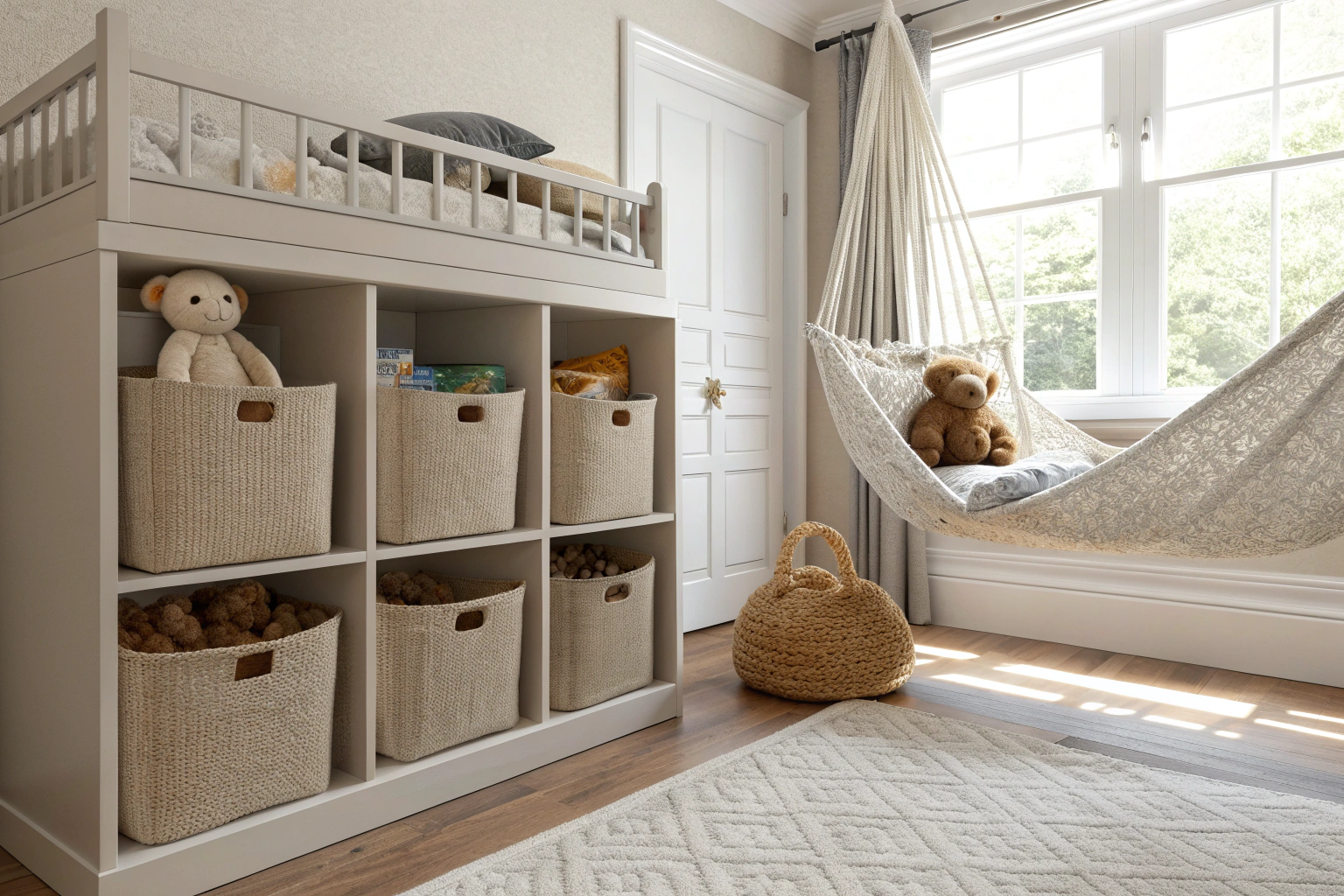
DIY stuffed animal storage refers to creative, homemade solutions for organizing plush toys to declutter children’s rooms or play areas. These projects use common household items or simple materials to create functional and decorative storage, like hammocks, cages, or wall-mounted displays. The goal is to manage the chaos of a large collection and save space without spending a lot of money on store-bought organizers, often making cleanup a fun activity for kids.
Key Benefits at a Glance
- Cost-Effective: Save money by repurposing household items like laundry baskets, fabric scraps, or wood crates instead of buying expensive storage units.
- Fully Customizable: Tailor your solution to fit any room size, decor style, or collection size, from wall-mounted nets to hanging shoe organizers.
- Encourages Tidy Habits: Create accessible and fun storage like a “stuffed animal zoo” or bean bag chair, making it easier for kids to put their toys away.
- Maximizes Vertical Space: Free up valuable floor space by using corners, walls, and the back of doors with solutions like hammocks or hanging chains.
- Eco-Friendly & Creative: Reduce waste by upcycling materials you already own, turning potential clutter into a fun and functional family project.
Purpose of this guide
This guide is for parents, caregivers, and anyone looking for creative ways to conquer stuffed animal clutter without breaking the budget. It solves the common problem of rooms overrun with plush toys by providing simple, actionable ideas for DIY storage. You will learn step-by-step methods for creating everything from a corner hammock to a “zoo” enclosure, discover common mistakes to avoid (like inaccessible designs), and gain the tools to build a lasting organization system that your kids will actually want to use.
Introduction
Last Tuesday morning, I walked into my daughter's room and was greeted by what I can only describe as a stuffed animal avalanche. Her beloved collection of plush friends had somehow migrated from every corner of the room to create a soft, furry obstacle course between her bed and the door. As I carefully navigated through the sea of teddy bears, unicorns, and various cartoon characters, I realized we had reached a breaking point with our Clutter Problem.
Like many parents, I'd watched our home slowly transform into a plush toy sanctuary where stuffed animals claimed every available surface, corner, and floor space. The emotional attachment my children had to each toy made decluttering feel impossible, yet the daily chaos of tripping over toys and spending precious time hunting for specific favorites was wearing on our entire family's sanity.
That morning marked the beginning of my journey into DIY stuffed animal storage solutions – a path that would transform not only our physical space but also how our children interact with and care for their beloved toys. Through trial and error, creative problem-solving, and a few Pinterest-inspired moments of brilliance, I discovered that effective toy organization doesn't require expensive storage systems or complete room makeovers.
Key Takeaways
- DIY storage solutions can be created for under $20 using repurposed materials
- Proper storage systems promote child independence and reduce daily cleanup time
- Visibility and accessibility are key principles for effective stuffed animal organization
- Rotation systems help manage large collections while maintaining toy appreciation
- Wall-mounted solutions maximize floor space in small rooms
My Journey with the Stuffed Animal Dilemma
The Clutter Problem in our home wasn't just about aesthetics – it was affecting our daily routines and my children's ability to engage meaningfully with their toys. When stuffed animals are scattered everywhere, children often overlook their favorites and gravitate toward whatever's most visible, usually the toys that ended up on top of the pile. This created a cycle where some beloved companions were forgotten at the bottom of toy boxes while others received constant attention.
My first attempts at organization involved traditional toy chests and large bins, but these solutions actually made the problem worse. Stuffed animals would get compressed and forgotten at the bottom, creating what I now call "toy graveyards" where special friends disappeared for months at a time. The lack of visibility meant my children couldn't make independent choices about which toys to play with, reducing their sense of Child Autonomy and increasing their dependence on me to help locate specific animals.
The breakthrough came when I realized that DIY stuffed animal storage needed to work with the unique properties of plush toys rather than against them. Unlike blocks or action figures, stuffed animals have irregular shapes, varying sizes, and emotional significance that traditional storage methods don't address. They need to breathe, remain visible, and be easily accessible for the spontaneous play that makes them so special to children.
Through implementing thoughtful storage solutions, our home transformed from chaotic to organized, but more importantly, I watched my children develop greater independence and appreciation for their toys. The Organized Playroom we achieved wasn't about perfection – it was about creating systems that supported both play and cleanup while respecting the emotional bonds children form with their stuffed companions.
How I Learned to Understand Stuffed Animal Storage Challenges
My journey into effective DIY stuffed animal storage began with a series of well-intentioned failures. Traditional storage approaches that worked brilliantly for other toys fell short when applied to our growing collection of plush friends. Through months of trial and error, I discovered that stuffed animals present unique challenges that require specialized solutions.
The irregular shapes of stuffed animals make them difficult to stack or organize efficiently. Unlike uniform toys that fit neatly into compartments, plush toys come in countless sizes and configurations – from tiny pocket-sized bears to oversized dragons that seem to expand to fill whatever space they're given. This variability means that one-size-fits-all storage solutions rarely work effectively.
Emotional attachment adds another layer of complexity to stuffed animal storage. While I could easily donate outgrown clothes or broken toys, suggesting that my children part with even the most worn teddy bear often resulted in tears and passionate defenses of why every single animal was absolutely essential. This emotional component means that DIY stuffed animal storage solutions must accommodate growing collections rather than focusing solely on reduction.
Through experimentation with various Fabric Storage Bins and Open Storage Bin options, I identified four core principles that transformed our approach to plush toy organization. These principles emerged from observing how my children naturally interacted with their toys and noticing which storage methods actually got used versus those that were ignored.
- Visibility: Children need to see their toys to play with them independently
- Accessibility: Storage height must match child’s developmental stage
- Containment: Solutions must prevent toys from spilling or creating new clutter
- Aesthetics: Storage should complement room decor and feel intentional
What I Look for in a Good Storage Solution
Developing a framework for evaluating DIY stuffed animal storage options saved me countless hours and prevented many expensive mistakes. Before implementing any new storage solution, I learned to assess our specific needs systematically rather than getting swept up in Pinterest-worthy photos that might not work for our family's lifestyle.
The evaluation process begins with honest assessment of available space and current collection size. I learned to measure not just floor space but also vertical opportunities, considering how wall-mounted options or Low Shelf Unit installations could maximize our storage capacity without overwhelming the room. This spatial awareness prevented me from choosing solutions that looked great in photos but didn't fit our actual dimensions.
Child Autonomy considerations became increasingly important as my children grew and developed new capabilities. A storage solution that required adult assistance every time my child wanted to access their toys ultimately created more work for me and frustrated my children's growing independence. I found that Low Shelf Unit options positioned at appropriate heights encouraged self-directed play and cleanup while building confidence in organizational skills.
- How much floor space can you dedicate to stuffed animal storage?
- What is your child’s current height and independence level?
- How many stuffed animals need storage solutions?
- Does the storage need to match existing room decor?
- What’s your budget for materials and time investment?
Budget considerations shaped many of my decisions, particularly early in my DIY stuffed animal storage journey. I discovered that the most expensive solutions weren't necessarily the most effective, and some of our most successful storage systems were created from repurposed items or basic materials costing less than $15. This budget-conscious approach allowed me to experiment with multiple solutions without significant financial risk.
My Tips for Properly Caring for Stuffed Animals in Storage
Maintaining the condition of stuffed animals during storage became a crucial aspect of our organization system after I discovered several beloved toys had developed musty odors and pest damage in inadequately protected containers. Proper care extends the life of cherished companions and ensures they're ready for play whenever children want to rediscover them.
My cleaning routine now includes washing stuffed animals before any long-term storage, using gentle cycles and air-drying to prevent damage to delicate fabrics or attached accessories. This pre-storage cleaning prevents odors from setting in and eliminates any food particles or dirt that might attract pests during storage periods.
Airtight Containers became essential for seasonal storage and toys that weren't being actively used. These containers protect against moisture damage, pest infiltration, and dust accumulation that can occur in less secure storage options. I learned to choose containers large enough to avoid compressing the toys, which can cause permanent deformation of stuffing or fabric.
Desiccant Packets proved invaluable for moisture control, particularly in humid climates or basement storage areas. These small packets absorb excess moisture that could lead to mold or mildew development, preserving both the appearance and safety of stored toys. I found food-grade desiccant packets online and added them to each storage container as an extra protection measure.
- DO wash stuffed animals before long-term storage
- DO use airtight containers for seasonal storage
- DO add desiccant packets to prevent moisture damage
- DON’T store damp or dirty stuffed animals
- DON’T overcrowd containers which can cause deformation
- DON’T use plastic bags for long-term storage
Quick and Simple DIY Solutions I've Implemented
When I first committed to solving our stuffed animal chaos, I needed solutions that could be implemented quickly without requiring advanced DIY skills or expensive tools. These beginner-friendly DIY stuffed animal storage options provided immediate relief from our Clutter Problem while giving me confidence to tackle more complex projects later.
The Storage Hammock emerged as my favorite quick-fix solution, transforming corner spaces into functional storage areas within minutes of installation. This simple mesh net stretches across room corners, creating an instant home for medium to large stuffed animals while adding a playful element that children find visually appealing. The installation requires only two eye hooks and takes less than 15 minutes to complete.
Fabric Storage Bins offered versatility and immediate organization for toys that needed contained storage. Unlike rigid containers, these soft-sided options accommodate the irregular shapes of stuffed animals while maintaining a neat appearance. I discovered that Open Storage Bin designs work particularly well for frequently used toys, allowing children to see their options at a glance and make independent selections.
These simple solutions taught me that effective DIY stuffed animal storage doesn't require perfection or permanent installations. Sometimes the most successful approaches are those that can be adjusted, moved, or modified as children's needs and preferences change. The key is choosing solutions that actually get used rather than admired from a distance.
How I Transformed a Hanging Shoe Organizer
The hanging shoe organizer transformation became one of my most successful DIY stuffed animal storage projects, primarily because it addressed visibility and accessibility issues that plagued our previous storage attempts. This clear-pocket organizer, originally designed for footwear, proved perfect for displaying smaller stuffed animals while keeping them easily accessible for independent play.
I purchased a clear-pocket hanging shoe organizer from a discount store for under $10, immediately recognizing its potential for toy storage. The transparent pockets allow children to see their options at a glance, eliminating the guesswork that often leads to dumping out entire bins in search of one specific animal. This visibility factor significantly reduced cleanup time and increased Child Autonomy in toy selection.
The installation process required careful consideration of hanging height to ensure my children could reach their toys independently. I found that positioning the organizer so the lowest pockets were at my youngest child's shoulder height created the perfect balance between accessibility and safety. This height also allowed room for growth as my children developed new reaching capabilities.
- Purchase clear-pocket hanging shoe organizer from discount store
- Measure door height and mark appropriate hanging level for child
- Install over-door hooks or use existing closet rod
- Sort stuffed animals by size to fit organizer pockets
- Label pockets with pictures or words based on child’s reading level
- Teach child how to select and return toys independently
The sorting process revealed interesting insights about our collection and my children's preferences. Smaller animals that had been getting lost in larger storage containers suddenly became favorites again when they were visible and accessible. The pocket format also encouraged my children to return toys to their designated spots, as each animal had a clearly defined home that was easy to remember.
My Under-Bed Storage System with Baskets and Bins
Under-bed space represented untapped storage potential in our home, particularly in my children's rooms where floor space was at a premium. Developing an effective under-bed storage system required testing various Under-bed Container options to find solutions that balanced accessibility, protection, and space efficiency.
My first attempts using standard plastic storage bins proved frustrating because the bins were difficult to slide in and out, especially for my children. The hard plastic edges also scratched our hardwood floors, creating maintenance issues that outweighed the storage benefits. This experience taught me to consider the practical aspects of daily use, not just storage capacity.
Rolling containers with smooth-gliding wheels transformed the under-bed storage experience, making it possible for children to access their toys independently. These containers slide easily on various floor surfaces and can be pulled out completely for toy selection, then pushed back under the bed to maintain clear floor space. The rolling mechanism proved essential for encouraging regular use of the storage system.
| Container Type | Pros | Cons | Best For |
|---|---|---|---|
| Rolling plastic bins | Easy access, stackable | Not airtight, can crack | Frequently used toys |
| Fabric storage boxes | Soft sides, foldable | Less durable, dust penetration | Seasonal rotation |
| Airtight containers | Moisture protection, pest-proof | Harder access, more expensive | Long-term storage |
Airtight Containers became my preference for storing seasonal or less frequently used stuffed animals under beds in guest rooms or storage areas. While these containers require more effort to open and access, they provide superior protection against dust, moisture, and pests during longer storage periods. I learned to reserve these containers for toys that were being rotated out of active play rather than daily-use favorites.
The "One in, One out" Basket System That Saved My Sanity
The rotation system using Fabric Storage Bins revolutionized how our family managed the overwhelming quantity of stuffed animals while maintaining my children's emotional connections to their toys. This approach emerged from recognizing that children often play more creatively with smaller, rotating selections than with access to every toy simultaneously.
I introduced the concept during a family meeting, explaining that toys needed "rest time" just like people do. This framing helped my children understand that toys weren't being taken away permanently but were going on temporary vacations in special storage bins. The Fabric Storage Bins became "toy hotels" where animals could rest comfortably while others had their turn in the active play rotation.
The implementation required patience and consistent communication as my children initially resisted the idea of any toys being temporarily inaccessible. I discovered that involving them in the selection process and allowing them to choose which toys rotated when gave them a sense of control and Child Autonomy that reduced resistance to the system.
The rotation schedule evolved based on our family's needs and my children's attention spans. Monthly rotations proved too infrequent, leading to forgotten toys and reduced excitement about "new" arrivals. Weekly rotations created too much administrative work for me. We settled on bi-weekly rotations that maintained novelty without becoming burdensome to maintain.
This system dramatically reduced daily cleanup time and increased the quality of play I observed. With fewer options available, my children engaged more deeply with their toys, creating elaborate storylines and spending longer periods in focused play. The DIY stuffed animal storage approach also made special occasions more meaningful, as rotating toys felt like receiving new gifts.
My Method for Using Labeled Baskets for Sorting
Categorization using labeled Fabric Storage Bins and Open Storage Bin options addressed the chaos that occurred when multiple children shared toy collections or when different types of stuffed animals were mixed together randomly. This labeling system created clear ownership and organization guidelines that reduced sibling conflicts and increased Child Autonomy in toy management.
The categorization process began by observing how my children naturally grouped their toys during play. Rather than imposing arbitrary categories, I noticed they often sorted by animal type, size, or emotional significance. These natural groupings became the foundation for our labeling system, ensuring the organization felt intuitive rather than forced.
Open Storage Bin options worked particularly well for categories that were accessed frequently, such as "bedtime buddies" or "small animals." The open design allowed children to see their options and make quick selections without needing to remove lids or open containers. These bins were positioned at child-accessible heights to encourage independent use.
Picture labels proved essential for pre-reading children and helped establish the sorting system before literacy skills developed. I created simple line drawings or used photographs of representative toys to mark each category, allowing children to understand the system regardless of their reading level. As reading skills developed, I added word labels alongside the pictures to support literacy development.
The labeling system evolved as our collection and children's interests changed. Seasonal adjustments allowed for categories like "winter animals" or "birthday bears," while interest-based categories like "dinosaurs" or "farm animals" reflected current play themes. This flexibility kept the system relevant and engaging rather than rigid and outdated.
How I Set Up Hanging Fruit Basket Storage
Overhead storage using hanging fruit baskets represented a creative solution for maximizing vertical space while keeping stuffed animals visible and accessible. This DIY stuffed animal storage approach worked particularly well for toys that were loved but not used daily, creating an attractive display that doubled as functional storage.
The installation process required careful attention to safety considerations, particularly regarding weight limits and secure mounting. I learned through research and trial that ceiling installations need proper anchor points to prevent accidents, making this solution more appropriate for homes where permanent installations are acceptable.
- Locate ceiling joist or use heavy-duty drywall anchors rated for 20+ pounds
- Mark installation points ensuring adequate clearance from child’s head
- Install ceiling hooks using appropriate hardware for your ceiling type
- Test weight capacity with heavy items before adding stuffed animals
- Hang fruit basket at height allowing easy adult supervision
- Establish rules about which toys are appropriate for overhead storage
Height considerations proved crucial for both safety and functionality. The baskets needed to be high enough to prevent head injuries during normal room activities but low enough that children could see their contents and request specific toys when desired. This balance required measuring and testing different heights before final installation.
| Safety Consideration | Solution | Age Recommendation |
|---|---|---|
| Falling objects | Secure mounting with proper anchors | All ages with supervision |
| Head clearance | Install minimum 7 feet from floor | Walking children and up |
| Weight limits | Test with 15-20 pound load first | All installations |
The selection of appropriate toys for overhead storage became an important safety and practical consideration. I established guidelines that only soft, lightweight stuffed animals could be stored overhead, excluding toys with hard parts or excessive weight that could cause injury if they fell. This selection process also helped teach children about safety considerations and appropriate use of different storage solutions.
Creative Repurposing Ideas From My Home
The journey into Repurposed Materials for DIY stuffed animal storage began when I realized that many household items possessed the exact properties needed for effective toy organization. This approach not only saved money but also provided the satisfaction of creative problem-solving while teaching my children about resourcefulness and environmental consciousness.
My first successful repurposing project involved transforming a large decorative basket that had been collecting dust in our closet. Originally purchased as a laundry hamper, this woven basket proved perfect for storing medium-sized stuffed animals while maintaining an attractive appearance that complemented our room decor. The natural materials and neutral colors made it feel intentional rather than makeshift.
The process of identifying repurposing opportunities became a family activity, with my children suggesting creative uses for items we might otherwise discard or donate. This collaborative approach helped them develop problem-solving skills while taking ownership of our organization solutions. Their suggestions often surprised me with their creativity and practical insight.
One of our most beloved repurposed solutions emerged from my daughter's suggestion to use an old wooden crate as a reading nook storage unit. She envisioned filling the crate with her favorite stuffed animal reading companions, creating a cozy corner where books and toys could coexist. This idea transformed a simple storage need into a special space that encouraged both literacy and imaginative play.
Wall-Mounted Storage Projects I've Created
Vertical storage solutions revolutionized our approach to DIY stuffed animal storage by utilizing wall space that had previously been purely decorative. This shift from floor-based to wall-mounted storage immediately created more play space while maintaining easy access to toys. The transformation felt dramatic, converting cluttered floors into organized, functional rooms.
The Wall Storage Net became our first successful vertical installation, stretching across a corner to create an instant stuffed animal display. This simple mesh net, originally designed for sports equipment storage, proved perfect for plush toys due to its flexibility and visual appeal. Children could easily see their toy options while the net contained everything securely.
Installing a Stuffed Animal Zoo required more planning and construction skills but created a stunning focal point that doubled as functional storage. This cage-like structure, built from wood framing and stretched cord, displayed stuffed animals like a museum exhibit while keeping them easily accessible for play. The zoo concept appealed to my children's imagination while solving our storage challenges.
Wall Anchors became a critical safety consideration for all wall-mounted projects, particularly when children might climb or pull on the storage installations. I learned to use heavy-duty anchors rated for significantly more weight than the toys themselves, accounting for dynamic loads created by enthusiastic children accessing their favorites.
The most popular DIY approach is building a stuffed animal cage organizer, a wooden frame with bungee cords that keeps plush toys visible and accessible while saving floor space. For additional storage strategies, explore detailed building instructions and visual demonstrations to guide your project.
“This stuffed animal storage cage will provide a convenient place for the kids to neatly store their stuffed animals.”
— Kreg Tool, 2024
Source link
Build-from-Scratch Storage Solutions I'm Proud Of
My venture into woodworking for DIY stuffed animal storage began with simple projects using basic Wood materials and evolved into custom furniture pieces that perfectly matched our family's needs and room aesthetics. These build-from-scratch solutions required greater time investment and skill development but provided lasting storage that grew with our children.
The decision to use Wood for permanent storage solutions came from recognizing that our stuffed animal collections were long-term commitments rather than temporary phases. Quality wooden storage pieces could accommodate growing collections while maintaining structural integrity through years of active use by multiple children.
Non-toxic Paint finishes became essential when creating furniture for children's rooms, ensuring that curious hands and mouths wouldn't encounter harmful chemicals during play or cleanup activities. I researched child-safe finishing options extensively, discovering that water-based paints and natural wood stains provided both safety and durability for high-use storage furniture.
Basic Construction Options
You can build this project using either plywood or dimensional lumber. The simplest design features four vertical corner supports connected by horizontal pieces, creating a rectangular frame approximately 20" × 16" × 47" tall. A sturdier alternative uses 1×4 and 1×2 boards assembled with pocket-hole joinery for cleaner joints.
Key Materials
- Wood (plywood sheets or 1×4 and 1×2 boards)
- Bungee cord (50-foot spool typically required)
- Wood glue and screws or nails
- Paint or stain for finishing
Assembly Process
After cutting and assembling the wooden frame, drill holes through the vertical supports to thread bungee cords. The cords are fed vertically along each side, typically spacing 2–3 cords per side with approximately 3 inches between them. Tie knots at both ends and secure them with staples or eye hooks. Melt the bungee cord ends with a lighter to prevent fraying.
Cost Advantage
This DIY approach costs a fraction of commercial organizers, which can exceed $200, while using less than one sheet of plywood and basic tools. The entire project can be completed over a weekend or in a single day.
The satisfaction of creating custom storage solutions that perfectly fit our space and needs made the learning curve worthwhile. Each project taught me new skills while providing functional furniture that supported our family's organization goals. The children took special pride in storage pieces I had built specifically for them, treating these custom solutions with greater care than store-bought alternatives.
Dual-Purpose Storage Ideas That Saved Space in My Home
Multi-functional furniture became essential in our smaller bedrooms where every square foot needed to serve multiple purposes. DIY stuffed animal storage solutions that doubled as seating, decoration, or play surfaces maximized our limited space while reducing the visual clutter that comes with single-purpose storage items.
The philosophy behind dual-purpose solutions emerged from recognizing that children's rooms often lack adequate space for separate furniture pieces dedicated to sleeping, playing, studying, and storage. By combining functions, I could provide more utility within the same footprint while creating rooms that felt spacious rather than cramped.
| Solution | Space Saved | Cost Range | Difficulty | Best Feature |
|---|---|---|---|---|
| Storage ottoman | 3-4 sq ft floor | $30-60 | Easy | Extra seating |
| Bench with cubbies | 2-3 sq ft floor | $50-100 | Medium | Reading nook |
| Bed with built-in storage | 8-10 sq ft floor | $200-400 | Hard | Maximum storage |
Storage ottomans proved particularly successful because they provided comfortable seating for reading time while concealing stuffed animals that weren't currently in active rotation. The soft, upholstered tops were safe for children to use independently, and the hidden storage kept rooms looking neat even when toy organization wasn't perfect.
Window seat storage benches created cozy reading nooks while providing substantial storage capacity for larger stuffed animal collections. These built-in solutions made use of otherwise wasted space under windows while creating special areas that encouraged quiet activities and independent play.
Maintenance and Organization Systems That Work for My Family
Sustaining DIY stuffed animal storage systems required developing realistic maintenance routines that could be integrated into our family's daily life without creating additional stress or unrealistic expectations. The most beautiful storage solutions proved worthless if they couldn't be maintained consistently by busy parents and developing children.
Child Autonomy became the cornerstone of our maintenance approach, with age-appropriate expectations that grew alongside my children's developmental capabilities. Rather than expecting perfection, I focused on building habits and systems that supported gradual skill development while maintaining functional organization.
The integration of Airtight Containers into our maintenance routine provided long-term protection for stored toys while teaching children about proper care of their belongings. Regular checks of these containers became opportunities for quality time together while ensuring stored toys remained in good condition for future play.
- Set weekly 10-minute tidying sessions rather than daily perfection expectations
- Rotate stored toys monthly to maintain interest and prevent hoarding
- Check airtight containers quarterly for moisture or pest issues
- Involve children in annual decluttering with donation opportunities
- Take photos of organized systems to help maintain standards
- Adjust storage heights as children grow and develop new capabilities
The evolution of our maintenance systems reflected our family's changing needs and my children's growing capabilities. What worked for toddlers required adjustment as they became school-aged, and systems that succeeded with one child needed modification to accommodate siblings with different organizational styles and preferences.
Flexibility became more important than perfection in maintaining our DIY stuffed animal storage solutions. Systems that could adapt to changing needs, growing collections, and developing skills proved more valuable than rigid approaches that became obstacles rather than helpful tools. This adaptability ensured our organization solutions remained relevant and useful throughout different phases of childhood.
Frequently Asked Questions
Use wall-mounted shelves or hanging nets to display stuffed animals, allowing easy visibility and access for playtime. Clear plastic bins on open shelving units also keep them organized without hiding them away. This approach maintains a tidy space while encouraging creativity in kids.
Begin with a simple toy hammock made from a sheet or net suspended in a corner using hooks. Over-the-door shoe organizers can be repurposed to hold smaller stuffed animals effortlessly. These beginner-friendly ideas require no advanced skills and use common household items.
Collect cardboard boxes or wooden crates, cut out bars for a cage effect, and paint them with fun zoo themes. Stack and secure the boxes with glue or brackets to form the zoo structure. Place stuffed animals inside each “enclosure” for an engaging and organized storage solution.
Install decorative wall pockets or themed shelves that blend with the room’s aesthetic to hold stuffed animals attractively. Create a hanging swing from fabric and ropes for a playful decor element that stores toys. This method enhances the room’s look while providing functional storage.
Transform old laundry baskets into cozy nests by lining them with soft fabric for stuffed animals. Repurpose tension rods and curtains to make hanging dividers or use empty jars for tiny plush toys. These ideas save money and add a personalized touch to organization.
Opt for vertical storage like hanging organizers or wall-mounted pockets to utilize wall space efficiently. Under-bed storage bins or vacuum-sealed bags compress stuffed animals for compact keeping. This maximizes room area while keeping toys accessible and dust-free.