
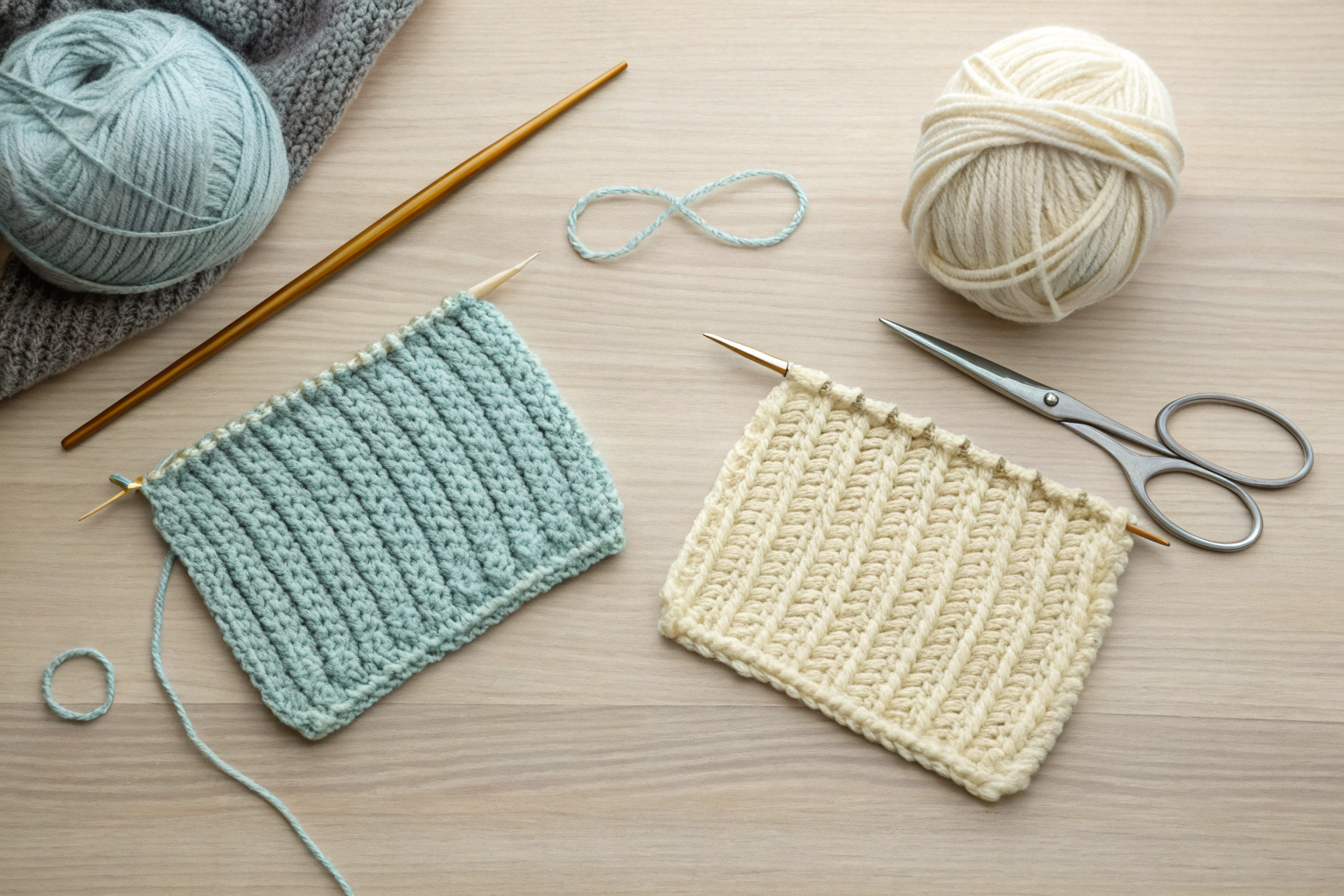
Learning how to cast off knitting is the essential final step to finish your project, securing the live stitches to prevent them from unraveling. This technique creates a finished edge on items like scarves, blankets, and garments. A common concern for knitters is keeping the tension even, as a cast-off edge that is too tight can ruin the shape and stretch of the final piece, while one that is too loose can look messy.
Key Benefits at a Glance
- Secure Your Work: Properly casting off locks your stitches in place, ensuring that your hours of hard work don’t unravel after the needles are removed.
- Create a Professional Finish: A neat cast-off provides a clean, polished edge, giving your handmade items a professional and complete appearance.
- Ensure Proper Fit and Stretch: Using the correct tension allows cuffs, necklines, and hems to stretch appropriately, making garments comfortable and easy to wear.
- Easy for Beginners: The standard cast-off method is simple to learn, as it only uses the basic knit stitch and the motion of lifting one stitch over another.
- Versatile Application: This fundamental skill is used to complete nearly every type of knitting project, from simple dishcloths to complex sweaters and accessories.
Purpose of this guide
This guide is for beginner knitters ready to complete their first projects and for anyone seeking to improve their finishing technique. It solves the common problems of creating a cast-off edge that is too tight, puckered, or uneven. You will learn a simple, step-by-step method for the standard cast-off, which is the most widely used technique. By following these instructions and avoiding common mistakes like pulling the yarn too tight, you can achieve a flexible, tidy edge that makes your handmade items durable and beautiful.
Understanding cast off vs bind off what's the difference
If you've ever been confused by knitting patterns that use both "cast off" and "bind off," you're not alone. These terms refer to exactly the same technique – the method used to finish your knitting by removing stitches from the needle and securing them permanently. The difference is purely regional: knitters in the UK typically say "cast off," while those in the US prefer "bind off."
This terminology confusion extends beyond just casting off. Many knitting terms vary between regions, which can make following international patterns challenging for new knitters.
- Cast off (UK) = Bind off (US)
- Tension (UK) = Gauge (US)
- Stocking stitch (UK) = Stockinette stitch (US)
- Moss stitch (UK) = Seed stitch (US)
- Treble crochet (UK) = Double crochet (US)
Understanding these regional differences helps you confidently follow any pattern, regardless of its origin. Whether you're working from a British magazine or an American blog, the techniques remain identical – only the language changes.
Understanding pattern abbreviations for casting off
Knitting patterns use various abbreviations to indicate when you should cast off or bind off stitches. Learning these common abbreviations will help you interpret pattern instructions accurately and avoid confusion during your projects.
| Abbreviation | Meaning | Usage Example |
|---|---|---|
| BO | Bind Off | BO 5 sts |
| CO | Cast Off | CO all sts |
| bind off | Complete technique | bind off in pattern |
| cast off | Complete technique | cast off loosely |
When you see these abbreviations in patterns, they're telling you to complete the bind off process using whatever method the pattern specifies. Some patterns will add modifiers like "loosely" or "in pattern," which provide additional guidance for achieving the best results.
Why learning to cast off properly matters
Mastering the cast off technique directly impacts the quality, appearance, and functionality of your finished knitting projects. A well-executed bind off creates a professional-looking edge that maintains the proper stretch and drape of your knitted fabric, while poor technique can ruin hours of careful work.
The finished edge of your knitting serves multiple purposes beyond just securing your stitches. It needs to match the stretch and recovery of your knitted fabric, provide a clean visual boundary, and maintain its shape through wearing and washing. When you cast off too tightly, you create a rigid edge that can pucker and distort your project. Too loose, and the edge becomes floppy and unprofessional-looking.
- Proper cast off prevents curling edges
- Consistent tension creates professional appearance
- Correct technique ensures garment fit
- Good bind off maintains fabric drape
- Quality edges improve garment longevity
A neat cast off looks even better when the stitches leading up to it are smooth and consistent. For help with your basic knit fabric, see Stockinette Stitch in the Round Guide.
I’ve seen beautiful sweaters rendered unwearable by bind offs that were too tight around the neckline, making them impossible to get on and off comfortably. Conversely, I’ve watched knitters transform their projects from amateur-looking to professional simply by improving their cast off technique and paying attention to edge tension.
What you’ll need before you start
The beauty of casting off lies in its simplicity – you don’t need any special tools beyond what you’re already using for your knitting project. Most knitters can complete a perfect bind off using only their working needles and project yarn.
- Working knitting needles (current project size)
- Yarn from your project
- Sharp scissors for cutting yarn
- Tapestry needle for weaving in ends
However, a few optional items can make the process easier and improve your results, especially if you tend to knit tightly or struggle with maintaining consistent tension during bind off.
- Keep needles one size larger for looser cast-offs
- Use blunt tapestry needle to avoid splitting yarn
- Have good lighting for clear stitch visibility
Many experienced knitters keep a set of needles one size larger than their project needles specifically for casting off. This simple adjustment automatically creates a looser, more flexible edge without requiring you to consciously change your knitting tension.
Basic cast off technique my step by step approach
The standard bind off method forms the foundation for all cast off variations. Once you master this basic technique, you’ll have the skills needed to tackle any bind off situation with confidence.
“To cast off knitting, start on a new row, and knit two stitches loosely. It’s important to keep the stitches loose so your cast off edge will remain stretchy.”
— Sheep and Stitch, March 2025
Source link
The key to successful binding off lies in understanding the mechanics of each step and maintaining consistent rhythm throughout the process. Think of it as creating a chain of interlocked loops that secures each stitch permanently.
- Knit the first two stitches onto right needle
- Insert left needle tip into first stitch on right needle
- Lift first stitch over second stitch and off needle
- Knit one more stitch from left needle
- Repeat lifting first stitch over second stitch
- Continue until one stitch remains
- Cut yarn leaving 6-inch tail
- Pull tail through final loop to secure
“Continue the pattern of ‘knitting one stitch, binding off one stitch, knitting one stitch, binding off one stitch’ until you have one stitch left on the right needle.”
— Sarah Maker, January 2025
Source link
For a visual guide, see the step-by-step video from Cardigang.
The rhythm becomes natural with practice: knit one, lift over, knit one, lift over. Focus on smooth, deliberate movements rather than speed, especially while learning. Each lifted stitch should slide easily off your needle without resistance.
Maintaining the right tension
Achieving the perfect tension during cast off requires a different approach than regular knitting. Your hands need to work more loosely, and your yarn control becomes even more critical to creating an edge that matches your fabric’s natural stretch.
If you often cast off on ribbing, learning how ribbed fabric behaves will make your edges more elastic. Start here: Knit Ribbing Mastery: Techniques for Perfect Elastic Edges.