
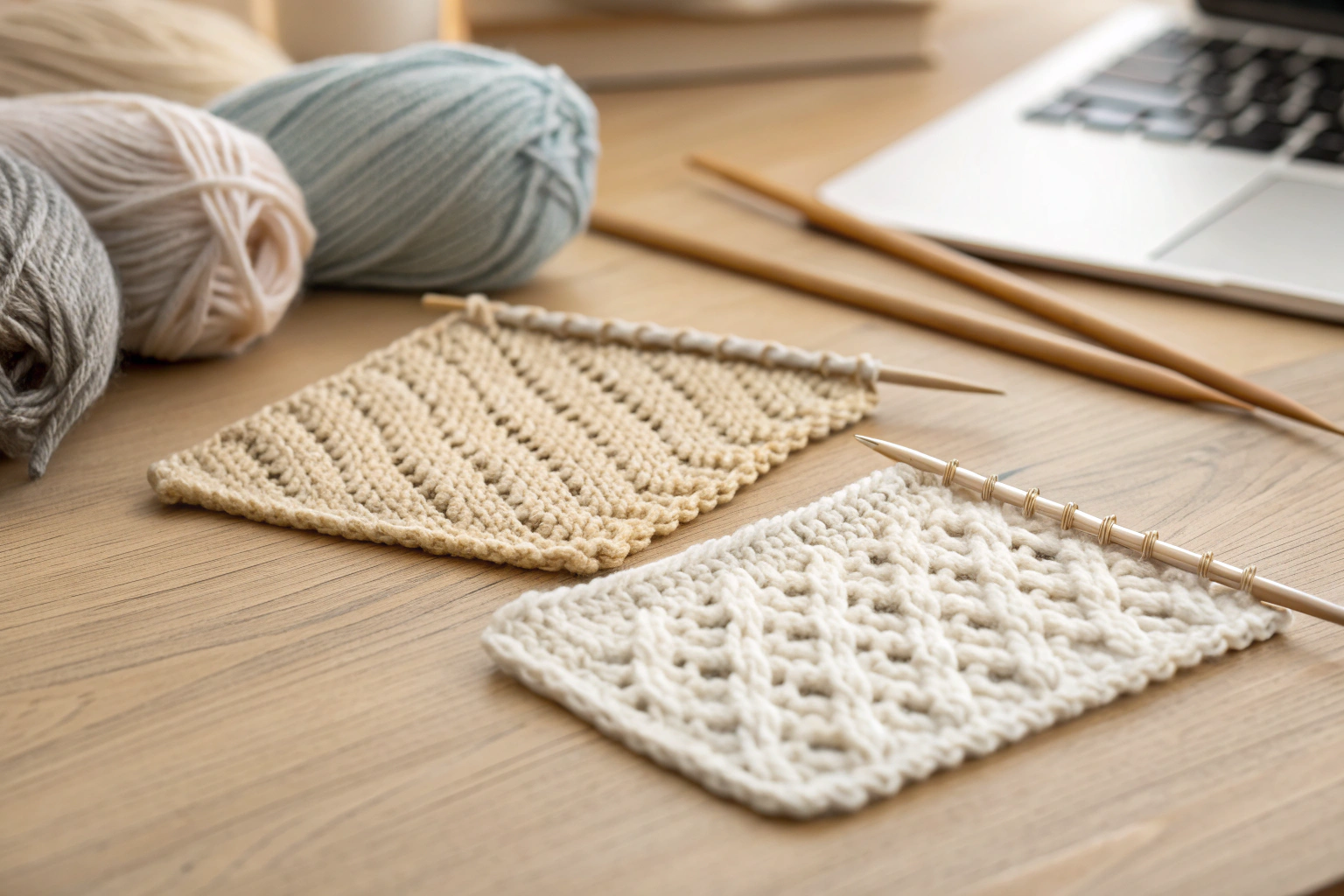
Learning how to change colors in knitting is a fundamental skill for creating vibrant patterns like stripes and colorwork. The process involves dropping your current yarn and introducing a new color at a specific point, typically at the end of a row to create clean stripes. A common user concern is ensuring the transition is seamless and secure, without creating holes or loose stitches in the fabric. Mastering this technique opens up endless creative possibilities for your projects.
Key Benefits at a Glance
- Professional Finish: Achieve crisp, clean color transitions for professional-looking stripes and patterns, avoiding blurry lines.
- Structural Integrity: Learn how to join new yarn securely to prevent gaps, holes, and unraveling at the color change point.
- Creative Freedom: Unlock the ability to knit complex designs like Fair Isle, intarsia, and other multi-colored projects.
- Simplicity for Beginners: The basic technique for changing colors at the end of a row is quick to learn and easy to master.
- Sustainable Crafting: Use up smaller, leftover skeins of yarn to create unique, eco-friendly projects while reducing waste.
Purpose of this guide
This guide provides clear, actionable steps for any knitter who wants to move beyond single-color projects. It is designed to help beginners and intermediate crafters solve the common frustrations of messy color changes, insecure joins, and tangled yarn. You will learn the most reliable method for switching colors to create stripes, including how to prepare your yarn and manage the tails to avoid puckering. By following these tips, you will avoid common mistakes and gain the confidence to create beautiful, multi-colored knitwear with a clean, durable finish.
Why proper color changing techniques matter
Every knitter knows that moment when a beautiful pattern is marred by sloppy color transitions. Poor color changing techniques can transform an otherwise stunning project into something that looks homemade in the worst way. When you master proper color changing methods, your knitting takes on a professional quality that elevates every project from scarves to sweaters.
The difference between amateur and expert-level knitting often comes down to these technical details. Proper color changing techniques ensure seamless transitions that maintain the integrity of your design while preventing common problems like holes, loose ends, and uneven tension. These skills become the foundation for more advanced colorwork techniques like Fair Isle and intarsia.
Understanding how technique quality directly impacts your project outcomes helps you prioritize which skills to develop first. Visual appearance depends heavily on clean color transitions, whether you're working simple stripes or complex colorwork patterns. The relationship between technical execution and aesthetic results becomes clear when you compare projects made with different skill levels.
| Poor Technique | Proper Technique | Impact on Project |
|---|---|---|
| Visible holes | Seamless joins | Professional appearance |
| Loose ends | Secure weaving | Durability |
| Uneven tension | Consistent gauge | Proper fit |
| Color bleeding | Clean transitions | Design clarity |
Your yarn choice and needle selection work together with proper technique to create the best results. Different fiber contents respond differently to color changes, while needle material and size affect how smoothly you can execute transitions. These foundational elements set you up for success before you even begin changing colors.
What you'll need for successful color changes
Success in color changing starts with having the right tools and materials at your disposal. Your knitting needles form the foundation of good technique, with different materials offering varying levels of grip and smoothness. Bamboo needles provide excellent grip for beginners learning tension control, while metal needles offer smooth yarn flow for experienced knitters working complex colorwork.
Needle size directly impacts your ability to maintain consistent gauge across color changes. Using needles that match your yarn weight ensures proper stitch formation, while having a range of sizes available lets you adjust for different yarn combinations. The style of needle you choose matters too – circular needles work best for seamless colorwork projects, while straight needles suit flat pieces with simple color changes.
- Knitting needles (appropriate size for yarn weight)
- Darning needle (blunt tip for weaving ends)
- Scissors (sharp, small)
- Yarn in desired colors (same weight and fiber content)
- Stitch markers (for pattern tracking)
- Row counter (optional but helpful)
Yarn selection proves critical for successful color changes. Matching fiber content across all colors ensures consistent drape and care requirements, while using the same yarn weight maintains even gauge throughout your project. The ply structure of your yarn affects how well ends weave in and how smooth color transitions appear in the finished fabric.
Quality scissors make clean cuts that prevent fraying, while a darning needle with a blunt tip helps you weave in ends without splitting yarn fibers. Stitch markers become essential for tracking pattern repeats in colorwork, and a row counter helps maintain accuracy in complex color sequences.
Basic color change methods for beginners
Beginning knitters often feel intimidated by color changes, but mastering basic techniques builds confidence for more advanced colorwork. These foundational methods focus on clean joins and proper yarn management, skills that translate to every type of color changing you'll encounter. Starting with simple techniques lets you practice tension control and end management without the complexity of multiple colors or intricate patterns.
The progression from basic to more complex color changing follows a logical sequence that builds skills systematically. Each technique introduces new concepts while reinforcing previous learning, creating a solid foundation for advanced colorwork. Understanding this progression helps you choose appropriate projects as your skills develop.
- Master the drop and pick method for simple stripes
- Learn the twist method for hole-free transitions
- Practice weave-in-as-you-go for efficiency
- Advance to mid-row color changes for complex patterns
Basic knitted fabrics provide the perfect canvas for learning color changing techniques. Working with familiar knit and purl stitches lets you focus on the color change mechanics without worrying about complex stitch patterns. This foundation approach ensures you develop proper technique before adding complexity.
Yarn management becomes second nature when you practice these basic methods consistently. Learning to maintain proper tension while switching colors, managing multiple yarn tails, and preventing tangles sets you up for success in more advanced projects. These fundamental skills support everything from simple striped scarves to complex Fair Isle sweaters.
“To create color changes with crisp lines—such as stripes—78% of experienced knitters recommend dropping the working yarn, picking up the new color, and knitting the first stitch tightly to avoid gaps before weaving in the yarn ends at the finish.”
— The Spruce Crafts, January 2024
The simple drop and pick method
The drop and pick method serves as every knitter's introduction to color changing, offering a straightforward approach that works perfectly for striped patterns. This basic join technique focuses on clean transitions at row beginnings, making it ideal for horizontal stripes and simple color blocks. The method's simplicity allows beginners to concentrate on tension management without complex yarn manipulation.
Starting with this technique builds confidence through immediate success. You simply complete your row with the old color, drop that yarn, and pick up the new color to begin the next row. This approach works particularly well with single-color-per-row patterns where you're not carrying multiple yarns simultaneously.
Tension management becomes crucial with the drop and pick method. The first stitch with your new color determines how clean your color transition appears, so working this stitch with consistent tension prevents gaps or puckering. Practice helps you develop the muscle memory needed for smooth, even transitions.
- Leave 6-inch tails for secure weaving later
- Maintain consistent tension when picking up new yarn
- Work first stitch gently to avoid loosening
- Keep dropped yarn close to prevent tangling
Stripe patterns showcase this method beautifully, creating clean horizontal lines that highlight your color choices. The technique works equally well for narrow accent stripes or bold, wide color blocks. Understanding how yarn weight affects stripe appearance helps you plan projects that highlight this simple but effective method.
The twist method for clean transitions
The twist method elevates your color changing skills by preventing the small holes that sometimes appear with basic joins. This technique creates seamless transitions through a simple twist that locks the yarns together, ensuring no gaps appear in your knitted fabric. Advanced beginners appreciate how this small modification dramatically improves their project's professional appearance.
Clean color changes look even better when your ribbing is consistent and well tensioned. If you’re working on stripes in ribbing, review: Knit Ribbing Mastery.
Visual appearance improves significantly when you eliminate holes from color changes. The twist method achieves this by creating a secure connection between old and new yarns without adding bulk to your fabric. This technique works particularly well with lighter weight yarns where holes are more noticeable.
- Complete last stitch with old color
- Bring new yarn under old yarn from right to left
- Twist yarns once around each other
- Work first stitch with new color, maintaining tension
- Continue pattern with new color
Proper yarn positioning makes the twist method work effectively. The direction of your twist matters – always bring the new yarn under the old yarn to create the most secure connection. This positioning prevents the twist from loosening as you continue knitting and ensures the join remains invisible from the right side of your work.
Practice this technique on simple stockinette stitch swatches before incorporating it into projects. The muscle memory you develop through repetition makes the twist become automatic, letting you focus on pattern requirements rather than technique mechanics.
“A neat color change is most easily achieved at the start of a row by tying an overhand knot with the new yarn and then knitting normally, making it suitable for stripes, mosaic, or fair isle work—be sure to undo the knot and weave in the tails at the end.”
— Nimble Needles, May 2024
Weave in as you go
Efficiency becomes paramount in projects with frequent color changes, making the weave-in-as-you-go method invaluable for Fair Isle and other stranded colorwork. This technique integrates end management into your knitting process, eliminating the tedious finishing work that often accompanies colorwork projects. By weaving tails as you create them, you maintain project momentum while ensuring secure, professional results.
When you’re ready to finish a multicolor piece, a neat cast off is essential. Here’s a detailed tutorial: How to Cast Off Knitting.
This method works particularly well when floats can hide your woven tails, making it perfect for stranded colorwork where the wrong side shows multiple yarn strands. The technique saves significant time during finishing while creating more secure end attachment than traditional weaving methods.
- Hold yarn tail along needle with working yarn
- Work 3-4 stitches catching tail in stitches
- Drop tail and continue with working yarn only
- Trim excess tail close to fabric
- Repeat process when changing colors again
Darning skills support this technique by teaching you how yarn behaves when woven through knitted fabric. Understanding fiber behavior helps you determine how many stitches to catch the tail through and how tightly to secure it. Different yarn types require different approaches – wool grips more readily than cotton or silk.
Time-saving benefits become most apparent in complex colorwork projects where traditional end weaving could take hours. By integrating this process into your knitting rhythm, you complete projects faster while maintaining high-quality results. The technique becomes second nature with practice, requiring no extra concentration once mastered.
Changing colors in the middle of a row
Mid-row color changes open up possibilities for complex colorwork patterns including intarsia blocks and pictorial knitting. This technique requires more precision than row-beginning changes since you must maintain fabric integrity while switching yarns in the middle of active stitches. Understanding proper execution prevents holes and maintains even tension across your work.
Intarsia methodology depends heavily on clean mid-row color changes for creating distinct color blocks. Unlike stranded colorwork where yarns travel across the back, intarsia uses separate yarn lengths for each color section, making smooth transitions essential for professional results. This technique forms the foundation for pictorial knitting and geometric color blocking.
- Work to color change point with old color
- Drop old yarn, leaving 6-inch tail
- Pick up new yarn, leaving 6-inch tail
- Twist yarns together once to prevent holes
- Continue row with new color
- Weave in tails when finishing
Preventing holes becomes critical in mid-row changes since gaps are more visible within fabric than at edges. The twist between old and new yarns creates the secure connection needed to maintain fabric integrity. Proper tension control ensures this twist doesn't create puckering or distortion in your finished piece.
Application context varies significantly for mid-row changes, from simple geometric shapes to complex pictorial designs. Understanding when to use this technique versus carrying yarns helps you choose the most appropriate method for each project. Large distinct color areas benefit from individual yarn lengths, while small motifs work better with carried strands.
Carrying yarns for multiple color projects
Multiple color projects require sophisticated yarn management skills that go beyond simple color changing. Fair Isle and other stranded colorwork techniques demand careful attention to yarn carrying, float management, and tension control across multiple colors simultaneously. Understanding these principles transforms complex-looking colorwork into manageable, enjoyable knitting.
Stranded colorwork methodology creates the foundation for traditional Fair Isle patterns, where two or more colors travel across each row. This technique requires learning to manage yarn strands efficiently while maintaining consistent tension and preventing tangling. The visual impact of well-executed stranded colorwork makes mastering these skills worthwhile.
Yarn management skills become increasingly important as project complexity grows. Working with multiple balls or skeins simultaneously requires organizational systems that prevent tangling while keeping yarns easily accessible. Developing efficient yarn handling techniques speeds up your knitting while reducing frustration.
| Method | Best For | Pros | Cons |
|---|---|---|---|
| Dominant hand carrying | Fair Isle patterns | Fast, even tension | Takes practice |
| Two-handed carrying | Complex colorwork | Independent control | Slower initially |
| Yarn bowl system | Multiple colors | Prevents tangling | Requires setup |
Tension control across multiple colors challenges even experienced knitters. Each yarn type and color may behave differently, requiring adjustments to maintain consistent gauge throughout your project. Learning to recognize and correct tension variations prevents puckering and maintains proper fabric drape.
Organizational systems become essential for projects using more than two colors per row. Whether you prefer yarn bowls, bobbins, or other management tools, having a system prevents the tangling that can halt progress and create frustration. Experiment with different approaches to find what works best for your knitting style.
Managing floats in colorwork
Float management represents one of the most critical skills in stranded colorwork, directly affecting both the appearance and wearability of your finished projects. Floats are the yarn strands that travel across the back of your work when not in use, and their proper management ensures even tension and prevents snagging. Understanding float length limits and catching techniques creates professional-quality colorwork.
Fair Isle technique traditionally limits float length to prevent excessive loose strands that can catch or pull. The maximum recommended float length of three to five stitches balances design flexibility with practical wearability. Longer floats require catching techniques that secure them without affecting the right side appearance.
Pattern types influence float management requirements significantly. Small repeating motifs typically create shorter floats that rarely need catching, while larger geometric patterns may require more attention to float length. Understanding your pattern's float requirements helps you plan catching strategies before you begin knitting.
- DO catch floats longer than 5 stitches
- DON’T pull floats too tight – they should lie flat
- DO maintain consistent float tension across rows
- DON’T twist floats when catching them
- DO check float length on wrong side regularly
Catching floats requires technique that secures loose strands without creating visible marks on the right side. The process involves briefly catching the unused yarn with your working needle before continuing the pattern. This technique takes practice to execute smoothly without disrupting your knitting rhythm.
Tension management becomes more complex when managing floats across multiple colors. Each yarn must maintain appropriate looseness to prevent puckering while staying secure enough to prevent snagging. Regular checking of your work's wrong side helps you identify and correct tension issues before they affect large sections.
Carrying yarn up the side for stripes
Stripe patterns offer an efficient alternative to cutting yarn between color changes through side-carrying techniques. This method works particularly well for narrow stripes where cutting and rejoining yarn would create excessive ends to weave in. Understanding proper edge management ensures carried yarns remain neat and don't affect the finished appearance.
Multicolor projects often use circular needles. If you’re knitting in the round, these techniques will help: Knitting in the Round.
Application context for stripe patterns varies from simple two-color alternations to complex multi-color sequences. The side-carrying technique works best when stripe widths remain relatively consistent, typically between two and six rows per color. Wider stripes may require cutting to prevent excessive yarn buildup at the edges.
- Complete row with current color
- Bring carried yarn up along edge loosely
- Twist carried yarn with working yarn once
- Begin new row maintaining edge tension
- Repeat every 2-4 rows to secure carried yarn
Edge tension requires careful attention when carrying yarns to prevent puckering or loose loops along the fabric edge. The carried yarn should lie flat against the edge without pulling tight or creating excessive bulk. Practice helps you develop the feel for proper tension that maintains neat edges while preventing distortion.
Yarn requirements change when using side-carrying techniques since you don't cut between color changes. This approach reduces waste and eliminates many ends to weave in, but requires careful yarn management to prevent tangling. Planning your yarn quantities becomes more straightforward when you don't need to account for multiple cut ends.
For practical instructions, see the Knitting overview and reference the color change guide from the Craft Yarn Council.
Alternating stitches for blending colors
Gradient blending techniques create subtle color transitions that mimic natural color progressions through strategic yarn alternation. This advanced method goes beyond simple color changes to create smooth transitions that blend multiple colors seamlessly. Understanding alternating patterns helps you create custom gradients that enhance your design vision.
Color changing techniques for gradient work require precise planning to achieve smooth transitions. The key lies in gradually changing the ratio of old to new color over several rows, creating a blended effect that appears more natural than abrupt color changes. This technique works particularly well for sunset effects, ocean gradients, and other natural color progressions.
Visual appearance benefits significantly from proper gradient technique execution. Subtle transitions create sophisticated color effects that elevate simple patterns into striking designs. The alternating methodology requires more concentration than basic color changes but produces results that justify the extra effort.
| Pattern | Effect | Difficulty |
|---|---|---|
| Every other stitch | 50/50 blend | Beginner |
| 2 old, 1 new | Gradual transition | Intermediate |
| Random alternating | Organic blend | Advanced |
| Decreasing ratio | Smooth gradient | Intermediate |
Strategic yarn alternation requires planning the color progression before you begin knitting. Mapping out which stitches use which color helps maintain consistency across rows and ensures smooth gradient development. This planning becomes more important as gradient complexity increases.
Yarn selection affects gradient success significantly. Colors that are too different create harsh transitions even with careful alternation, while closely related colors blend more naturally. Understanding color theory helps you choose yarn combinations that work well together for gradient effects.
Frequently Asked Questions
The best way to change colors when knitting is to knit up to the stitch where you want to switch, then drop the old yarn and start with the new one, twisting them together to secure the join. This method prevents loose ends and ensures a smooth transition, especially in techniques like stripes or colorwork. Always weave in ends later for a polished finish.
To change colors in knitting without leaving holes, twist the old and new yarns together by wrapping the new yarn over the old one before knitting the next stitch. This locks the yarns in place and closes any potential gaps. Practice on a swatch to perfect the tension for even results.
When changing colors in knitting, carry the unused yarn loosely along the back of the work for short distances, catching it every few stitches to avoid long floats. For vertical stripes, carry the yarn up the side of the fabric at row ends. This keeps the fabric neat and prevents tangling while maintaining even tension.
Yes, you can change colors in the middle of a row by simply dropping the old yarn and picking up the new one at the desired stitch, twisting them to avoid holes. This is common in colorwork patterns like intarsia. Secure loose ends by weaving them in during finishing to keep the project tidy.
Intarsia involves changing colors in knitting for large blocks or motifs by using separate yarn bobbins for each section, twisting yarns at color changes without carrying them across the back. Fair Isle, on the other hand, strands unused colors across the back of the work in small floats, creating intricate patterns with multiple colors per row. Intarsia is ideal for bold designs, while Fair Isle suits repeating motifs with carried yarns.