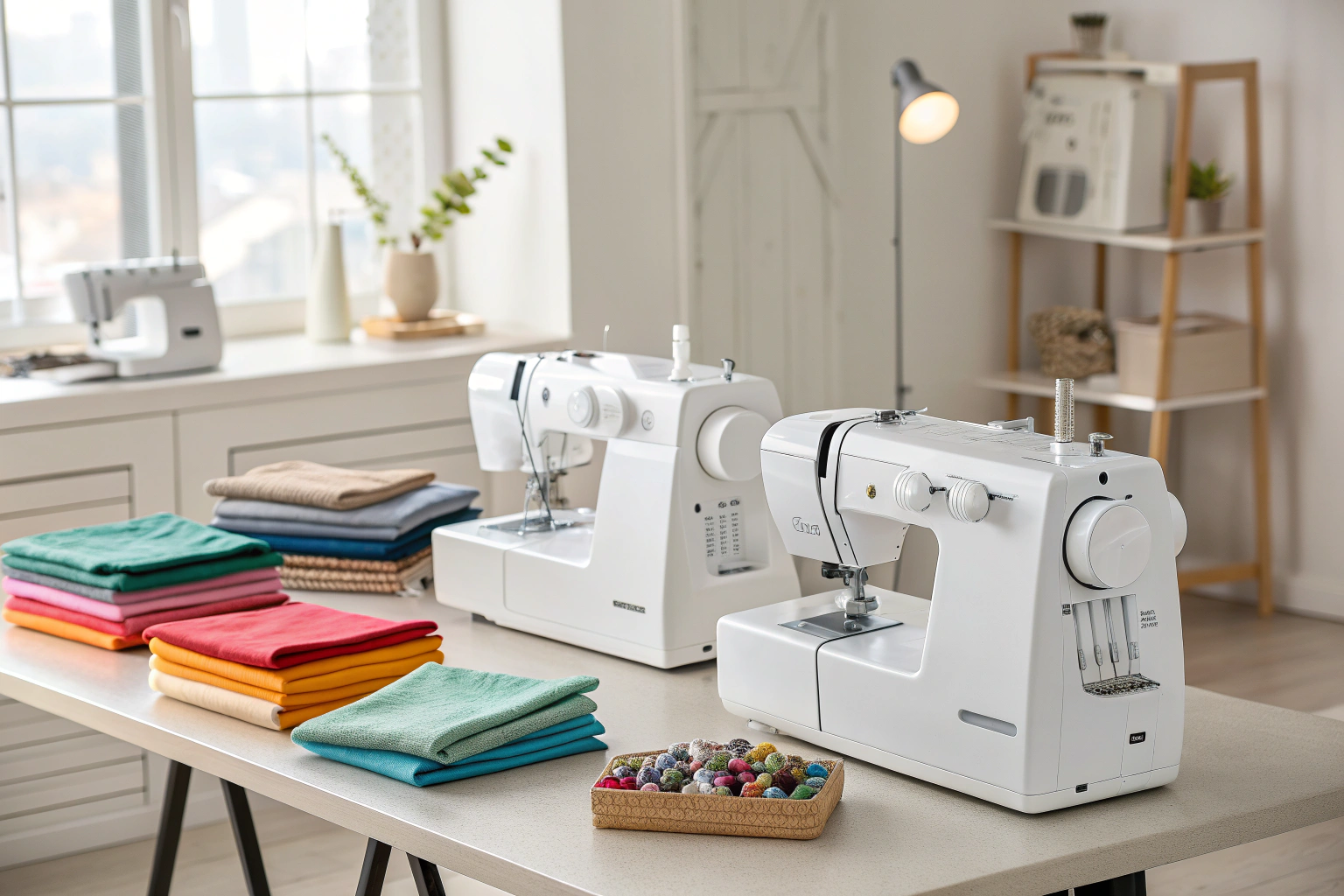
Learning how to choose your first sewing machine involves matching a machine’s features to your sewing goals, budget, and current skill level. For beginners, the best choice is a user-friendly model that reliably handles essential stitches without overwhelming you with complex, expensive functions. This approach helps you build confidence on a machine you understand, avoiding the common frustration of a device that is too complicated for your initial projects like simple repairs, crafts, or basic garments.
Key Benefits at a Glance
- Enjoy a Frustration-Free Start: An intuitive, easy-to-thread machine allows you to focus on learning sewing techniques instead of struggling with complicated controls.
- Avoid Unnecessary Costs: Beginner-friendly machines are more affordable and prevent you from paying for advanced computerized features you won’t use for years.
- Grow With Your Skills: A quality entry-level machine is versatile enough to handle basic repairs, pillows, simple garments, and craft projects as your abilities advance.
- Ensure Project Success: Look for a machine with a metal frame and consistent stitch quality, which is crucial for making your first projects look neat and professional.
- Invest in Reliability: Choosing a machine from a reputable, well-known brand ensures it is built to last and that support or parts are accessible if needed.
Purpose of this guide
This guide is for aspiring sewers who feel overwhelmed by the vast number of sewing machine options on the market. It solves the problem of not knowing where to begin by breaking down the decision-making process into simple, actionable steps. You will learn how to assess your needs, understand the core differences between mechanical and computerized models, and recognize the handful of stitches and features that are essential for success. This will help you avoid common mistakes, like overspending on an overly complex machine, and confidently select a reliable partner for your creative journey.
Introduction
Standing in the sewing machine aisle, surrounded by dozens of models with confusing features and price tags ranging from $99 to $3,000, I watched another student freeze with overwhelm. "I just want to learn to sew," she whispered, "but I don't know where to start." After fifteen years of teaching sewing and helping over 500 students choose their first machines, I've seen this scenario countless times.
The sewing machine you choose will either support your creative journey or frustrate you into quitting before you've truly begun. I've watched students struggle with inappropriate machines, abandon beautiful projects halfway through, and sadly, give up on sewing altogether because their equipment worked against them instead of with them.
This guide distills everything I've learned from teaching hundreds of beginner sewists, from the grandmother who finally tackled quilting at 70 to the college student who started a successful alteration business. You don't need the most expensive machine or the one with 500 built-in stitches. You need the right machine for your goals, your space, and your budget.
Let me share the exact framework I use when helping students navigate this important decision, so you can choose your first sewing machine with confidence instead of confusion.
Understanding my sewing goals and needs
Three months into my first teaching semester, Sarah brought her brand-new computerized machine to class, tears streaming down her face. She'd spent $800 on a machine loaded with embroidery functions and decorative stitches, but couldn't figure out how to sew a simple straight seam. Meanwhile, Janet was happily hemming curtains on her $200 mechanical machine, wondering why Sarah looked so frustrated.
This scene taught me that the most expensive sewing machine isn't necessarily the best choice. The right machine matches your actual sewing goals, not the ones you think you should have. Before you set foot in a store or browse online, you need to honestly assess what you want to create and how you plan to use your machine.
I've developed a series of questions that help my students cut through marketing hype and focus on their real needs. These aren't hypothetical scenarios – they're based on watching students succeed or struggle based on how well their sewing machine needs assessment aligned with their actual usage patterns.
The most successful first-time sewing machine buyer starts by understanding that Singer Corporation, Brother, and Janome all make excellent machines, but each excels in different areas. Your job isn't to find the "best" machine – it's to find the best machine for your specific sewing aspirations.
- What types of projects do I want to create most often?
- How frequently will I realistically use this machine?
- What’s my current skill level and learning goals?
- Do I have space constraints for machine size?
- Am I planning to sew for hobby or potential business?
- What fabrics will I work with most (cotton, knits, denim, etc.)?
- Do I need portability for classes or sewing groups?
How my occasional vs regular sewing habits impact my machine choice
Maria attended my weekend workshops twice a year and loved sewing, but realistically only used her machine for holiday gifts and occasional sewing projects. She nearly bought a $600 machine with dozens of features she'd never use. Instead, I guided her toward a reliable $250 Brother that perfectly met her limited but enthusiastic needs.
Contrast this with David, who started with regular sewing goals but bought the cheapest machine he could find. Within six months, he was frustrated with its learning curve limitations and sewing frequency demands. He ended up spending more money replacing it than if he'd bought a better machine initially.
Your honest assessment of sewing machine usage patterns determines whether you need a workhorse that can handle daily use or a reliable occasional-use machine. Regular sewing enthusiasts quickly outgrow basic machines, while occasional sewing hobbyists often waste money on unused professional features.
The key insight from my teaching studio: students who accurately predict their usage patterns stay happy with their machines longer. Those who either underestimate or overestimate their commitment often end up frustrated or feeling guilty about their purchase.
Types of projects I want to create from garments to quilts to home decor
In my studio, I keep different machines for different classes because garment sewing, quilting, and home decor projects each demand specific capabilities. Students always ask if one versatile sewing machine can handle everything, and while some machines come close, understanding your primary project type helps prioritize features.
Garment sewists need machines that excel with knits and require reliable stretch stitch capabilities. Quilting enthusiasts benefit from extension tables and precise straight-stitch performance. Home decor projects often involve heavy fabrics that demand powerful motors and wide stitch capabilities.
| Project Type | Essential Features | Fabric Requirements | Stitch Needs |
|---|---|---|---|
| Garment Sewing | Stretch stitches, buttonhole, free arm | Knits, wovens, lightweight | Straight, zigzag, overlock |
| Quilting | Extension table, walking foot capability, precise stitching | Cotton, batting layers | Straight, decorative, free motion |
| Home Decor | Heavy-duty motor, large throat space | Upholstery, canvas, heavy cotton | Straight, zigzag, decorative |
| Crafts/Alterations | Versatile stitch selection, precision | Mixed fabric types | Basic plus specialty stitches |
I tell students to be realistic about their primary focus. If you're passionate about quilting, choose a machine that excels at precise straight stitching even if it means fewer decorative options. If garment construction is your goal, prioritize stretch stitch reliability over embroidery capabilities.
The most satisfied students choose machines that excel at their primary interest while adequately handling secondary projects. Trying to optimize for everything often results in a machine that's mediocre at everything.
Do I already have a machine I'm replacing
When Lisa brought her grandmother's 1970s Singer Corporation machine to class, she was torn between repair and replacement. That conversation helped me develop questions I now ask every student with previous sewing machine experience: What did you love about your old machine? What drove you crazy? What projects did it handle well, and where did it struggle?
Students replacing a sewing machine have valuable insights that first-time buyers lack. Maybe your old machine skipped stitches on knits, struggled with thick seams, or had threading difficulties that frustrated you. These experiences guide your next purchase more effectively than any sales pitch.
I've learned that machine satisfaction often comes down to small details. One student loved everything about her old machine except the weak light. Another was happy with performance but hated the loud motor. These specific frustrations help identify priorities for upgrading machines.
The key is distinguishing between problems caused by poor maintenance or user error versus genuine sewing machine limitations. Sometimes a thorough cleaning and tune-up transforms a machine's performance, while other times upgrading is the only solution for evolving needs.
Essential features I look for in a first machine
After watching hundreds of students navigate their first sewing machine purchases, I've developed strong opinions about what matters and what doesn't. Marketing materials emphasize flashy features like hundreds of stitch options and computerized displays, but I prioritize mechanical reliability and essential sewing machine features that students actually use.
To choose your first sewing machine, prioritize ease of use with simple dials, a drop-in bobbin, and automatic needle threader. Look for essential stitches like straight, zigzag, and buttonhole, plus adjustable length and width up to 4-6mm. Opt for durable mechanical models from brands like Brother, Singer, or Janome in the $150-300 range. For detailed comparisons, explore machine features. Test durability on various fabrics and consider a free arm for cuffs. Reliable options include the Singer 4423 with 1100 stitches per minute or Brother XM2701 with 27 stitches. See beginner reviews for hands-on insights.
The most important beginner sewing machine features aren't glamorous: a strong motor that maintains consistent speed through thick fabrics, reliable stitch formation that doesn't skip or tangle, and intuitive controls that don't require a manual consultation for basic adjustments.
I've seen students abandon beautiful projects because their sewing machine couldn't handle the fabric weight or maintain consistent stitch quality. Motor strength and mechanical precision matter more than decorative stitch variety for building confidence and completing projects successfully.
Non negotiable features I insist every machine should have
When Jennifer's budget machine couldn't create a proper buttonhole stitch, she hand-sewed twenty buttons on a dress that should have taken two hours to complete. This experience reinforced my conviction about must-have sewing functions that aren't optional for any sewing machine.
Every sewing machine I recommend must handle basic stitch types with adjustable length and width. The buttonhole feature might seem advanced, but it's essential for most garment projects and home sewing. Students who compromise on these basics always regret it.
- Straight stitch with adjustable length (1-6mm range minimum)
- Zigzag stitch with adjustable width (up to 5mm minimum)
- One-step buttonhole or 4-step manual buttonhole
- Free arm for sleeves and cuffs
- Needle down position for pivoting
- Droppable feed dogs for free motion work
- Reverse stitch capability for securing seams
- Adjustable presser foot pressure
- Standard needle system (15×1 or 130/705H)
The feed dog system must drop for free-motion work, and the needle should stop in the down position for precise pivoting. These might seem like advanced features, but they're fundamental for proper sewing technique and project success.
Standard needle compatibility ensures you can always find replacements and specialty needles. Proprietary needle systems limit your options and often cost more, creating ongoing frustration for students who discover this too late.
Nice to have features I find worth considering
After fifteen years of teaching, I can distinguish between convenience features that genuinely improve the sewing experience and marketing gimmicks that add cost without value. An automatic needle threader might seem frivolous until you watch a student with arthritis struggle for ten minutes to thread her machine.
Some advanced sewing features earn their place through practical benefit. Speed control helps nervous beginners maintain precision, while LED lighting makes detail work easier for everyone. However, hundreds of decorative stitches rarely get used beyond initial experimentation.
- Automatic needle threader (huge time-saver, especially for vision challenges)
- Speed control slider (essential for learning precision)
- Automatic thread cutter (convenient but not critical)
- LED lighting (much better than traditional bulbs)
- Knee lifter compatibility (hands-free presser foot control)
- Multiple spool pins (for twin needle work)
- Extension table included (valuable for quilting)
- Alphabet stitches (fun but limited practical use)
- Embroidery capability (only if you’ll actually use it)
The automatic thread cutter saved one of my students with severe arthritis from abandoning sewing entirely. For her, this convenience feature transformed from luxury to necessity. However, most students rarely use alphabet stitches beyond labeling a few projects.
Embroidery capabilities add significant cost and complexity. Unless you're specifically interested in machine embroidery, these features often go unused while taking up valuable space and adding potential mechanical problems.
How I navigate machine types and brands
The sewing machine landscape includes dozens of brands with hundreds of models, creating overwhelming choices for new sewists. My teaching studio experience with Brother, Singer Corporation, Janome, Pfaff, and Bernina machines under heavy student use provides real-world insights into reliability and durability that marketing materials can't convey.
Beginner-friendly sewing machines share certain characteristics regardless of brand: intuitive controls, clear instruction manuals, and responsive customer service. However, each major brand has developed distinct strengths that appeal to different user preferences and sewing styles.
I've observed consistent patterns in how different mechanical sewing machines versus computerized sewing machines perform under classroom stress. Students drop them, spill coffee on them, thread them incorrectly, and generally test their limits in ways that reveal true build quality and design philosophy.
Mechanical vs computerized what I've learned about their pros and cons
Tom was terrified of anything electronic but needed a reliable sewing machine for his upholstery business. Meanwhile, Rachel embraced technology and loved the precision of computerized stitch settings. Both students succeeded because they chose machine types that matched their comfort levels and working styles.
Mechanical sewing machines use physical dials and levers for all adjustments, making them intuitive for users who prefer hands-on control. Computerized sewing machines offer precise digital settings and often include helpful features like automatic buttonhole sizing, but require comfort with electronic interfaces.
| Aspect | Mechanical Machines | Computerized Machines |
|---|---|---|
| Initial Cost | $150-500 typical range | $300-1500+ typical range |
| Durability | Fewer electronic parts to fail | More complex, potential tech issues |
| Ease of Use | Simple dials and levers | Digital displays, can be overwhelming |
| Maintenance | User-serviceable, local repair | May need specialized tech support |
| Stitch Selection | Limited but adequate selection | Extensive stitch libraries available |
| Precision | Manual adjustments required | Consistent digital settings |
| Learning Curve | Intuitive mechanical controls | Requires comfort with technology |
In my experience, students over 60 often prefer mechanical machines for their straightforward operation, while younger students appreciate the precision and features of computerized models. However, I've seen plenty of exceptions based on individual preferences and technical comfort levels.
The most important factor isn't the technology type but how well it matches your working style and maintenance preferences. Mechanical machines are generally more forgiving of neglect, while computerized models reward careful maintenance with superior performance.
Reliable brands I recommend for beginners my honest assessment
My studio machines endure abuse that would horrify home sewists: hundreds of students threading them incorrectly, jamming them with inappropriate fabrics, and generally testing every component. This harsh environment reveals which brands truly deliver on their reliability promises.
“The Singer Heavy Duty 4423 takes the crown for regular use, offering reliability, performance, and ease of use for beginners and seasoned sewists alike.”
— Glory Allan, 2024
Source link
Brother consistently delivers excellent value with reliable electronics and intuitive design. Their customer service responds quickly to questions, and their dealer network ensures local support in most areas. Janome machines cost more but justify the premium with superior build quality and smooth operation that lasts decades.
- Brother: Excellent value, reliable electronics, good customer service, wide dealer network
- Janome: Superior build quality, smooth operation, higher price but worth it, excellent longevity
- Singer: Mixed quality depending on model, avoid ultra-budget models, some excellent mid-range options
- Juki: Professional-grade construction, powerful motors, limited decorative features, industrial heritage
- Bernina: Premium quality and price, exceptional precision, extensive dealer support, Swiss engineering
- Pfaff: Innovative features, good build quality, limited dealer network, higher learning curve
Singer Corporation presents a mixed picture: their budget models often disappoint, but mid-range Singer machines like the Heavy Duty series perform excellently. Juki brings industrial-grade construction to home sewing, while Bernina represents the premium tier with Swiss precision and comprehensive dealer support.
Avoid brands with limited dealer networks or poor customer service reputations. The most reliable machine becomes frustrating if you can't get parts, service, or technical support when needed.
Setting a realistic budget what I tell my students to expect at different price points
Money conversations make students uncomfortable, but budget reality shapes every sewing machine decision. I've watched students stretch beyond their means for machines they couldn't afford to maintain, and others buy cheap machines that frustrated them into quitting sewing entirely.
My philosophy emphasizes value for money over pure cost minimization. The affordable sewing machines that serve students well for years cost more initially than rock-bottom options, but deliver better price performance through reliability and capabilities that grow with developing skills.
Sewing machine price ranges reflect genuine differences in build quality, motor strength, and feature sets. Understanding what each budget level provides helps students make informed decisions rather than hoping for bargains that don't exist.
Entry level options $150 300 what I've observed at this price point
“These machines are between $150 and $300 dollars.”
— Madam Sew, 2024
Source link
The entry-level sewing machines category includes both surprising successes and disappointing failures. Brother XM2701 and Singer Corporation Start 1304 represent the positive end of this range, offering basic reliability for light sewing projects and learning fundamental techniques.
However, machines below $150 often create more frustration than joy. Plastic gears, weak motors, and poor stitch quality plague ultra-budget sewing machines. Students who buy these machines to "try sewing" often conclude that sewing is difficult when the problem is inadequate equipment.
The sweet spot in this price range targets students who genuinely plan occasional use: holiday gifts, simple alterations, or exploring sewing as a potential hobby. These machines handle cotton fabrics and basic projects adequately but struggle with challenging materials or intensive use.
Affordable beginner machines in this range work best for students with realistic expectations who understand the limitations. If you're planning serious garment construction or regular sewing, invest in the next price tier for better long-term satisfaction.
Mid range options $300 700 why I often recommend this sweet spot
Most successful students purchase mid-range sewing machines because this price range delivers the best value proposition for developing sewists. Brother CS7000X, Janome 2212, and Juki HZL-F300 exemplify machines that support skill development without overwhelming beginners with complexity.
These value sewing machines feature stronger motors, better stitch quality, and more durable construction than entry-level options. Students can tackle challenging fabrics, complete complex projects, and develop advanced techniques without equipment limitations.
Intermediate machines in this range often include convenience features like automatic buttonhole sizing, improved lighting, and expanded stitch selections that genuinely enhance the sewing experience. Unlike budget machines where features feel gimmicky, mid-range additions usually prove useful.
The longevity of mid-range investments impresses me most. Students who buy quality machines in this price range often use them for decades, while those who start with cheaper machines typically upgrade within two years, spending more money overall.
Investment options $700 when I advise beginners to splurge
High-end sewing machines make sense for specific beginner situations: students with previous experience who know they'll sew regularly, those planning professional quality work, or sewists with physical limitations that benefit from premium convenience features.
Bernina, Pfaff, and high-end Janome models provide exceptional build quality, extensive warranty coverage, and dealer support that justifies their premium price. These machines handle any home sewing project with precision and reliability that lasts decades.
However, most beginners shouldn't start with investment machines. The learning curve benefits more from understanding basic sewing principles than from premium features that won't be appreciated until skills develop. Professional quality machines often intimidate new sewists with their complexity.
The exception involves students who know they'll sew professionally or extensively. If you're starting a business, planning intensive quilting, or have specific technical requirements, buying quality initially saves money and frustration compared to upgrading later.
Where I shop online vs local dealers
The sewing machine shopping experience significantly impacts long-term satisfaction, especially for beginners who need ongoing support and guidance. I've observed dramatically different outcomes between students who bought online versus those who developed relationships with local sewing stores.
Buying sewing machines online offers price advantages and convenience, but eliminates hands-on testing and personal support. Local sewing dealers provide higher price points but include services that often justify the premium through education, maintenance, and community connections.
The choice between online and local purchasing depends on your experience level, support needs, and local dealer availability. However, the decision impacts more than initial cost – it shapes your entire sewing journey through the resources and relationships you develop.
The value I've found in local dealerships
Maria's story illustrates why I advocate for local dealerships when possible. Six months after buying her Brother machine locally, she brought it in because stitches were skipping. The dealer discovered she'd been using the wrong needle type, replaced it free, and spent twenty minutes teaching her needle selection principles.
Local sewing dealers provide education that extends far beyond the initial sale. They offer sewing classes, maintenance services, and troubleshooting expertise that transforms sewing machine ownership from isolated struggle into supported learning experience.
The relationship aspect matters most for beginners. Dealers who see you regularly learn your sewing style, project preferences, and skill development. They can recommend accessories, suggest techniques, and provide personalized guidance that online retailers cannot match.
In-person support becomes invaluable when problems arise. Instead of navigating phone trees or shipping machines for warranty service, local dealers often provide immediate diagnosis and solutions. This support prevents minor issues from derailing sewing projects and enthusiasm.
My tips for navigating online purchases
Despite my preference for local dealers, online sewing machine shopping can work successfully with proper preparation and realistic expectations. Students who research thoroughly and understand what they're buying often find excellent deals from reputable online retailers.
The key to successful online purchasing involves verifying seller credentials, understanding warranty terms, and having realistic expectations about support levels. Authorized dealers provide full manufacturer warranties, while unauthorized sellers may offer limited coverage or no warranty at all.
- Is the full manufacturer warranty included and transferable?
- What’s the return policy timeframe and who pays return shipping?
- Are all standard accessories included (bobbins, presser feet, manual)?
- Is the seller an authorized dealer for warranty service?
- What’s included for setup support or initial troubleshooting?
- Are there hidden fees for shipping, handling, or packaging?
- Can you verify the model number matches current manufacturer specs?
Research seller reputations through reviews and Better Business Bureau ratings. Established retailers like Amazon, Walmart, and specialty sewing websites often provide reliable service, but verify that they're authorized dealers for warranty coverage.
Consider the total cost including shipping, taxes, and potential return expenses. Sometimes the "deal" disappears when you factor in return shipping costs for a machine that doesn't meet expectations or arrives damaged.
How I test drive machines before buying what you should look for
Hands-on testing reveals sewing machine characteristics that specifications cannot convey: how the motor sounds under load, whether stitch quality remains consistent across different fabrics, and how intuitive the controls feel during actual sewing. I insist that students test machines thoroughly before purchasing.
My evaluating sewing machines protocol has evolved through observing hundreds of student purchases. Students who skip testing often discover compatibility issues after the return period expires, while those who follow systematic testing procedures rarely experience buyer's remorse.
Sewing machine test drive sessions should simulate your actual sewing conditions as closely as possible. Bring fabric samples that match your intended projects, test the features you'll use regularly, and evaluate the machine's performance under realistic conditions rather than artificial demonstrations.
My in store testing checklist
The systematic testing approach I teach students ensures thorough machine evaluation within typical dealer time constraints. This checklist covers essential functions while respecting dealer policies and other customers' needs for access to display models.
Bring fabric samples that represent your intended projects: cotton for quilting, knits for garments, or canvas for home decor. Testing on appropriate fabrics reveals how the machine handles materials you'll actually use rather than the lightweight demonstration fabric dealers typically provide.
- Bring fabric samples matching your intended projects
- Test threading the machine yourself, including bobbin winding
- Sew straight lines on different fabric weights
- Try the buttonhole feature on appropriate fabric
- Test stitch length and width adjustments while sewing
- Listen for unusual noises or vibrations during operation
- Evaluate the brightness and positioning of work lighting
- Check ease of presser foot changes and needle insertion
- Test reverse stitching and needle up/down positioning
Threading the machine yourself reveals design philosophy: are the threading guides clear and logical? Does the bobbin wind smoothly and evenly? Can you change the needle without tools or wrestling with tight spaces?
Stitch quality assessment requires sewing actual seams rather than just running the machine empty. Look for consistent stitch formation, proper tension balance, and smooth fabric feeding. Machine noise levels matter if you'll sew in shared living spaces or have noise sensitivity.
Red flags I watch for when testing machines
Experience has taught me to recognize warning signs that indicate future problems or poor dealer practices. Students who ignore these red flags often regret their purchases when problems emerge after the return period expires.
Performance issues during testing predict ongoing frustration. If the machine struggles during a brief demonstration, imagine the problems during intensive sewing sessions. Similarly, dealer behavior during testing reveals their approach to customer service and support.
- Excessive noise, grinding sounds, or unusual vibrations during operation
- Inconsistent stitch formation or tension issues on test fabrics
- Difficulty threading or frequent thread breakage during demonstration
- Pushy sales tactics or reluctance to let you test thoroughly
- Vague warranty terms or unwillingness to explain coverage details
- Machine feels flimsy, plastic parts seem brittle or poorly fitted
- Dealer can’t demonstrate features or seems unfamiliar with the model
- Significantly lower price than other dealers without clear explanation
Trust your instincts about build quality. Machines that feel substantial and well-constructed usually perform better than those with flimsy plastic components or loose-fitting parts. Premium machines should feel solid and precise in operation.
Dealer knowledge and willingness to support thorough testing indicate their commitment to customer satisfaction. Dealers who rush you through demonstrations or can't answer technical questions probably won't provide good post-purchase support either.
Maintaining my investment how I care for my machines
Proper sewing machine maintenance extends equipment life dramatically while preventing the frustrations that drive students away from sewing. My personal machines, some over twenty years old, still perform like new because I follow consistent maintenance routines that take minutes but save hundreds in repairs.
Sewing machine care isn't complicated, but it requires consistency and attention to detail. Students who establish good maintenance habits from the beginning rarely experience major problems, while those who neglect basic cleaning sewing machine tasks often face expensive repairs and project delays.
I learned the value of preventive maintenance when my neglected studio machine required a $200 repair that could have been prevented with $5 worth of oil and fifteen minutes of cleaning. This expensive lesson now saves my students from similar experiences through education and accountability.
Essential maintenance I teach all my students
Every new student receives the same maintenance lecture because I've seen too many beautiful machines ruined by neglect. The routine I teach takes less time than threading the machine but prevents most common problems that send machines to repair shops.
Cleaning bobbin area after every few hours of sewing prevents lint buildup that causes thread tension problems and stitch quality issues. Changing needles regularly ensures clean stitch formation and prevents fabric damage from dull or bent needle points.
- DO: Clean lint from bobbin area after every 3-4 hours of sewing
- DO: Change needles every 8-10 hours of sewing or when switching fabric types
- DO: Oil machine according to manual schedule (usually every 40 hours)
- DON’T: Force stuck parts – stop and troubleshoot the cause
- DO: Cover machine when not in use to prevent dust accumulation
- DON’T: Use compressed air to blow lint deeper into the machine
- DO: Keep a maintenance log to track needle changes and oiling
- DON’T: Ignore unusual noises – address problems before they worsen
Oiling sewing machine components according to manufacturer schedules keeps internal mechanisms running smoothly. However, over-oiling causes problems by attracting lint and dust, so follow manual specifications exactly rather than assuming more oil is better.
The maintenance log system helps students track needle changes, oiling schedules, and unusual occurrences. This record proves invaluable for warranty claims and helps identify patterns that predict problems before they become serious.
Making the final decision my expert checklist
After guiding hundreds of students through sewing machine selections, I've refined a decision framework that eliminates buyer's remorse and ensures long-term satisfaction. This sewing machine checklist synthesizes all the factors we've discussed into actionable steps for confident purchasing.
Sarah used this framework to choose between three machines she'd narrowed down after extensive research. The systematic approach revealed that her second choice actually met her needs better than her initial favorite, saving her from a purchase that looked good on paper but wouldn't have served her actual sewing goals.
The choosing the right machine process requires balancing multiple factors: budget, features, brand reputation, dealer support, and personal preferences. This sewing machine decision framework ensures you consider each element appropriately rather than being swayed by single factors like price or feature lists.
When I recommend waiting and when I say buy now
Timing sewing machine purchase decisions can save significant money or prevent missed opportunities. I've learned to recognize when students should wait for better deals versus when immediate purchase makes sense despite higher costs.
Sewing machine sales follow predictable patterns: major discounts during Black Friday, January clearances, and pre-back-to-school promotions. New model releases in spring often trigger seasonal discounts on previous year models, creating excellent value opportunities for patient shoppers.
However, waiting for sales makes sense only if you're not actively sewing. Students who delay purchases while eager to start projects often lose momentum and never begin sewing. Sometimes paying full price for immediate satisfaction beats waiting months for marginal savings.
The decision depends on your urgency, budget flexibility, and local dealer inventory. If you find the right machine at a fair price and you're ready to start sewing, don't let perfect become the enemy of good by waiting indefinitely for better deals.
Moving forward with confidence my final advice
Watching students successfully choose their first sewing machines and begin rewarding sewing journeys never gets old. The excitement in their eyes when they complete their first project on equipment that supports rather than frustrates their efforts reminds me why I'm passionate about helping people navigate this important decision.
Essential sewing machine accessories to purchase alongside your machine include extra bobbins, a seam ripper, good fabric scissors, and basic presser feet for your intended projects. These tools complete your sewing setup and prevent frustrating delays when you're eager to start your first project.
Remember that the "perfect" sewing machine doesn't exist – only the right machine for your current needs and goals. Your sewing interests and skills will evolve, and your next machine purchase will reflect that growth. For now, focus on finding reliable equipment that supports your beginning sewing journey with confidence and joy.
Trust the research and testing you've done, choose from reputable dealers who provide ongoing support, and most importantly, start sewing. The best machine is the one that gets you creating, learning, and discovering the satisfaction that comes from making beautiful things with your own hands.
Frequently Asked Questions
Choosing your first sewing machine starts with assessing your needs, such as the types of projects you’ll tackle, like learning how to measure waist for men to sew custom pants. Consider beginner-friendly models with essential features like adjustable stitch length and easy threading. Research reviews and test machines in person to ensure they match your skill level and budget.
As a beginner, opt for a mechanical sewing machine that’s straightforward and reliable for basic tasks, including projects involving how to measure waist men for tailored clothing. These machines are easier to learn on compared to computerized ones and often come with essential stitches. Look for models from reputable brands like Brother or Singer to build your skills confidently.
A sewing machine should have at least adjustable stitch length and width, multiple built-in stitches, and a free arm for versatility in projects like those requiring how to measure waist for men. Include automatic needle threading and a drop-in bobbin for ease of use as you advance. These features allow the machine to adapt as your sewing skills improve over time.
Expect to spend between $100 and $300 on a quality beginner sewing machine that offers durability and essential functions for tasks like learning how to measure waist men. This range provides good value without overwhelming features, ensuring reliability for starters. Investing a bit more can yield a machine that lasts longer and supports skill growth.
Mechanical sewing machines use manual dials for settings and are simpler for beginners working on basic projects, such as those involving how to measure waist for men. Computerized models offer automated features like programmable stitches and LCD screens for more precision and variety. While mechanical ones are more affordable, computerized versions provide advanced options as you progress.
The four key points are your budget, the machine’s features, its ease of use, and the types of projects you’ll do, like mastering how to measure waist men for custom garments. Ensure it has essential stitches and accessories. Also, consider warranty and brand reputation for long-term satisfaction.
Buying a new sewing machine is often better for beginners as it comes with warranties and modern features suitable for learning tasks like how to measure waist for men. Used machines can be cost-effective but may require maintenance or lack support. If choosing used, inspect it thoroughly or buy from a reputable dealer.