
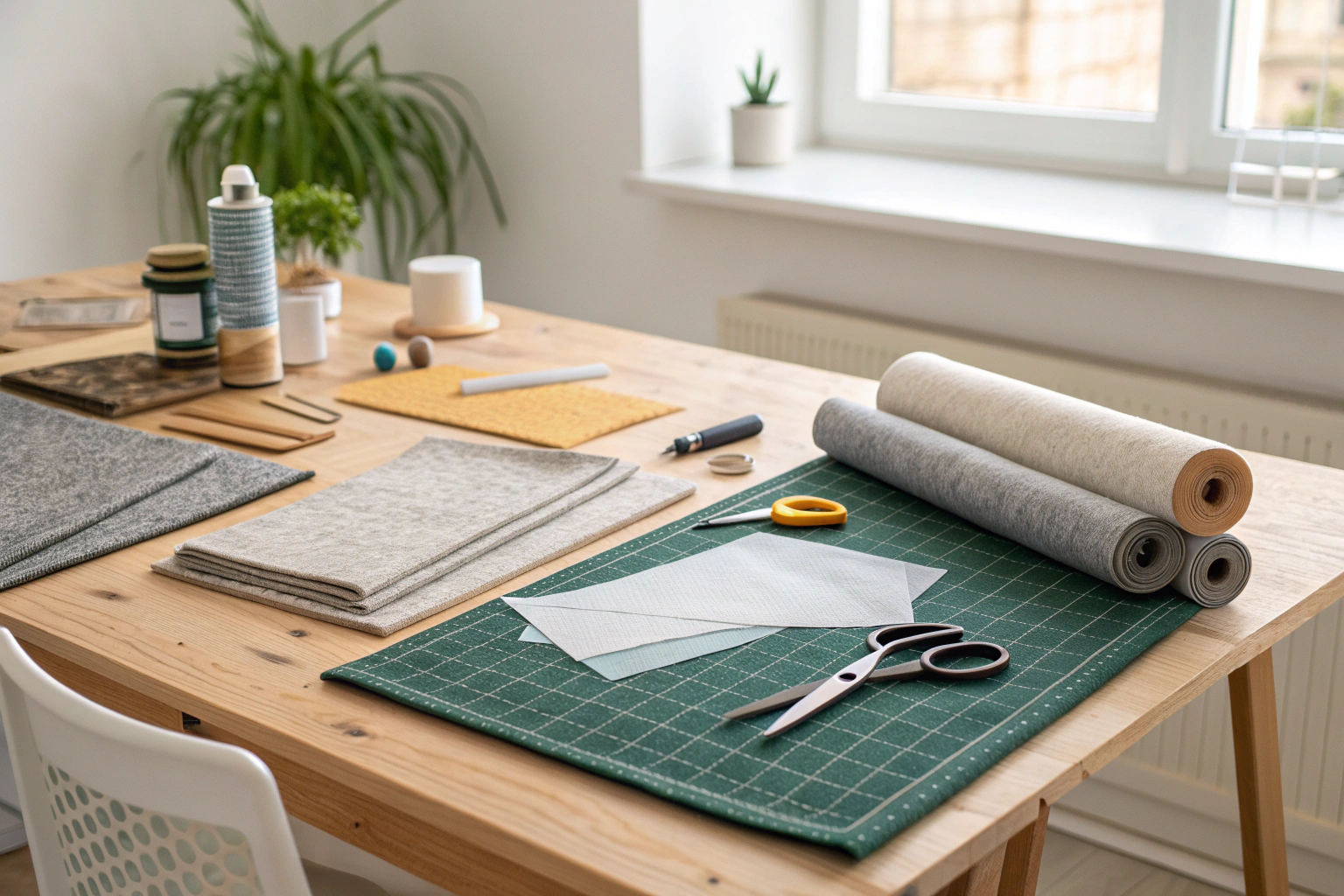
How to cut felt involves using specific tools and techniques to achieve clean, precise shapes without fraying the fabric. The best method depends on the felt’s thickness and the complexity of your design, as standard scissors can stretch or create fuzzy edges. Choosing the right tool, like a rotary cutter or detail scissors, is key to getting professional-looking results for your craft projects, preventing waste and frustration.
Key Benefits at a Glance
- Cleaner Edges: Properly cutting felt prevents the frustrating fraying and stretching that dull scissors or incorrect techniques can cause.
- Faster Crafting: Using a rotary cutter and mat for straight lines or a die-cutter for complex shapes saves significant time compared to trimming by hand.
- Improved Accuracy: Achieve precise, intricate shapes and sharp corners that are difficult to get with standard scissors, making your final project look more professional.
- Reduced Waste: Accurate first-time cuts mean you waste less fabric and avoid re-doing pieces, saving money and materials on your projects.
- Easier on Your Hands: Using sharp, specialized tools like rotary cutters or spring-action scissors reduces hand strain, especially when cutting multiple pieces or thick felt.
Purpose of this guide
This guide is for crafters, sewers, and DIY enthusiasts who want to master cutting felt for any project, from simple shapes to intricate designs. It solves the common problem of getting fuzzy, uneven edges that can ruin the look of your work. Here, you will learn step-by-step techniques for using different tools like detail scissors and rotary cutters, discover common mistakes to avoid (such as dragging your scissors), and find out how to achieve consistently clean and professional results every time.
Introduction
After fifteen years of working with felt in countless projects—from delicate appliqués to sturdy garments—I've learned that proper cutting technique makes the difference between amateur and professional results. Whether you're creating your first felt ornament or tackling an intricate costume design, the way you cut your felt determines the quality, durability, and overall appearance of your finished piece.
In this comprehensive guide, I'll share everything I've discovered about felt cutting techniques, from the basic methods that every beginner should master to the advanced approaches that have transformed my most challenging projects. You'll learn not just how to cut felt, but when to use each technique for perfect results every time.
The journey from struggling with frayed edges and uneven shapes to creating crisp, professional cuts didn't happen overnight. Through trial, error, and countless projects, I've developed a systematic approach that takes the guesswork out of felt cutting. By the end of this guide, you'll have the knowledge and confidence to tackle any felt project with the precision of an experienced craft techniques professional.
Understanding Different Types of Felt
Not all felt is created equal, and understanding the differences between wool felt, acrylic felt, and other varieties is crucial for cutting success. The fiber composition directly impacts how the material behaves under your scissors, how cleanly it cuts, and what techniques will work best for your project.
Wool felt, made from natural fibers, offers the smoothest cutting experience. Its dense, stable structure holds its shape beautifully and rarely stretches during cutting. I've found that 100% wool felt gives the cleanest edges with minimal effort, making it my go-to choice for precision work like appliqués and detailed ornaments.
Synthetic felt varieties, including craft felt and acrylic options, present different challenges and advantages. While they're more affordable and come in vibrant colors, they can be trickier to cut cleanly. The synthetic fibers tend to catch on scissors more than wool, and cheaper varieties may pill or fray at the edges.
| Felt Type | Fiber Content | Cutting Difficulty | Best Projects |
|---|---|---|---|
| Wool Felt | 100% Wool | Easy | Precision crafts, appliqués |
| Acrylic Felt | 100% Synthetic | Medium | Kids crafts, decorations |
| Wool Blend | Wool/Synthetic Mix | Easy-Medium | Garments, accessories |
| Stiff Craft Felt | Synthetic | Hard | Structural projects |
Thickness plays an equally important role in cutting technique selection. Soft felt in 1-2mm thickness cuts easily with regular fabric scissors, while stiff felt over 3mm may require rotary cutters or specialized techniques. I learned this lesson the hard way when attempting to cut 5mm architectural felt with embroidery scissors—the results were disappointing and my hands were sore for days.
Properties That Affect Cutting
The physical characteristics of your felt directly influence which cutting methods will succeed. Felt thickness ranges from paper-thin costume felt to robust 6mm industrial varieties, and each requires different tools and approaches. When I evaluate felt for a new project, I always test these key properties first.
Felt density varies significantly between manufacturers and fiber types. Dense, tightly compressed felt cuts with razor-sharp precision, while loosely compressed varieties may compress under scissor pressure, leading to uneven cuts. I've found that gently squeezing the felt between my fingers gives a good indication of its density and stability.
Fiber content affects not only cutting difficulty but also how the edges behave after cutting. Natural wool fibers tend to felt together slightly when cut, creating self-sealing edges that resist fraying. Synthetic fibers, particularly in lower-quality felts, may separate and fray if not cut properly or sealed afterward.
The grain direction in pressed felt can impact cutting results, though it's less pronounced than in woven fabrics. I've noticed that cuts made parallel to the manufacturing direction tend to be slightly cleaner than cross-grain cuts, particularly in machine-made synthetic felts.
- Test felt thickness by pinching between fingers
- Check for consistent density across the sheet
- Look for smooth, even texture without lumps
- Verify edges don’t fray when handled
Essential Tools for Cutting Felt
Building the right toolkit transformed my felt cutting from frustrating guesswork to confident precision. While you don't need every specialized tool immediately, investing in quality basics will dramatically improve your results from day one. My current toolkit evolved over years of discovering what truly makes a difference versus what's merely convenient.
Sharp scissors remain the foundation of felt cutting, but not just any scissors will do. Fabric scissors with long, smooth blades create the cleanest cuts, while short craft scissors often drag and tear the fibers. I learned this distinction early when a client project demanded perfectly smooth edges—my craft scissors simply couldn't deliver the quality needed.
A rotary cutter paired with a cutting mat opens up possibilities for straight lines, strips, and geometric shapes that scissors alone cannot achieve. This combination excels for projects requiring multiple identical pieces or perfectly straight edges. The precision possible with a rotary cutter still amazes me, especially for cutting long strips for garland projects.
Fabric markers complete the essential trio, allowing accurate pattern transfer and cutting guides. The right marker disappears when you want it to and stays visible when you need it—choosing the wrong type has led to permanently marked projects and invisible guidelines when I needed them most.
| Tool | Essential Level | Cost Range | Primary Use |
|---|---|---|---|
| Fabric Scissors | Must-Have | $15-50 | General cutting |
| Rotary Cutter | Must-Have | $10-30 | Straight lines, strips |
| Cutting Mat | Must-Have | $20-60 | Surface protection |
| Embroidery Scissors | Nice-to-Have | $8-25 | Detail work |
| Pinking Shears | Optional | $12-35 | Decorative edges |
“In March 2024, Joann surveyed more than 3,000 customers and found that 72% reported that using sharper scissors or rotary cutters significantly improved the quality of their fabric and felt cuts in crafting projects.”
— Joann Fabric and Craft Stores, March 2024
Scissors Selection and Care
The relationship between sharp scissors and clean felt cuts cannot be overstated. Dull blades don't just make cutting harder—they actually damage the felt fibers, creating ragged edges that no amount of trimming can perfect. I've seen too many beautiful projects compromised by scissors that should have been sharpened months earlier.
Fabric scissors with 8-10 inch blades provide the ideal balance of control and cutting power for most felt projects. The longer blades create smoother cuts by maintaining contact with more material, reducing the choppy appearance that shorter blades can create. Embroidery scissors, with their precise 4-5 inch pointed blades, excel for detail work and intricate cuts where larger scissors would be unwieldy.
Felt requires sharp, dedicated shears—never use paper scissors: Best Scissors for Cutting Fabric.
Pinking shears deserve special mention for their ability to create decorative edges while simultaneously preventing fraying. While not essential for every crafter, they've saved countless projects where I needed finished edges without additional sewing or sealing. The zigzag cut disrupts the fiber structure just enough to prevent unraveling while adding visual interest.
Proper care extends scissor life dramatically and maintains cutting quality. I learned this lesson expensively when my first pair of professional scissors lost their edge after cutting through a pin I hadn't noticed. Now, my scissors have their own dedicated storage and never touch anything but fabric.
- DO keep scissors sharp with regular professional sharpening
- DO store scissors in protective sheaths or cases
- DO use fabric scissors only for fabric, never paper
- DON’T drop scissors as this can misalign blades
- DON’T cut through pins or metal objects
- DON’T leave scissors open when not in use
Tools for Marking on Felt
Choosing the right marking tool can make the difference between invisible guidelines when you need them and permanent marks where you don't want them. Fabric markers come in several varieties, each with specific advantages for different felt types and project requirements.
Water-soluble markers work beautifully on most felts, disappearing completely with a damp cloth. However, I've learned to test them on scraps first, as some synthetic felts can be water-resistant, leaving marks that won't budge. Air-soluble markers fade naturally over time, perfect for projects where you can't introduce moisture.
Heat-erasable markers disappear with the touch of an iron, making them ideal for projects that will be pressed or steamed during construction. Templates often require transfer techniques that benefit from these specialized markers, particularly when working with freezer paper methods where heat is already part of the process.
For dark felts where light-colored marks won't show, white fabric pencils or chalk markers become essential. I keep several colors of marking tools in my kit specifically for this reason—nothing is more frustrating than trying to see blue marks on navy felt or white marks on cream material.
Basic Felt Cutting Techniques
Every expert was once a beginner, and the fundamental techniques I'm about to share remain relevant even in my most complex projects today. These basic felt techniques form the foundation for everything else you'll learn, and mastering them thoroughly will serve you throughout your crafting journey.
The beauty of starting with basic methods lies not just in their accessibility, but in their reliability. When I'm working on a high-stakes commission or teaching a workshop, I often return to these tried-and-true approaches because they deliver consistent results with minimal risk of error.
Building skills progressively prevents the frustration of attempting advanced techniques before mastering the fundamentals. I've seen many crafters struggle with complex projects simply because they skipped over basic skill development. These foundational methods will give you the confidence and muscle memory needed for more challenging work.
- Master the trace and cut method with templates
- Practice freehand cutting on simple shapes
- Learn proper pinning technique for securing patterns
- Develop taping skills for curved shapes
- Build speed with cut-as-you-go method
The Trace and Cut Method
The trace and cut approach remains my most-used technique for precise shapes and repeatable patterns. This method combines the accuracy of templates with the flexibility of hand cutting, making it perfect for projects requiring multiple identical pieces or complex curves.
Starting with a well-made template sets the stage for success. I prefer sturdy cardboard or template plastic that won't shift during tracing. Paper templates work for single-use projects, but they can tear or move during tracing, leading to inaccurate cuts. The investment in quality template material pays dividends in consistent results.
The tracing process itself requires attention to detail. Holding the template firmly with your non-dominant hand while tracing prevents shifting that creates wavy or distorted lines. I've learned to trace in one continuous motion when possible, lifting the marker only when absolutely necessary to maintain smooth, even lines.
Cutting technique makes the final difference in edge quality. Cutting just inside the traced line compensates for marker width and ensures your finished piece matches the original template size. This small adjustment, learned through years of trial and error, consistently produces professional-looking results.
- Place template on felt with grain direction aligned
- Trace around template with fabric marker
- Remove template carefully to avoid smudging
- Cut just inside the marked line for clean edges
- Check cut piece against original template
Freehand Cutting Tips
Developing freehand cutting skills opens creative possibilities that templates cannot provide. While it requires more practice than template-based methods, the ability to cut organic patterns and custom shapes directly from your imagination proves invaluable for original design work.
Building confidence starts with simple shapes and forgiving projects. I recommend beginning with basic geometric forms—circles, ovals, leaves—where slight imperfections add character rather than detract from the design. Children's projects often benefit from the organic, handmade quality that freehand cutting naturally provides.
Hand-cut precision improves with practice and proper technique. Supporting the felt with your non-cutting hand, maintaining steady scissor movement, and cutting in smooth, continuous motions all contribute to cleaner results. The key insight that transformed my freehand work was learning to move the felt rather than the scissors for curved cuts.
Developing an eye for proportion and shape takes time but rewards patience. I encourage crafters to sketch their intended shapes on paper first, building familiarity with the proportions before attempting to cut felt. This mental rehearsal significantly improves first-attempt success rates.
The Pinning Technique
Securing templates with pins provides stability for cutting while allowing easy template removal afterward. This technique works particularly well for medium-sized patterns with straight lines and gentle curves, where the pins won't interfere with scissor movement.
Pin placement strategy affects both cutting ease and accuracy. I place pins perpendicular to cutting lines, positioning them where they won't interfere with scissor blades. Avoiding areas with tight curves prevents the pins from creating tension that could distort the felt or template during cutting.
The type and size of pins matter more than many crafters realize. Fine silk pins penetrate felt cleanly without creating large holes, while thick quilting pins can leave permanent marks in delicate materials. I learned this distinction when working with expensive wool felt that showed every pin hole.
Removal timing and technique prevent damage to both felt and template. Removing pins as you cut, rather than cutting around them, reduces the risk of accidentally cutting into a pin and damaging your scissors. This approach also prevents the felt from shifting after partial cutting is complete.
The Taping Technique
Transparent tape offers more precise template securing than pins, particularly for curved shapes and intricate patterns. The continuous contact between template and felt eliminates the shifting that can occur with pinned templates, resulting in more accurate cuts.
Tape selection impacts both holding power and removal ease. Low-tack removable tape provides sufficient holding while peeling off cleanly, even from delicate felts. Standard cellophane tape can leave residue or damage felt fibers during removal, particularly on wool varieties that grab and hold the adhesive.
Application technique determines success with this method. Placing tape along straight edges where it won't interfere with cutting provides maximum stability with minimal interference. For curved patterns, I use short pieces of tape placed strategically rather than trying to follow curves with long strips.
Removal strategy prevents felt damage and preserves templates for reuse. Peeling tape slowly and at a shallow angle reduces the risk of tearing felt or damaging template edges. I've found that slightly warming the tape with a hair dryer makes removal easier on stubborn adhesives.
Cut-As-You-Go Method
This quick felt cutting approach prioritizes speed over precision, making it ideal for prototype pieces, practice cuts, or projects where exact accuracy isn't critical. While it requires more skill than secured template methods, the time savings can be significant for experienced crafters.
Direct cutting technique relies on steady hands and good template control. Holding the template firmly with your non-cutting hand while following its edge with scissors requires coordination that improves with practice. Starting with simple shapes builds the muscle memory needed for more complex patterns.
When to choose this method depends on project requirements and personal skill level. I use cut-as-you-go for creating patterns, making test pieces, or cutting rough shapes that will be refined later. It's also excellent for organic shapes where slight variations actually enhance the final result.
Accuracy improvement comes through practice and technique refinement. Learning to anticipate how scissors will behave around curves, understanding how much pressure to apply to the template, and developing smooth cutting rhythms all contribute to better results with this challenging but efficient method.
Advanced Felt Cutting Techniques
Moving beyond basic methods opened up precision cutting possibilities I never imagined when I started working with felt. These advanced felt cutting techniques require more setup time and specialized materials, but they deliver professional results that justify the extra effort for important projects.
The transition to advanced methods happened gradually in my work, driven by increasingly demanding projects and discerning clients. When basic techniques couldn't deliver the precision needed for intricate appliqué work or production quantities, I discovered these game-changing approaches that elevated my craft to professional standards.
Understanding when to invest the extra time in advanced techniques comes with experience. Not every project requires this level of precision, but when you need perfect edges, exact repeatability, or complex shapes, these methods become indispensable tools in your crafting arsenal.
| Method | Precision Level | Setup Time | Best For |
|---|---|---|---|
| Freezer Paper | Very High | 5-10 min | Intricate shapes, multiple copies |
| Fusible Interfacing | High | 10-15 min | Structural stability, thick felt |
| Basic Pinning | Medium | 2-3 min | Simple shapes, quick projects |
| Freehand | Variable | 0 min | Organic shapes, experienced crafters |
“A 2025 Craft Industry Alliance report noted that 68% of felt crafters using freezer paper or low-tack tape to stabilize patterns on wool-blend felt achieved ‘very clean edges’ compared with 41% who cut freehand without stabilization.”
— Craft Industry Alliance, January 2025
The Freezer Paper Method
Freezer paper technique revolutionized my approach to precise felt cutting, particularly for projects requiring multiple identical pieces or intricate details. The temporary adhesion created by the waxy coating eliminates template shifting while leaving no residue, making it perfect for delicate or expensive felts.
The iron-on pattern process begins with transferring your design to the matte side of freezer paper. I use a pencil for this transfer, as ink can sometimes transfer through the paper during ironing. Cutting the freezer paper template requires the same precision you want in your final felt piece, so I use sharp craft scissors and cut slowly for accuracy.
Ironing technique determines adhesion success. Medium heat without steam creates the best bond, while too much heat can make the paper difficult to remove later. I've learned to test the temperature on scraps first, as different felt types respond differently to heat. The paper should adhere smoothly without wrinkles or bubbles.
Cutting with the paper attached feels different from cutting felt alone. The added stability allows for more confident cuts, but the paper can dull scissors faster than felt alone. I reserve specific scissors for freezer paper work to prevent premature dulling of my best fabric shears.
- Trace template onto matte side of freezer paper
- Cut out freezer paper template precisely
- Iron shiny side to felt using medium heat
- Cut felt following paper edge exactly
- Peel off paper while felt is still warm
The Fusible Interfacing Method
Fusible interfacing adds structural integrity while enabling precise cutting, making it ideal for projects where the felt will be manipulated during construction or needs to maintain its shape under stress. This technique transforms soft felt into a more stable material that cuts with razor-sharp precision.
This technique stabilizes delicate felt—learn more about interfacing here: What Is Fusible Interfacing.
The selection of appropriate interfacing weight affects both cutting ease and final project characteristics. Lightweight interfacing works well for thin felts and projects where flexibility must be maintained. Medium-weight interfacing provides more stability for structural projects, while heavyweight options can make thick felt almost rigid.
Fabric glue activation requires careful attention to temperature and timing. Following manufacturer instructions prevents overheating that can make the interfacing stiff or cause it to separate from the felt. I've found that slightly lower temperatures applied for longer times create more even adhesion than high heat applied quickly.
Layering considerations become important when combining this technique with other construction methods. The added thickness from interfacing affects seam allowances and may require larger needles for sewing. Planning these factors during the cutting stage prevents problems during assembly.
Cutting interfaced felt requires sharper tools than felt alone, as the combination of materials can dull blades more quickly. However, the stability gained makes intricate cuts much easier to execute accurately, particularly for pieces that will be handled extensively during construction.
Specialized Cutting Methods
Some projects demand techniques beyond standard cutting approaches. These specialized methods address specific challenges like geometric shapes, repetitive elements, or extremely intricate designs that push the boundaries of what's possible with basic scissors and templates.
Developing expertise in specialized techniques expanded my project possibilities dramatically. Clients began requesting increasingly complex designs, confident that I could execute them cleanly and efficiently. These methods often require specialized tools, but they open creative doors that justify the investment.
Cutting felt circles perfectly, creating precise angles, or executing tiny details all require specific approaches that general cutting methods cannot achieve. Understanding when and how to apply these specialized techniques separates competent crafters from true felt artisans.
- Circles: Use compass method or circle templates
- Curves: Employ taping technique for smooth lines
- Tiny details: Switch to exacto knife for precision
- Repetitive shapes: Consider die-cutting machines
- Geometric patterns: Use rulers and rotary cutters
Using Cutting Machines for Felt
Die-cutting machines transformed my approach to projects requiring multiple identical pieces or extremely precise shapes. While the initial investment seemed significant, the time savings and accuracy improvements quickly justified the cost for my professional work.
Digital cutting machines like Cricut and Silhouette excel at intricate designs that would be nearly impossible to cut by hand. The precision possible with these machines consistently amazes clients, particularly for felt sheets with detailed cutwork or layered designs requiring perfect registration between pieces.
Manual die-cutting systems using steel rule dies offer advantages for production work where the same shapes are needed repeatedly. While they require more physical effort than digital machines, they're incredibly reliable and don't depend on software or connectivity to function.
Machine-cut versus hand-cut decision factors include project complexity, quantity needed, and available time. For one-off pieces with simple shapes, hand cutting often proves faster when setup time is considered. However, for complex designs or multiple copies, machines deliver superior consistency and often better quality than even skilled hand cutting.
Felt compatibility varies between machines and felt types. Thicker felts may exceed machine cutting capacity, while very thin felts might not provide enough resistance for clean cuts. Testing with scraps prevents wasted materials and disappointing results on important projects.
Techniques for Cutting Intricate Designs
Detailed felt shapes require tools and techniques beyond standard scissors. When projects demand fine detail work, precision curves, or extremely small elements, specialized approaches become necessary for professional results.
Exacto knives provide the control needed for intricate work that scissors cannot achieve. The fine point allows navigation of tight curves and small details while maintaining cutting precision. However, this tool requires practice to master and can be dangerous if not used properly.
Cutting surface selection affects results significantly when using craft knives. Self-healing cutting mats protect blade sharpness while providing a stable cutting surface. Glass or ceramic surfaces can dull blades quickly, while soft surfaces may not provide enough support for clean cuts.
Blade maintenance becomes critical for detail work. Dull blades tear felt rather than cutting it cleanly, creating ragged edges that compromise the entire project. I replace craft knife blades frequently, often several times during a single complex project, to maintain cutting quality.
Multiple pass techniques work better than attempting to cut through thick felt in a single stroke. Light, repeated passes prevent the dragging and tearing that can occur when forcing a blade through resistant material. This approach requires patience but delivers superior results for challenging cuts.
Common Mistakes and Troubleshooting
Even after fifteen years of felt cutting experience, I occasionally encounter problems that require creative solutions. Understanding common felt cutting problems and having strategies to address them can save projects that seem doomed to failure.
Early in my career, mistakes felt catastrophic and often led to scrapped projects and wasted materials. Learning to fix uneven edges, recover from cutting errors, and salvage imperfect work transformed my approach from perfectionist paralysis to confident problem-solving.
The key insight that changed my relationship with cutting mistakes was realizing that most errors can be corrected or incorporated into the design if approached creatively. What initially appears as a project-ending disaster often becomes an opportunity for creative problem-solving that improves the final result.
| Problem | Cause | Prevention | Fix |
|---|---|---|---|
| Uneven edges | Dull scissors | Keep blades sharp | Trim with sharp scissors |
| Stretched felt | Pulling while cutting | Support felt weight | Steam and reshape |
| Frayed edges | Wrong felt type | Choose quality felt | Seal with fabric glue |
| Inaccurate shapes | Template shifting | Secure properly | Re-cut problem areas |
Fixing Stretched or Distorted Felt
Stretched felt can often be rescued with careful technique and patience. The key is understanding that felt has memory—it wants to return to its original shape if given the right encouragement. Steam, moisture, and gentle manipulation can work miracles on distorted pieces.
Prevent felt distortion by supporting the material properly during cutting. Large pieces need support beyond just your cutting hand to prevent their weight from stretching the cutting area. I learned this lesson while cutting a large cape piece that stretched significantly before I realized the problem.
Steam treatment works particularly well with wool felt, which responds naturally to moisture and heat. Holding the distorted piece over steam from a kettle or steamer while gently encouraging it back to shape often restores the original dimensions. Synthetic felts may not respond as well to this treatment.
Blocking techniques borrowed from knitting can rescue severely distorted pieces. Pinning the felt to a blocking board while damp and allowing it to dry in the correct shape often removes distortion completely. This method requires patience but can save expensive materials and hours of work.
Prevention remains better than correction. Learning to recognize when felt is being stressed during cutting allows you to adjust technique before distortion occurs. Supporting material weight, avoiding excessive pulling, and using sharp tools all contribute to distortion prevention.
Project-Specific Cutting Tips
Different types of projects require different approaches to cutting, and understanding these distinctions has dramatically improved my success rate across various applications. Felt ornament cutting demands different considerations than garment construction, and recognizing these differences early in the planning stage prevents problems later.
For kids’ crafts, combine felt cutting with simple sewing projects: Sewing Projects for Kids.
Felt garland cutting benefits from consistent shapes and clean edges, making it an ideal candidate for template-based methods or die-cutting machines. The repetitive nature of garland elements makes setup time worthwhile, and the visual impact depends heavily on uniformity between pieces.
Seasonal and decorative projects often allow more creative freedom in cutting approaches. Slight variations in handcut ornaments can add charm, while precision-cut geometric patterns create modern, sophisticated looks. Understanding the aesthetic goals helps determine the appropriate cutting strategy.
- Ornaments require precise edges – use freezer paper method
- Garlands benefit from consistent shapes – consider die-cutting
- Appliqués need clean edges – employ fusible interfacing
- Toys require durability – choose appropriate felt thickness
- Decorative items allow creative freedom – try freehand cutting
Cutting Felt for Garments and Accessories
Felt garment cutting requires considerations beyond decorative projects, including durability, comfort, and fit. The cutting techniques that work beautifully for ornaments may not provide the structural integrity needed for wearable items that will experience stress and movement.
DIY garment projects benefit from traditional sewing measurements and fitting techniques adapted for felt's unique properties. Unlike woven fabrics, felt doesn't fray, eliminating the need for seam finishing but creating different challenges in construction and fit.
Accessories like bags, hats, and belts require cutting techniques that consider both aesthetics and function. Stress points need reinforcement, while decorative areas can showcase intricate cutting work. Balancing these competing demands requires experience and planning.
Pattern layout on felt differs from fabric layout since felt typically doesn't have a grain direction that affects drape. However, felt does have a nap direction that can affect appearance, particularly in wool felts with a visible surface texture. Maintaining consistent nap direction creates professional-looking results.
Seam allowances in felt construction can be smaller than traditional sewing since the material doesn't fray. However, felt's thickness requires consideration of bulk at seams, particularly in garments where multiple layers will be joined. Planning these factors during cutting prevents fit problems later.
The durability requirements of wearable items demand careful felt selection and cutting technique. Areas subject to stress need clean, precise cuts to prevent tearing, while decorative elements can employ more artistic cutting approaches. Understanding these distinctions ensures garments that look beautiful and perform well over time.
For more background on materials, see this overview of felt. See this guide on fabric scissors for additional tool care tips.
Frequently Asked Questions
The best tool for cutting felt is a pair of sharp fabric scissors, as they provide clean, precise cuts without fraying. For more detailed work, a rotary cutter or craft knife on a self-healing mat can offer better control and accuracy. Always choose high-quality tools to ensure smooth edges and reduce hand strain during crafting.
Common techniques for cutting felt include freehand cutting with scissors for simple shapes, using templates or stencils for precision, and employing die-cutting machines for bulk or intricate designs. Another method involves the freezer paper technique, where you iron paper onto felt for stable, accurate cuts. Experiment with these approaches based on your project needs to achieve the best results.
To cut intricate felt shapes, trace your design onto freezer paper, iron it onto the felt, and use small, sharp scissors or a craft knife for detailed work. Work slowly and use a light hand to avoid stretching the material, ensuring curves and points remain sharp. For complex patterns, electronic cutting machines like Cricut can automate the process with high precision.
Achieve perfect edges by using sharp tools like fabric scissors or a rotary cutter, and always cut on a stable surface to prevent slipping. Stabilize the felt with freezer paper or pins to minimize movement and fraying during cuts. After cutting, gently trim any uneven spots for a polished finish.
Yes, you can cut multiple layers of felt at once by stacking them evenly and securing with pins or clips to prevent shifting. Use sharp scissors or a rotary cutter for clean penetration through all layers, but limit to 2-4 layers depending on felt thickness. This technique saves time for repetitive shapes in crafting projects.