Learning how to make a weighted blanket is a DIY project that involves sewing a gridded blanket and filling it evenly with materials like plastic poly pellets or glass beads. This popular method allows you to create a custom therapeutic tool that provides deep pressure stimulation to promote calmness and improve sleep. A primary user concern is calculating the correct weight—typically 10% of the user’s body weight—and distributing it properly for safety and comfort.
Key Benefits at a Glance
- Cost Savings: Crafting your own blanket is significantly cheaper than purchasing a high-end commercial version, often saving you over 50% of the retail cost.
- Full Customization: You have complete control over the fabric, color, size, and exact weight, allowing you to create a blanket that perfectly suits your personal preferences and needs.
- Safe Materials: By selecting your own fillers and fabrics, you can ensure all materials are non-toxic, hypoallergenic, and machine-washable for easy care.
- Personalized Sizing: You can make a blanket of any dimension, from a small lap pad for a child to an extra-large blanket for a king-sized bed, ensuring a perfect fit.
- Therapeutic Effectiveness: A DIY blanket allows you to precisely calibrate the weight to your body, maximizing the deep pressure stimulation for better sleep and anxiety relief.
Purpose of this guide
This guide is for crafty individuals, caregivers, and anyone seeking the therapeutic benefits of a weighted blanket on a budget. It solves the common problems of high retail prices and one-size-fits-all designs by providing a clear path to creating a custom, affordable alternative at home. By following this guide, you will learn the essential steps for making a weighted blanket, including how to select appropriate fabrics and fillers, calculate the correct weight, and sew the grid for even distribution. You’ll also learn to avoid common mistakes, ensuring your finished product is safe, effective, and durable.
Introduction
After spending over a decade as an occupational therapist and creating hundreds of custom weighted blankets for clients with various sensory needs, I've discovered that making your own weighted blanket offers unmatched therapeutic benefits and complete customization control. These remarkable therapeutic tools provide deep pressure stimulation that naturally calms the nervous system, making them invaluable for anxiety relief, improved sleep quality, and sensory processing support. In this comprehensive DIY guide, I'll walk you through my proven step-by-step process for creating a professional-quality weighted blanket tailored specifically to your needs, drawing from years of hands-on experience helping clients achieve better sleep and reduced anxiety through carefully crafted therapeutic blankets.
Understanding weighted blankets: benefits and science I've observed
Through my occupational therapy practice, I've witnessed firsthand how weighted blankets activate the body's deep pressure touch system, triggering a cascade of neurochemical responses that promote relaxation and better sleep. The science behind weighted blankets centers on deep pressure stimulation, which activates the parasympathetic nervous system and reduces cortisol levels while increasing production of serotonin and melatonin. This therapeutic mechanism mirrors the calming effect of a firm hug or swaddling, providing consistent pressure that helps regulate the autonomic nervous system.
- Increases serotonin and dopamine production
- Reduces cortisol stress hormone levels
- Activates parasympathetic nervous system
- Improves sleep quality and duration
The weighted pressure creates what researchers call "grounding" – a therapeutic technique that helps individuals feel more connected to their physical body and present moment. In my practice, I've observed that clients using properly weighted blankets typically experience reduced nighttime anxiety, fewer sleep disruptions, and improved overall sleep architecture. The consistent pressure input helps quiet an overactive nervous system, making it particularly effective for individuals with sensory processing differences or stress-related sleep difficulties.
“Weighted blankets can weigh anywhere between 5% and 12% of the user’s body weight, but most people find that the sweet spot is around 10%.”
— Sleep Foundation, 2024
Source link
| Condition | How Weighted Blankets Help | Recommended Weight |
|---|---|---|
| Anxiety | Deep pressure stimulation reduces cortisol | 10-12% body weight |
| Insomnia | Promotes serotonin and melatonin production | 12-15% body weight |
| Autism/ADHD | Provides calming sensory input | 10% body weight (children) |
| PTSD | Reduces hypervigilance and promotes relaxation | 12-15% body weight |
Who can benefit from weighted blankets in my practice
Throughout my years working with diverse populations, I've seen weighted blankets provide remarkable benefits for children with autism spectrum disorders, adults managing anxiety and depression, elderly individuals with dementia-related sleep disturbances, and trauma survivors experiencing hypervigilance. Children with sensory processing disorders often show immediate calming responses to the deep pressure input, while adults with anxiety frequently report feeling more grounded and secure under the weighted blanket's embrace.
One particularly memorable client was an 8-year-old with autism who had never slept through the night. Within two weeks of using a custom 7-pound weighted blanket I created for him, his parents reported their first full night's sleep in years. Similarly, a veteran with PTSD found that a 20-pound blanket helped reduce his nighttime anxiety and improved his ability to fall asleep without medications.
- Not suitable for infants under 2 years
- Children should be supervised during use
- Avoid if claustrophobic or have breathing issues
- Consult doctor if pregnant or have medical conditions
The therapeutic benefits extend beyond sleep improvement to include enhanced focus during daytime activities, reduced fidgeting behaviors, and improved emotional regulation. However, safety considerations are paramount – weighted blankets should never be used with infants under two years old, and children should always be supervised to ensure they can remove the blanket independently. Adults with respiratory conditions, claustrophobia, or certain medical conditions should consult their healthcare provider before use.
How I plan my DIY weighted blanket projects
Successful weighted blanket construction begins with thorough planning that considers the user's specific therapeutic needs, sensory preferences, and lifestyle factors. My planning process involves assessing the individual's sensory profile, determining optimal weight and size specifications, selecting appropriate materials based on temperature preferences and skin sensitivities, and creating a detailed construction timeline that prevents rushed decisions.
The customization possibilities with DIY weighted blankets far exceed commercial options, allowing you to create the perfect therapeutic tool for specific needs. I always start by evaluating the intended user's sleep patterns, preferred sleeping position, room temperature, and any fabric sensitivities. This assessment guides every subsequent decision, from fabric selection to final weight distribution.
Planning also involves realistic time management – a quality weighted blanket requires 8-12 hours of focused work, and I recommend breaking this into manageable 2-3 hour sessions to maintain precision and avoid fatigue-related mistakes. Proper planning ensures your finished blanket will provide years of therapeutic benefit while meeting the highest safety and comfort standards.
My method for calculating the right weight
Determining the appropriate weight for a weighted blanket follows the established therapeutic guideline of 10-15% of the user's body weight, though individual preferences and specific conditions may require adjustments within this range. I've found that first-time users often prefer starting at the lower end of this range, around 10%, while experienced users may prefer weights closer to 12-15% for maximum therapeutic benefit.
“Most experts recommend using a weighted blanket that is 5% to 10% of your body weight.”
— Quilters Candy, 2024
Source link
| Body Weight Range | Recommended Blanket Weight | Notes |
|---|---|---|
| 50-70 lbs (child) | 5-7 lbs | Always supervise children |
| 100-150 lbs | 10-15 lbs | Start lighter for first-time users |
| 150-200 lbs | 15-20 lbs | Most popular weight range |
| 200+ lbs | 20-25 lbs | Maximum recommended weight |
For children, I'm particularly conservative with weight calculations, typically staying closer to 10% of body weight and never exceeding 12%. Age and developmental considerations also influence weight selection – younger children may benefit from slightly lighter blankets that still provide therapeutic benefits without feeling overwhelming. I always recommend that children demonstrate they can remove the blanket independently before regular use.
Individual factors that may influence weight selection include anxiety severity, sensory processing sensitivity, and physical strength. Some clients with high anxiety levels prefer heavier blankets for maximum grounding effect, while those with sensory sensitivities may need lighter weights to avoid overstimulation. The key is finding the sweet spot where the blanket provides calming pressure without feeling restrictive or uncomfortable.
Materials I recommend for your weighted blanket
Selecting appropriate materials forms the foundation of a successful weighted blanket project, with fabric choice significantly impacting comfort, durability, and therapeutic effectiveness. Through extensive testing with various materials, I've developed strong preferences for specific fabric types and filling materials based on their performance in real-world use.
For outer fabrics, 100% cotton remains my top recommendation due to its breathability, durability, and easy care properties. Cotton's natural temperature regulation prevents overheating, while its soft texture provides comfort without sensory irritation. Flannel offers excellent warmth for cold climates but may be too warm for year-round use. Minky fabric provides ultra-soft luxury that's particularly beneficial for individuals with tactile sensitivities, though it requires more careful washing.
| Material | Pros | Cons | Best For |
|---|---|---|---|
| Glass Beads | Silent, washable, hypoallergenic | More expensive | Adults, hot sleepers |
| Poly Pellets | Affordable, lightweight | Can be noisy | Budget builds, children |
| Steel Shot | Very dense | Heavy, can rust | Small blankets only |
| Fabric Type | Properties | Care | Recommended Use |
|---|---|---|---|
| Cotton | Breathable, durable, soft | Machine wash warm | All-season use |
| Flannel | Warm, cozy texture | Wash cold, low heat dry | Winter/cold climates |
| Minky | Ultra-soft, luxurious | Wash cold, air dry | Sensory sensitivity |
For weighted filling, micro glass beads represent the premium choice due to their silent operation, hypoallergenic properties, and excellent washability. These tiny spheres distribute evenly and don't create the rustling sounds associated with plastic pellets. Poly pellets offer a budget-friendly alternative that works well for children's blankets, though they can be somewhat noisy and may not wash as well as glass beads.
Thread selection is crucial for durability – I exclusively use heavy-duty polyester thread that can withstand the stress of weighted filling without breaking. The thread must be strong enough to secure seams under constant pressure while maintaining flexibility for comfortable use.
How I determine blanket size and grid pattern
Choosing appropriate blanket dimensions requires balancing user height, bed size, and intended use patterns with practical construction considerations. I typically recommend blankets that cover the user's body from shoulders to feet without hanging over bed edges, as excess overhang can create uncomfortable pulling sensations during sleep.
The grid pattern forms the heart of weight distribution, with 6-inch squares representing the optimal balance between even weight distribution and construction efficiency. Smaller squares provide more precise weight distribution but significantly increase construction time, while larger squares may allow filling to shift more readily. Through extensive testing, I've found that 6×6-inch pockets offer the best combination of therapeutic effectiveness and practical construction.
| Blanket Size | Dimensions | Grid Pattern | Total Pockets |
|---|---|---|---|
| Lap/Child | 36″ x 48″ | 6×8 squares | 48 pockets |
| Twin | 39″ x 75″ | 6.5×12.5 squares | 81 pockets |
| Full/Queen | 60″ x 80″ | 10×13 squares | 130 pockets |
Personal use patterns significantly influence size selection. Lap blankets work well for reading or relaxation time, while full-size blankets provide comprehensive sleep coverage. I often recommend slightly smaller dimensions than standard bedding to prevent the blanket from sliding off the bed during sleep, which can create safety concerns and disrupt therapeutic benefits.
The grid pattern must be precisely calculated to ensure even weight distribution across all pockets. I use a mathematical approach where total blanket weight minus fabric weight is divided by the number of pockets to determine exact filling amounts per square. This precision prevents uncomfortable weight variations that could disrupt sleep or reduce therapeutic effectiveness.
Tools and supplies I use for weighted blanket making
Creating professional-quality weighted blankets requires specific tools and materials that ensure precision, durability, and safety throughout the construction process. After years of refinement, I've identified essential tools that dramatically improve construction efficiency and final product quality, distinguishing them from nice-to-have items that can enhance the experience but aren't strictly necessary.
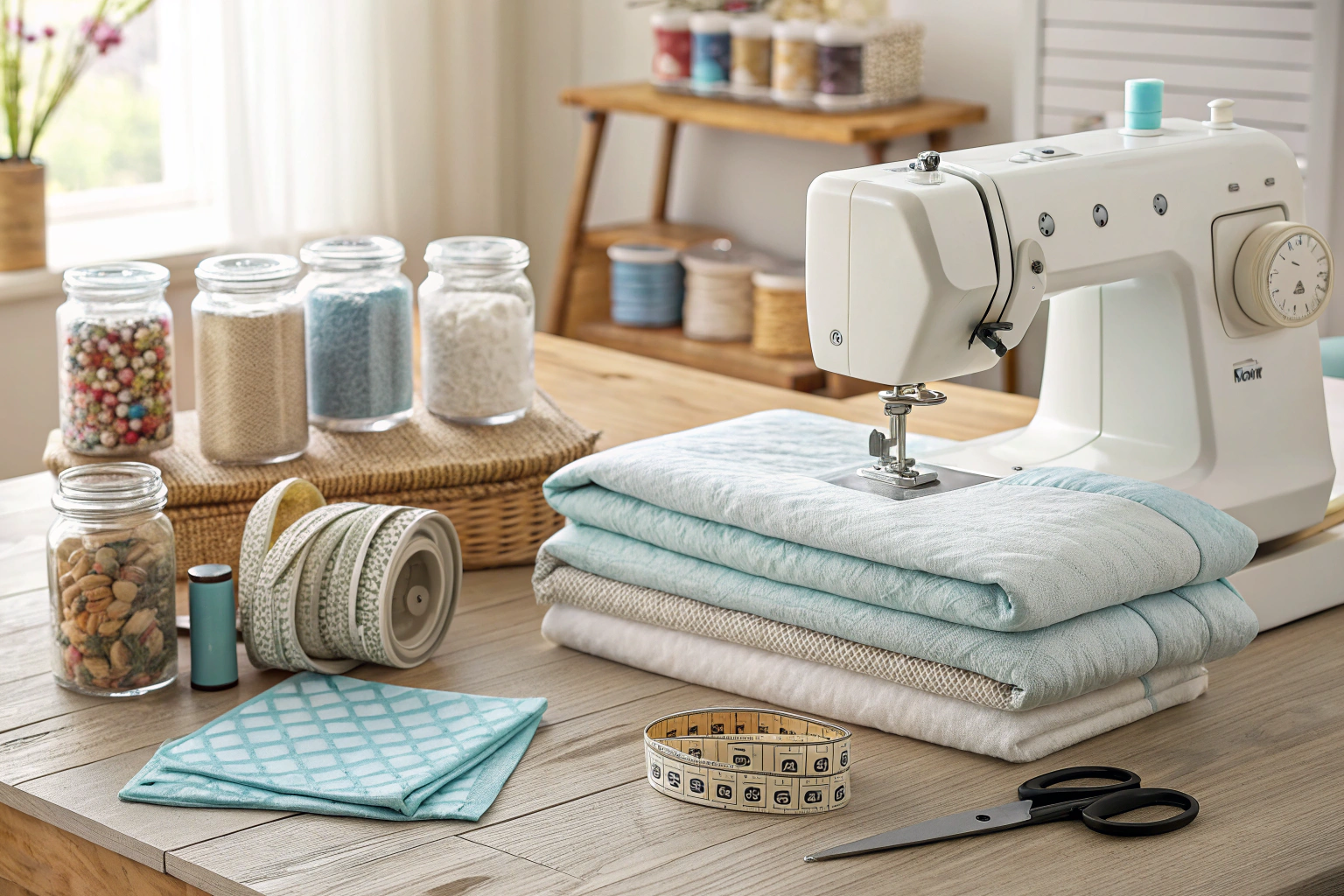
A heavy-duty sewing machine with walking foot capability represents the most critical tool investment, as standard machines often struggle with the multiple fabric layers and weight distribution challenges inherent in weighted blanket construction. The walking foot ensures even fabric feeding and prevents shifting during seaming, which is crucial for maintaining precise grid patterns and preventing filling pockets from misaligning.
- Heavy-duty sewing machine with walking foot
- Rotary cutter and cutting mat
- Quilting ruler (24-inch)
- Fabric scissors
- Seam ripper
- Measuring tape
- Fabric marking pen
- Safety pins
- Funnel for filling
- Digital scale
Precision measuring tools including a large quilting ruler, measuring tape, and fabric marking pen ensure accurate grid patterns and consistent pocket sizing. A digital scale capable of measuring small amounts accurately is essential for consistent filling distribution – weight variations between pockets can create uncomfortable pressure points that disrupt the therapeutic benefits.
Quality fabric scissors and a rotary cutter with fresh blades ensure clean, straight cuts that facilitate precise seaming. I've learned that investing in quality cutting tools at the beginning saves significant time and frustration during construction, as poor cuts lead to alignment issues that compound throughout the building process.
My fabric preparation process
Proper fabric preparation forms the foundation of a successful weighted blanket project, preventing shrinkage, distortion, and alignment issues that can compromise the finished product's quality and therapeutic effectiveness. Through years of experience, I've learned that skipping these preparation steps inevitably leads to problems that are difficult or impossible to correct later in the construction process.
- Pre-wash all fabrics in warm water
- Dry on low heat to prevent shrinkage
- Iron fabrics smooth while slightly damp
- Square up fabric edges with rotary cutter
- Cut pieces 2 inches larger than final size
Pre-washing is absolutely critical because different fabric types shrink at different rates, and any shrinkage after construction can distort the grid pattern and create uneven weight distribution. Cotton typically shrinks 3-5% in both directions, while flannel can shrink up to 8%. I learned this lesson the hard way when an early flannel blanket became misshapen after its first washing, requiring complete reconstruction.
Proper ironing while fabrics are slightly damp helps set the weave and creates smooth surfaces for accurate measuring and cutting. I use a steam iron on appropriate heat settings for each fabric type, taking care to avoid stretching or distorting the grain. This step significantly improves cutting accuracy and ensures that pattern pieces align properly during assembly.
Squaring fabric edges with a rotary cutter and quilting ruler removes irregular selvages and ensures perfectly straight edges for precise seaming. Even small variations in edge angles can accumulate into significant alignment problems when creating the grid pattern, so this precision is essential for professional results.
My step-by-step construction process
The weighted blanket construction process represents a carefully orchestrated sequence of steps that build upon each other to create a therapeutic tool that will provide years of reliable service. Based on constructing hundreds of blankets, I've refined this process to balance efficiency with quality, typically requiring 8-10 hours of focused work that I recommend spreading across multiple sessions to maintain precision and avoid fatigue.
Breaking the project into manageable sessions prevents the mental fatigue that leads to measuring errors, crooked seams, and inconsistent filling distribution. I typically recommend 2-3 hour working sessions with breaks between major construction phases, allowing time to step back and assess progress while maintaining energy for detail-oriented work.
The construction sequence follows a logical progression: creating the outer shell, constructing the inner weighted layer, establishing the grid pattern, adding weighted filling, and completing final finishing. Each phase builds upon the previous work, making accuracy in early steps crucial for overall success. Rushing through any phase to save time invariably creates problems that require more time to correct than doing it right initially.
How I create the blanket shell
The blanket shell construction establishes the foundation for all subsequent work, requiring precision in cutting, alignment, and seaming to ensure the finished blanket maintains its shape and therapeutic effectiveness. The shell consists of outer fabric layers that will contain the weighted inner layer while providing comfort and durability for daily use.
- Cut outer fabric pieces with 1-inch seam allowance
- Pin pieces right sides together
- Sew three sides with 1/2-inch seam
- Trim corners diagonally to reduce bulk
- Turn shell right side out and press seams
Working with different fabric types requires specific handling techniques to achieve professional results. Cotton fabrics are forgiving and easy to work with, while flannel can stretch during sewing if not handled carefully. Minky requires special attention to prevent shifting, and I often use spray basting to temporarily secure layers before permanent seaming.
The walking foot attachment becomes essential when working with multiple layers, as it feeds top and bottom fabrics evenly and prevents the shifting that can create puckered or misaligned seams. Standard presser feet often push the top layer forward relative to the bottom layer, creating seams that appear straight but actually contain significant fabric distortion.
Corner trimming and proper pressing create clean, professional-looking edges that lay flat and don't create uncomfortable bulk. I trim corners at a 45-degree angle, being careful not to cut too close to the seam line, then press seams open or to one side depending on the fabric type and final appearance preferences.
My technique for creating the inner weighted layer
The inner weighted layer serves as the containment system for the weighted filling, requiring durable construction and precise alignment with the outer shell to ensure even weight distribution and prevent filling migration. Muslin fabric provides the ideal combination of durability, breathability, and cost-effectiveness for this crucial component.
Precise straight-line stitching is essential for secure weight pockets: How to Sew a Straight Line.
Muslin's tight weave prevents small filling particles from escaping while allowing air circulation that prevents moisture buildup. The natural cotton fibers are strong enough to withstand the constant stress of weighted filling without stretching or tearing, and the neutral color doesn't show through outer fabrics.
Precise alignment between inner and outer layers is crucial for maintaining the grid pattern accuracy. I use temporary basting or spray adhesive to secure the layers before permanent stitching, ensuring that the inner layer doesn't shift during grid construction. Any misalignment at this stage will create permanent distortions in the weight distribution pattern.
The inner layer dimensions must account for seam allowances while maintaining precise pocket sizing. I calculate these dimensions carefully, adding seam allowances to the finished size rather than trying to adjust during construction. This mathematical approach prevents the cumulative errors that can result from eyeball adjustments during construction.
My method for creating the grid pattern
Grid pattern construction represents the most technically challenging aspect of weighted blanket creation, requiring precise measurement, marking, and sewing to ensure even weight distribution and prevent filling migration. The grid pattern creates individual pockets that contain specific amounts of weighted filling, making accuracy in this step crucial for therapeutic effectiveness.
- Mark vertical lines using fabric marker and ruler
- Pin layers together along marked lines
- Sew all vertical lines from top to bottom
- Mark horizontal lines perpendicular to verticals
- Sew horizontal lines, leaving top row open for filling
My marking technique uses a quilting ruler and water-soluble fabric marker to create perfectly straight, evenly spaced lines. I start by marking the center line, then work outward to ensure symmetrical spacing. This approach prevents the cumulative errors that can occur when measuring from edge to edge across the entire blanket width.
Pinning along marked lines before sewing prevents fabric shifting that can distort the grid pattern. I use safety pins placed perpendicular to the sewing line, removing them just before the needle reaches each pin. This technique maintains layer alignment while preventing needle damage from hitting pins.
The sewing sequence matters significantly – completing all vertical lines before starting horizontal lines ensures better pattern accuracy and prevents fabric distortion. I use a walking foot and maintain consistent seam allowances, checking alignment frequently to catch any deviations before they become significant problems.
My technique for adding the weighted filling
Weighted filling distribution requires systematic precision to ensure even weight distribution across all pockets, preventing uncomfortable pressure points and maintaining therapeutic effectiveness. My refined technique combines accurate measurement with efficient distribution methods that minimize spills and ensure consistent results.
- Use a kitchen scale to measure exact amounts per pocket
- Work systematically row by row to avoid missing pockets
- Tap blanket gently to settle filling before sewing
- Double-check weight distribution by lifting corners
The mathematical calculation for filling per pocket divides total desired weight by the number of pockets, accounting for fabric weight to ensure the finished blanket meets target specifications. I weigh fabric components separately and subtract this weight from the total to determine actual filling requirements.
My funnel technique uses a wide-mouth funnel positioned at one corner of each pocket, allowing controlled filling distribution without spills. I've developed a systematic approach working from left to right across each row, completing one row before moving to the next to prevent accidentally missing pockets or double-filling.
Settling the filling after adding to each pocket ensures even distribution within the pocket boundaries. I gently tap the blanket and manipulate the fabric to encourage filling to spread evenly, then check that no filling has migrated to adjacent pockets before sealing each row with horizontal seams.
My method for finishing your blanket
The finishing phase transforms the filled blanket into a durable, professional-quality therapeutic tool through careful seaming, binding, and quality control procedures. This final step requires attention to detail and patience, as rushing through finishing work can compromise all the careful construction that preceded it.
- Check all seams are secure with no gaps
- Verify filling is evenly distributed
- Test corner reinforcement by gentle tugging
- Ensure no loose threads or sharp edges
- Confirm final weight matches target
Double-stitching critical seams ensures long-term durability under the constant stress of weighted filling. I pay particular attention to seam intersections where stress concentrates, often reinforcing these areas with additional stitching or bar tacks that prevent seam failure.
Edge finishing can be accomplished through several methods, including binding with bias tape, serged edges, or turned and topstitched hems. The choice depends on fabric type, intended use, and aesthetic preferences, but durability should always take precedence over appearance in areas subject to stress.
Quality control procedures include weighing the finished blanket to confirm it meets target specifications, testing all seams for security, and checking that filling distribution feels even when the blanket is lifted and manipulated. Any issues discovered at this stage should be corrected before the blanket enters service, as problems typically worsen with use rather than improving.
Care and maintenance tips I give my clients
Proper care and maintenance significantly extend weighted blanket lifespan while preserving therapeutic effectiveness and hygiene. Through years of testing various cleaning methods and observing client usage patterns, I've developed comprehensive care guidelines that balance practical maintenance needs with preservation of the blanket's therapeutic properties.
Always prewash fabric to prevent post-construction shrinkage: Turn Prewash Into the Essential Laundry Step.
- DO wash in large capacity machine only
- DO use gentle cycle with cold water
- DO air dry or use low heat setting
- DON’T use fabric softener or bleach
- DON’T wring or twist when wet
- DON’T dry clean unless specified
Washing frequency depends on usage patterns, but I typically recommend washing every 2-3 weeks for nightly use or monthly for occasional use. More frequent washing may be necessary for children or individuals with allergies, while less frequent washing is appropriate for blankets used primarily for relaxation rather than sleep.
Machine capacity is crucial – weighted blankets require large-capacity machines to allow proper water circulation and prevent damage from overcrowding. Many home machines aren't large enough for adult-sized weighted blankets, making commercial laundromats necessary for proper cleaning. I always recommend testing the blanket's weight against the machine's capacity rating before attempting home washing.
Storage between uses should protect the blanket from dust and pests while allowing air circulation. I recommend breathable storage bags or clean, dry closets rather than plastic containers that can trap moisture. Proper folding techniques prevent permanent creases and distribute weight evenly during storage.
How I troubleshoot common weighted blanket issues
Even well-constructed weighted blankets can develop problems over time, but most issues can be resolved through targeted repairs and adjustments that restore therapeutic effectiveness without requiring complete reconstruction. My troubleshooting approach addresses problems systematically, starting with simple solutions before progressing to more complex repairs.
| Problem | Cause | Solution |
|---|---|---|
| Filling bunching in corners | Inadequate grid stitching | Add reinforcement stitching |
| Uneven weight distribution | Inconsistent filling amounts | Redistribute filling and re-sew |
| Seam splitting | Insufficient seam allowance | Reinforce with double stitching |
| Blanket too heavy/light | Calculation error | Remove or add filling as needed |
Filling migration represents the most common issue, typically resulting from inadequate grid stitching or seam failure that allows filling to move between pockets. Early intervention prevents minor migration from becoming major redistribution problems that require extensive repairs. I recommend checking for filling migration monthly and addressing any issues immediately.
Seam repairs require careful assessment of the failure cause before attempting fixes. Simple seam separation can often be repaired with additional stitching, while more extensive failures may require seam ripping and complete re-sewing with stronger thread or reinforcement techniques.
Weight adjustment issues usually stem from calculation errors during initial construction or changes in user needs over time. Adding weight requires opening seams and distributing additional filling evenly, while reducing weight involves removing specific amounts from each pocket to maintain distribution balance.
Alternatives to DIY I recommend to my clients
While DIY weighted blankets offer unmatched customization and cost savings, certain situations make purchasing or simplified alternatives more appropriate choices. Honest assessment of individual circumstances, skill levels, and time availability helps determine the best approach for each person's specific needs and constraints.
| Option | Cost | Time Investment | Customization | Best For |
|---|---|---|---|---|
| Full DIY | $30-60 | 8-12 hours | Complete control | Crafters, specific needs |
| Kit Assembly | $50-80 | 4-6 hours | Limited options | Beginners, time-savers |
| Store-bought | $100-300 | 0 hours | Size/weight only | Convenience, immediate need |
DIY kits provide a middle ground that reduces material selection complexity while maintaining some customization benefits. These kits typically include pre-cut fabrics, measured filling, and detailed instructions, making them ideal for beginners who want to experience DIY satisfaction without the complexity of material selection and calculation.
Store-bought options make sense for individuals who need immediate relief, lack sewing skills or equipment, or have standard sizing needs that commercial products can meet effectively. Quality commercial blankets can provide excellent therapeutic benefits, though they typically cost 3-5 times more than DIY alternatives and offer limited customization options.
Time constraints often determine the best approach – individuals with demanding schedules may find that purchasing a quality commercial blanket provides better value than spending precious free time on construction, while those who enjoy crafting and have flexible schedules often find DIY construction deeply satisfying and rewarding.
My final thoughts on DIY weighted blankets
Creating your own weighted blanket represents far more than a simple crafting project – it's an investment in therapeutic wellness that provides deep satisfaction alongside tangible health benefits. The process of carefully selecting materials, precisely constructing the therapeutic tool, and witnessing its positive impact creates a unique connection between maker and user that enhances the blanket's psychological benefits.
One of my most memorable success stories involved a teenager with severe anxiety who had struggled with sleep for years despite trying multiple commercial weighted blankets. Together, we created a custom 18-pound blanket using her favorite soft cotton fabric in a calming blue color. The personalization aspect proved as important as the therapeutic weight – knowing she had created something specifically for her needs enhanced her investment in using the blanket consistently. Within a month, her sleep quality had dramatically improved, and her anxiety levels decreased significantly.
The comprehensive guide I've shared represents years of refinement through real-world testing and client feedback. Every technique, material recommendation, and troubleshooting tip has been proven through practical application, giving you confidence to create a therapeutic tool that rivals or exceeds commercial alternatives. The satisfaction of creating something beautiful and therapeutic with your own hands, combined with the significant cost savings and perfect customization, makes DIY weighted blanket construction a rewarding journey that provides benefits far beyond the finished product.
Frequently Asked Questions
To make a weighted blanket, you’ll need durable fabric like cotton or flannel for the outer layers, filling materials such as glass beads or plastic pellets for weight, and sewing supplies including thread, pins, and a sewing machine. Optional items include batting for added comfort and a measuring tape to ensure proper sizing. Always choose machine-washable materials for easy maintenance.
To distribute weight evenly, sew the blanket into a grid of small pockets or channels, then fill each section with an equal amount of filling material like beads. Measure and mark the fabric before sewing to create uniform compartments, ensuring the weight doesn’t shift during use. This method provides consistent pressure and improves the blanket’s effectiveness for relaxation.
The best filling for a weighted blanket is often glass beads, as they are small, dense, and provide even weight distribution without clumping. Plastic pellets are a budget-friendly alternative that’s also machine-washable, while natural options like rice or beans may not hold up as well over time. Choose based on your preferences for texture, washability, and environmental impact.
Making a weighted blanket at home can cost between $50 and $150, depending on materials like fabric and filling, which is often cheaper than buying a pre-made one that ranges from $100 to $300. Factors such as size and quality of supplies influence the total expense. DIY options allow customization, potentially saving money if you already have sewing tools.
A weighted blanket should typically weigh about 10% of the user’s body weight for optimal therapeutic benefits, such as reducing anxiety and improving sleep. For example, a 150-pound person might use a 15-pound blanket. Always consult guidelines or a healthcare professional, especially for children or those with health conditions, to ensure safety.
Yes, you can make a weighted blanket at home with basic sewing skills and materials like fabric and filling. Start by measuring and cutting fabric, sewing compartments, and evenly distributing the weight. This DIY project allows for personalization in size, weight, and design to suit your needs.