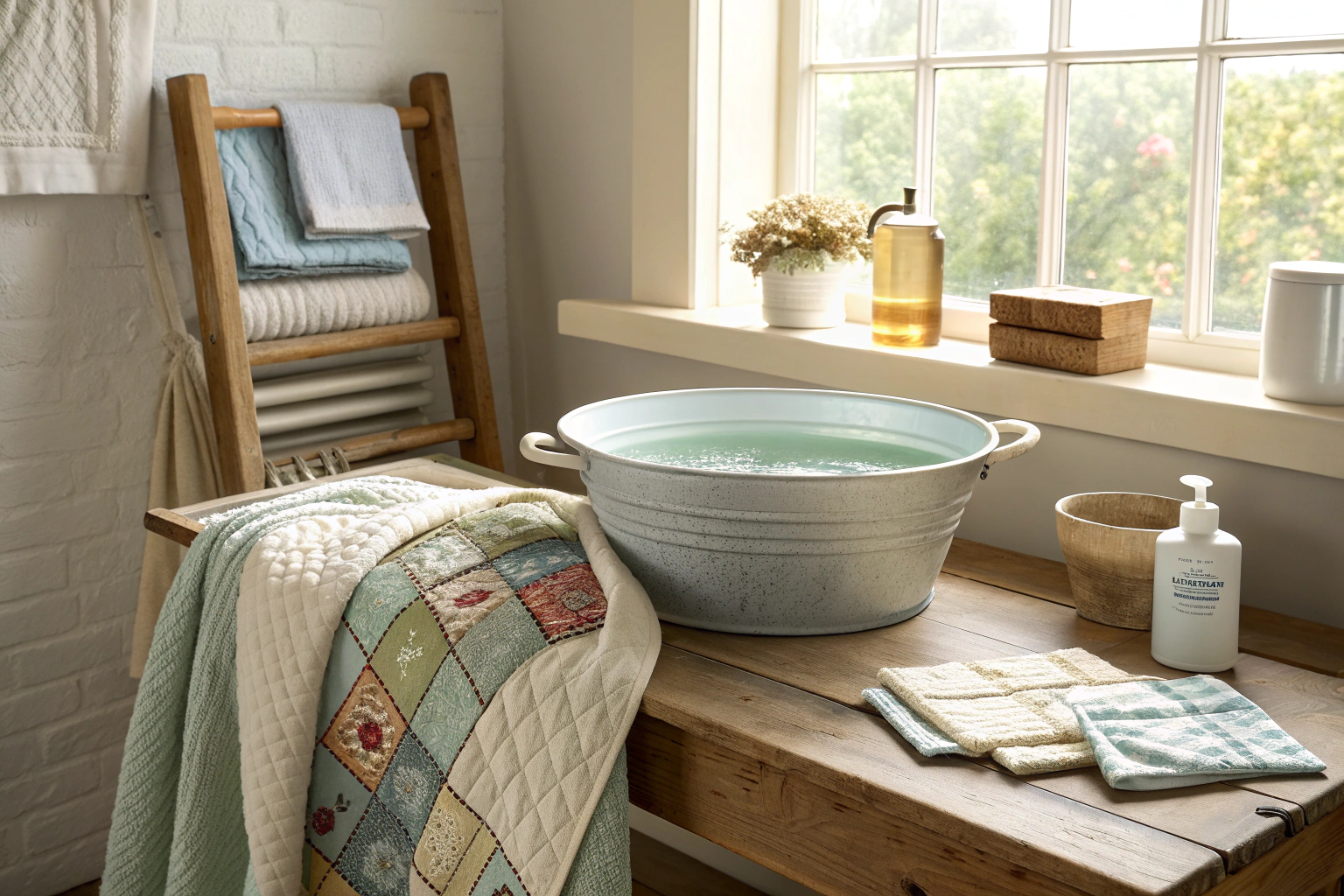
Learning how to wash handmade quilts without damaging them is essential for preserving their intricate stitching, vibrant colors, and delicate fabrics. Improper cleaning methods can lead to irreversible issues like dye bleeding, fabric shrinkage, or torn seams, which are common concerns for owners of these cherished items. Following gentle washing techniques ensures your heirloom remains intact and beautiful for years to come.
Key Benefits at a Glance
- Preserve Value: Protect the sentimental and monetary value of your quilt by preventing fraying, tearing, and seam stress during cleaning.
- Maintain Color: Safely clean your quilt while preventing dyes from bleeding, ensuring its patterns and colors remain bright and distinct.
- Gentle on Fabrics: Use simple, non-abrasive techniques and mild detergents that are safe for both antique cotton and modern quilt fabrics.
- Avoid Shrinkage: Learn proper water temperature and drying methods to prevent your quilt from shrinking or becoming misshapen.
- Save Money: Skip expensive and potentially harsh professional dry cleaning by confidently and safely washing your quilt at home.
Purpose of this guide
This guide is for quilt owners, whether you have a priceless family heirloom or a newly crafted piece, who are anxious about causing damage during cleaning. It directly addresses the fear of ruining a treasured item by providing clear, step-by-step instructions for safely washing handmade quilts. You will learn how to perform a simple colorfastness test, select the right pH-neutral soap, and use the correct methods for both machine washing on a gentle cycle and hand-washing in a bathtub. We’ll also cover crucial drying techniques to prevent distortion, empowering you to care for your quilt with confidence.
Introduction why proper quilt washing matters
Last month, I watched a friend's face crumble as she pulled her grandmother's wedding quilt from the washing machine. What should have been a simple cleaning had become a disaster – colors had bled, seams had separated, and decades of family history hung in tatters. This heartbreaking scene reinforced why I've dedicated years to mastering the art of proper quilt care.
Handmade quilts represent far more than mere bedding. These textile treasures embody countless hours of skilled craftsmanship, family memories, and artistic expression. Whether you've inherited a vintage family heirloom or invested in a contemporary artisan piece, understanding proper washing techniques means the difference between preservation and destruction.
The challenge lies in balancing functionality with conservation. Quilts are meant to be used and enjoyed, not locked away in storage. However, their complex construction – multiple fabric layers, varied fiber types, and intricate stitching patterns – requires specialized care that goes far beyond tossing them in the washing machine with your regular laundry.
Modern textile preservation techniques have evolved significantly, offering us methods that our grandmothers never had access to. By applying professional conservation principles to home care, we can maintain our quilts' beauty while extending their lifespan for future generations.
- Wash quilts only when necessary – typically every 2-5 years for display quilts
- Always test for colorfastness and inspect for damage before washing
- Hand washing is safest for most quilts, especially vintage and heirloom pieces
- Air dry flat whenever possible to prevent stretching and distortion
- Professional cleaning may be needed for valuable antique or severely damaged quilts
Before I wash my essential preparation steps
The difference between successful quilt cleaning and catastrophic damage often comes down to what happens before the quilt ever touches water. Over the years, I've learned that thorough preparation prevents more problems than any specialized cleaning product ever could.
Every handmade quilt tells a story through its construction, materials, and current condition. Reading these clues correctly determines whether your quilt will emerge from washing refreshed or require emergency restoration. Professional textile conservators spend considerable time in assessment phases, and home care should follow this same methodical approach.
The preparation process serves multiple critical functions. First, it identifies potential problems that could become catastrophic once water is introduced. Second, it helps determine the safest cleaning method for your specific quilt. Finally, it establishes a baseline condition record, particularly important for valuable or irreplaceable pieces.
I've seen too many quilts damaged by well-intentioned owners who skipped these crucial preliminary steps. The extra time invested in proper assessment and preparation pays dividends in successful outcomes and peace of mind.
Checking for pre existing damage
Before any quilt meets water, I conduct a systematic inspection that could save the piece from irreversible harm. This process has become second nature after witnessing the consequences of missed warning signs.
The inspection follows a logical pattern, starting with overall structural integrity and moving to detailed examination of vulnerable areas. I begin by laying the quilt flat on a clean, well-lit surface, preferably near a window for natural light that reveals fabric conditions more accurately than artificial lighting.
Inspect handmade quilts for loose threads or repairs before washing to avoid damage. For delicate or vintage quilts, hand washing is safest using cold water, gentle dye-free detergent, and distilled white vinegar in rinses. Machine washing works for sturdier quilts on gentle cycle with cold water and color catchers.
Fabric deterioration often occurs gradually, making it easy to miss until water exposure causes sudden failure. I pay particular attention to areas that experience regular stress – corners that get grabbed, edges that rub against bed frames, and central areas that bear the most weight during use.
- Examine all seams for loose or broken stitching
- Check binding edges for fraying or separation
- Look for thin or worn fabric areas that may tear when wet
- Inspect corners and stress points for structural weakness
- Note any existing stains or discoloration
- Test fabric stability by gently tugging small sections
One particularly memorable inspection saved a 1930s Depression-era quilt. What appeared to be solid construction revealed loose binding stitches that would have completely separated during washing. A few minutes with needle and thread prevented what could have been irreversible damage to an irreplaceable family heirloom.
Testing for colorfastness
The colorfastness test represents the most critical checkpoint in my preparation process. This simple procedure prevents the heartbreak of color bleeding that can ruin a quilt permanently. Even experienced quilters are often surprised by which fabrics prove unstable.
Modern reproduction fabrics generally perform well in colorfastness tests, but vintage fabrics present unpredictable challenges. I've seen quilts from the 1940s with colors that remained stable for decades suddenly release dye when exposed to specific water conditions.
“Cold water will help preserve the colours of your fabric. Heat has the opposite effect and dulls your colours over time.”
— Shannon Fraser Designs, February 2024
Source link
The testing protocol requires patience but provides invaluable information about how each fabric will behave during washing. Water temperature plays a crucial role in dye stability, with cooler temperatures generally providing better color retention.
- Choose an inconspicuous corner or seam allowance for testing
- Dampen a white cotton swab with cool water
- Gently press the swab against each fabric color for 30 seconds
- Check the swab for any color transfer
- Wait 10 minutes and repeat the test
- If any bleeding occurs, consider professional cleaning instead
The most dramatic colorfastness failure I've encountered involved a seemingly stable navy blue fabric that released massive amounts of dye during testing. The owner had planned to machine wash this quilt, which would have resulted in blue staining throughout the entire piece. The five-minute test saved hours of restoration work.
Making necessary repairs first
Determining which repairs to complete before washing requires balancing immediate structural needs against the risk of working with dirty fabric. Some repairs become easier after cleaning, while others must be addressed beforehand to prevent catastrophic damage during the washing process.
The decision-making process involves assessing whether existing damage will worsen significantly when exposed to water and agitation. Loose binding that might separate completely during washing takes priority over small decorative stitching that can wait until after cleaning.
- Critical: Loose binding that could separate completely
- Critical: Open seams longer than 2 inches
- Important: Frayed edges that will worsen when wet
- Important: Loose threads that could snag during washing
- Optional: Small decorative stitching repairs (can wait until after cleaning)
- Optional: Minor fabric patches (often easier to match after cleaning)
I once worked with a 1950s sampler quilt where the binding had separated along one entire edge. The owner wanted to wash first, then repair, but the loose binding would have caused the entire border to detach during washing. Twenty minutes of careful stitching before cleaning prevented what would have been extensive restoration work afterward.
Fabric repair techniques vary depending on the type and extent of damage, but the goal remains consistent: stabilize the quilt enough to withstand the washing process without compromising its historical integrity or aesthetic appeal.
How I determine my quilts type and washing needs
Understanding your quilt's construction and materials forms the foundation of safe cleaning decisions. Not all quilts are created equal, and what works perfectly for one piece could destroy another. This categorization process guides every subsequent care decision.
The assessment begins with age determination, which influences both material composition and appropriate care techniques. Vintage quilts from different eras used varying construction methods, batting materials, and fabric treatments that affect their washing tolerance.
Quilt batting composition significantly impacts washing decisions. Cotton batting generally withstands washing well, while wool batting can shrink dramatically, and some synthetic battings may shift or bunch during the washing process. Understanding these internal components prevents unpleasant surprises.
| Quilt Type | Age | Recommended Method | Special Considerations |
|---|---|---|---|
| Modern Cotton | 0-20 years | Hand wash or gentle machine | Usually colorfast and sturdy |
| Vintage Cotton | 20-80 years | Hand wash only | Test colorfastness carefully |
| Antique/Heirloom | 80+ years | Professional or gentle hand wash | May require conservation assessment |
| Wool Batting | Any age | Professional cleaning preferred | Shrinkage and felting risks |
| Polyester Batting | Modern | Hand or machine wash | Most durable option |
| Silk Fabrics | Any age | Professional cleaning only | Extremely delicate materials |
Construction methods provide additional clues about appropriate care. Hand-quilted pieces often require gentler treatment than machine-quilted ones, while tied quilts may have different structural vulnerabilities than traditionally quilted pieces.
My personal collection includes examples from each major category, allowing me to test and refine care techniques across different quilt types. This hands-on experience has taught me that individual assessment matters more than rigid category rules.
Handwashing my preferred method for most quilts
Hand washing represents the safest approach for most quilts, providing complete control over water temperature, agitation level, and handling techniques. This method allows for real-time monitoring and immediate response to any problems that arise during the cleaning process.
The preference for hand washing stems from textile conservation principles that prioritize gentle treatment over convenience. Professional conservators use similar techniques for museum-quality pieces, adapted here for home use with readily available supplies and equipment.
The gentle nature of hand washing makes it suitable for a wider range of quilt types than machine washing. Even sturdy modern quilts benefit from the controlled environment that hand washing provides, though the time investment may make machine washing more practical for frequently used pieces.
I've successfully hand washed quilts ranging from delicate 19th-century silk pieces to robust contemporary cotton quilts. The technique adapts easily to different materials and conditions, making it the most versatile cleaning method available to home quilters.
Supplies I always use
The right supplies make hand washing both safer and more effective. Over years of testing different products and techniques, I've developed a standard kit that handles most quilts successfully while remaining accessible to average home quilters.
pH-neutral detergents form the foundation of safe quilt washing. Regular household detergents often contain brighteners, fragrances, and other additives that can damage vintage fabrics or cause color changes in sensitive materials.
- Large, clean bathtub or utility sink
- pH-neutral detergent (Woolite or museum-quality cleaner)
- Multiple clean white towels for support and drying
- Mesh laundry bags for small loose pieces
- Soft-bristled brush for gentle spot cleaning
- Thermometer to monitor water temperature
- Camera to document the process for valuable quilts
Water quality affects cleaning outcomes more than many people realize. Hard water can leave mineral deposits, while heavily chlorinated water may cause color changes in some fabrics. When working with particularly valuable quilts, I use distilled water to eliminate these variables.
The seemingly simple task of supporting a wet quilt requires careful planning. A queen-size quilt can weigh 20-30 pounds when saturated, and improper handling during lifting can cause permanent stretching or tearing.
My step by step handwashing guide
The handwashing process follows a carefully orchestrated sequence designed to maximize cleaning effectiveness while minimizing stress on the quilt. Each step builds on the previous one, creating a systematic approach that produces consistent results.
Water temperature control remains critical throughout the process. I maintain cool water (65-70°F) to prevent shrinkage, color bleeding, and fiber damage. Sudden temperature changes can cause some fabrics to pucker or distort permanently.
The soaking method proves particularly effective for vintage quilts with embedded dirt and odors. Extended soaking time allows water and detergent to penetrate soil without requiring aggressive agitation that could damage fragile fabrics.
- Fill bathtub with cool water (65-70°F) and add pH-neutral detergent
- Gently submerge quilt, supporting weight with clean towels underneath
- Allow to soak for 15-30 minutes without agitation
- Gently press water through fabric – never wring or twist
- Drain dirty water and refill with clean cool water for rinsing
- Repeat rinse cycle until water runs clear (usually 2-3 times)
- Support quilt weight while lifting to prevent stretching
- Press out excess water using clean towels – never squeeze
The bathtub provides the ideal washing vessel for most home situations, offering adequate space and proper drainage. For quilts too large for standard bathtubs, utility sinks or even clean kiddie pools can serve as alternatives.
Weight management during the washing process requires advance planning and often an extra set of hands. I've found that supporting the quilt with clean towels throughout the process prevents the concentrated stress that causes seam separation and fabric tearing.
Machine washing when I consider it safe
Machine washing can be appropriate for certain quilts when specific criteria are met, but the decision requires careful evaluation of construction, materials, and condition. Modern washing machines offer gentler cycles than older models, expanding the range of quilts that can be safely machine washed.
The primary risk factors include agitator damage, excessive water temperature, and uncontrolled agitation that can cause batting to shift or bunch. Front-loading machines generally provide gentler treatment than top-loading models with central agitators.
Wash cycles selection becomes critical for successful machine washing. The gentlest available cycle, combined with cool water and minimal agitation time, provides the best balance of cleaning effectiveness and fabric protection.
| Method | Pros | Cons | Best For |
|---|---|---|---|
| Hand Washing | Gentlest method, full control, works for all quilts | Time-consuming, requires large space | Vintage, heirloom, and delicate quilts |
| Machine Washing | Convenient, thorough cleaning, good for regular use quilts | Risk of damage, limited to sturdy quilts | Modern quilts with cotton batting and colorfast fabrics |
I limit machine washing to quilts less than 20 years old, constructed with cotton fabrics and batting, and showing no signs of structural weakness. Even then, I use protective measures like mesh bags for loose elements and careful cycle selection.
The cautionary tale that reinforced my conservative approach involved a seemingly sturdy 1980s quilt that suffered batting displacement during machine washing. What should have been a simple cleaning became a complex restoration project requiring complete re-quilting in affected areas.
My techniques for using color catchers and special products
Color catchers represent one of the most effective innovations for preventing color bleeding during machine washing. These specialized sheets absorb loose dye before it can transfer to other parts of the quilt, providing an extra layer of protection for colorful pieces.
The effectiveness of color catchers varies depending on the type and amount of dye present in the fabrics. I've found them most useful for quilts with saturated colors or fabrics of questionable colorfastness that still need machine washing for practical reasons.
“To prevent dye bleeding, you can throw a couple of color catchers into the wash.”
— AccuQuilt, 2024
Source link
Fabric softener should never be used on quilts, as it can leave residues that attract soil and may interfere with the natural properties of cotton fibers. The coating effect of fabric softeners can also reduce the absorbency and breathability that make cotton quilts comfortable to use.
Product quantity calculations depend on the quilt's size and color intensity. For a full-size quilt with multiple saturated colors, I use two color catcher sheets and monitor the first few washing cycles to determine if this quantity provides adequate protection.
My proper drying techniques
Air drying provides the safest method for drying quilts while maintaining their shape and preventing the damage that can result from machine drying. The controlled environment of air drying allows for monitoring and adjustment throughout the drying process.
Drying racks designed for large items work well for smaller quilts, but most bed-sized quilts require flat surface drying to prevent stretching and distortion. The weight of wet batting can cause permanent shape changes if the quilt is hung or supported improperly.
Air dry flat or tumble low heat until damp, then finish air drying to prevent shrinkage. See washing steps for detailed hand and machine methods, including spot cleaning tips.
Quilt batting composition affects drying time significantly. Cotton batting dries relatively quickly and maintains its loft well, while polyester batting may take longer but resists matting. Wool batting requires the most careful monitoring to prevent felting during the drying process.
- DO lay flat on clean sheets or mesh drying racks
- DO rotate and flip periodically for even drying
- DO ensure good air circulation around the quilt
- DON’T hang wet quilts – this causes stretching and distortion
- DON’T place in direct sunlight which can fade colors
- DON’T use clothespins or clips that can leave permanent marks
- DON’T rush the drying process with heat sources
The drying process typically takes 24-48 hours depending on humidity, air circulation, and batting thickness. I've learned to plan quilt washing around weather patterns, as high humidity can extend drying time significantly and increase the risk of mildew development.
When I might use a dryer
Machine drying represents a calculated risk that I accept only under specific circumstances and with careful monitoring throughout the process. The convenience factor makes it tempting, but the potential for irreversible damage requires extreme caution.
Quilt batting shrinkage presents the primary concern with machine drying. Cotton batting can shrink 3-5%, while some synthetic battings may shrink unevenly, creating permanent puckers or distortions that cannot be corrected.
- Only use for modern quilts with polyester batting
- Set to lowest heat or air-dry setting only
- Check every 10 minutes and remove while slightly damp
- Add clean tennis balls to prevent bunching
- Never use dryer sheets or fabric softener
- Stop immediately if you notice any shrinkage or puckering
The monitoring protocol requires checking the quilt every 10 minutes during the drying cycle, looking for signs of shrinkage, bunching, or other problems. I remove quilts while still slightly damp and finish the drying process with air drying to minimize heat exposure.
My most memorable machine drying experience involved a contemporary quilt that developed permanent puckers when the batting shrank unevenly despite following all safety protocols. This incident reinforced my preference for air drying whenever possible.
Outdoor vs indoor drying what I recommend
Air drying location selection depends on environmental conditions, available space, and the specific needs of the quilt being dried. Both outdoor and indoor drying have advantages and limitations that affect the drying outcome.
Outdoor drying offers superior air circulation and natural deodorizing effects, but requires careful attention to weather conditions and UV exposure. Indoor drying provides complete environmental control but may require longer drying times and additional ventilation.
| Drying Location | Best Conditions | Advantages | Risks to Avoid |
|---|---|---|---|
| Outdoor | Overcast day, gentle breeze, no direct sun | Fresh air, faster drying, natural deodorizing | UV damage, sudden weather, dirt/pollen |
| Indoor | Good ventilation, stable temperature, low humidity | Complete control, weather protection, privacy | Slower drying, potential mold if humid, space requirements |
Drying rack systems work well in both environments, with modifications for specific conditions. Outdoor racks need secure anchoring against wind, while indoor racks benefit from fan placement to improve air circulation.
My preference leans toward indoor drying for valuable quilts, where I can maintain complete control over environmental conditions. For everyday quilts, outdoor drying on suitable days provides excellent results with the added benefit of natural freshening.
How I handle stains and special situations
Stains require individualized treatment approaches based on their composition, age, and the fabric types involved. The key principle involves treating stains as gently as possible while achieving effective removal, often requiring multiple treatment cycles rather than aggressive single attempts.
Vintage quilts demand modified approaches that prioritize fabric preservation over complete stain removal. Sometimes accepting a faded stain is preferable to risking fabric damage from aggressive treatment methods.
The treatment strategy changes significantly based on stain age and type. Fresh stains respond well to immediate treatment, while set stains may require professional assessment to determine if removal is possible without damaging the surrounding fabric.
- Blood stains: Cold water and hydrogen peroxide, work from outside in
- Food/grease: Cornstarch to absorb, then gentle dish soap treatment
- Sweat/body oils: White vinegar solution followed by normal washing
- Mildew: Lemon juice and salt paste, sun-dry if fabric allows
- Ink: Rubbing alcohol on cotton swab, blot carefully
- Red wine: Salt immediately, then cold water and white wine
- Unknown old stains: Professional assessment recommended
Detergent selection for stain treatment often differs from general washing products. Enzyme-based cleaners work well for protein stains, while oxygen-based bleaches can lighten organic stains without the harshness of chlorine bleach.
I maintain detailed records of successful stain treatments, including product names, concentrations, and treatment times. This documentation helps me replicate successful treatments and avoid repeating failed attempts.
My experience with specialty cleaners like Retro Clean and Oxy Clean
Specialty cleaning products designed for textile restoration can provide excellent results when used correctly, but they require careful testing and modified application techniques for quilt care. My experience with various products has taught me that manufacturer instructions often need adjustment for quilt-specific applications.
Retro Clean has proven effective for addressing age-related yellowing in vintage cotton quilts, but requires careful dilution and testing to prevent over-brightening that can look artificial. The product works best on quilts with uniform discoloration rather than localized stains.
| Product | Best Use | Effectiveness | Risks/Limitations |
|---|---|---|---|
| Retro Clean | Vintage quilt brightening | Excellent for age yellowing | Can be harsh on delicate fibers |
| Oxy Clean | Stain removal on modern quilts | Good for organic stains | May cause color fading |
| Carbona Stain Devils | Specific stain types | Targeted effectiveness | Must match exact stain type |
| Museum-grade cleaners | Heirloom pieces | Safest for valuable quilts | Expensive, requires special ordering |
Oxy Clean provides good results for organic stains on modern quilts but requires careful testing for colorfastness. I use significantly lower concentrations than recommended for general laundry, extending treatment time rather than increasing chemical strength.
Product testing on sample fabrics or inconspicuous areas remains essential before applying any specialty cleaner to the entire quilt. I maintain a collection of fabric scraps from various eras for testing purposes, allowing me to predict product reactions more accurately.
How I treat delicate or heirloom quilts
Heirloom quilts require the most conservative approach to cleaning, with preservation taking priority over achieving perfect cleanliness. The risk-versus-benefit analysis for these irreplaceable pieces often leads to minimal intervention strategies.
Professional cleaning consultation becomes advisable for quilts with significant historical, monetary, or sentimental value. Professional textile conservators have access to specialized equipment and techniques not available for home use.
- Document current condition with detailed photographs
- Assess monetary and sentimental value against cleaning risks
- Consult textile conservator for pieces over 100 years old
- Consider spot cleaning only for localized issues
- Use distilled water and museum-quality pH-neutral cleaners
- Work in smallest sections possible
- Allow extended drying time in controlled environment
- Document any changes in condition post-cleaning
The decision-making process for heirloom quilts involves weighing the benefits of cleaning against the risks of damage. Sometimes the best care decision is to avoid cleaning altogether, focusing instead on proper storage and display conditions.
Textile conservator consultation provides professional assessment of cleaning feasibility and appropriate methods. These specialists can often identify construction details and material compositions that affect cleaning decisions, information not readily apparent to untrained observers.
How often I recommend washing your quilts
Washing frequency recommendations vary dramatically based on quilt type, use patterns, and storage conditions. The general principle involves washing only when necessary, as each cleaning cycle contributes to gradual fabric wear and fiber degradation over time.
Display quilts that receive minimal handling require washing much less frequently than bed quilts used regularly. Environmental factors like dust accumulation, pet hair, and cooking odors influence the need for cleaning beyond visible soil levels.
Alternative maintenance techniques between full washings can extend the time between cleaning cycles while maintaining freshness and appearance. These methods prove particularly valuable for vintage quilts where frequent washing poses preservation risks.
| Quilt Type | Washing Frequency | Alternative Care | Signs It’s Time |
|---|---|---|---|
| Daily use quilts | Every 6-12 months | Weekly airing, spot cleaning | Visible soil, odors, loss of freshness |
| Display quilts | Every 2-3 years | Quarterly dusting, annual airing | Dust accumulation, storage odors |
| Heirloom pieces | Only when necessary | Professional assessment, gentle dusting | Stains, strong odors, pest damage |
| Guest room quilts | After each use period | Airing between uses | Guest use, seasonal storage odors |
The minimal washing philosophy stems from long-term observations of quilt condition over decades of use and care. Quilts washed annually show more wear than those washed every few years, even when soil levels appear similar.
Vintage quilts often benefit from even less frequent washing, with some museum pieces going decades between cleaning cycles. The focus shifts from regular washing to preventive care that minimizes soil accumulation and damage.
How I store my clean quilts
Quilt storage methods significantly impact long-term preservation and the frequency of required cleaning. Proper storage prevents dust accumulation, pest damage, and environmental contamination that necessitate more frequent washing cycles.
Textile conservation principles guide optimal storage conditions, focusing on stable temperature and humidity levels, protection from light exposure, and prevention of permanent creasing or folding damage.
My personal storage system has evolved over years of trial and refinement, incorporating lessons learned from both successful preservation and unfortunate storage-related damage to valuable pieces in my collection.
- Best: Flat storage in acid-free boxes with tissue paper
- Good: Rolled on large tube covered with muslin
- Acceptable: Careful folding with refolding every 6 months
- Avoid: Plastic bags, cedar chests, attics, basements
- Never: Vacuum storage bags or compression storage
Space limitations force most home quilters to compromise between ideal storage conditions and practical reality. The key involves understanding which compromises cause the least long-term damage and implementing protective measures where possible.
Seasonal considerations affect storage decisions, with humidity control becoming critical during summer months and temperature stability important during winter heating seasons. I adjust storage monitoring frequency based on seasonal risk factors.
My proper folding techniques
Folding techniques that minimize permanent creasing require understanding fabric behavior and stress distribution patterns. The goal involves distributing fold stress across areas that can best tolerate it while avoiding major design elements whenever possible.
Textile conservation standards recommend refolding stored quilts every six months to prevent permanent crease lines from developing. This schedule requires planning but prevents damage that cannot be reversed once it occurs.
- Choose fold lines that avoid major design elements when possible
- Place acid-free tissue paper along each fold line
- Fold gently without pressing creases firmly
- Support folds with additional tissue paper padding
- Refold in different locations every 6 months
- Store folded quilts flat, never stacked heavily
The folding method I've developed minimizes stress concentration while accommodating standard storage containers and closet dimensions. The technique adapts to different quilt sizes and construction types with minor modifications.
I learned the importance of proper folding technique after discovering permanent crease lines in a vintage quilt that had been stored folded in the same position for several years. The damage serves as a constant reminder of why storage protocols matter for long-term preservation.
Ideal storage conditions I recommend
Environmental control represents the most challenging aspect of home quilt storage, requiring balance between ideal conditions and practical limitations. The goal involves creating the most stable environment possible within existing space and budget constraints.
Textile conservation standards specify optimal ranges for temperature, humidity, and air quality that may not be achievable in typical home environments. Understanding which factors matter most helps prioritize improvements where they will have the greatest impact.
- Maintain 45-55% relative humidity with minimal fluctuation
- Keep temperature between 60-70°F year-round
- Ensure good air circulation without direct airflow on quilts
- Use natural pest deterrents like lavender sachets
- Check storage areas quarterly for signs of pests or moisture
- Keep storage areas dark when not accessing quilts
- Use dehumidifiers in humid climates, humidifiers in dry climates
Climate-related damage prevention requires understanding regional environmental challenges and seasonal patterns. Coastal areas face different risks than desert climates, requiring customized approaches to environmental control.
My storage monitoring routine includes quarterly inspections for signs of pest activity, moisture problems, or temperature fluctuations. Early detection of storage problems prevents minor issues from becoming major preservation disasters.
When I recommend professional help
Professional cleaning becomes advisable when home methods prove inadequate or when the risk of damage exceeds acceptable levels. The decision involves balancing cost considerations against the value and irreplaceability of the quilt.
Textile conservators offer specialized expertise in historical construction methods, material identification, and advanced cleaning techniques not available to home quilters. Their training includes understanding how different fibers, dyes, and construction methods respond to various cleaning approaches.
- Quilts with significant historical or monetary value (over $500)
- Severe staining that home methods cannot address
- Fabric deterioration or structural damage
- Unknown fiber content or construction methods
- Previous cleaning attempts that caused damage
- Quilts with mixed materials (silk, wool, cotton combinations)
- Any quilt where you’re uncertain about safe cleaning methods
The process of finding qualified professional cleaners requires research and verification of credentials. Not all dry cleaners or restoration services have experience with textile conservation principles necessary for valuable quilt care.
Cost considerations for professional cleaning typically range from $200-800 depending on quilt size, condition, and required treatments. While expensive, professional cleaning often proves more economical than attempting to repair damage caused by inappropriate home treatment.
My philosophy balancing use and preservation
The central philosophy guiding my approach to quilt care involves enabling enjoyment while ensuring longevity. Handmade quilts deserve to be used and appreciated, not locked away in storage where they provide no joy to their owners.
This balance requires understanding that proper care actually facilitates use rather than restricting it. Well-maintained quilts can withstand regular use for decades, while neglected pieces may become too fragile for any handling within just a few years.
Heirloom status doesn't automatically require museum-level preservation protocols. Many family quilts gain meaning through use and continue to create memories for new generations when properly cared for throughout their use cycles.
- Quilts are meant to be enjoyed, not just preserved
- Proper care enables both use and longevity
- When in doubt, err on the side of caution
- Document your quilts’ stories along with their care
- Regular gentle maintenance prevents major restoration needs
- Each quilt is unique and deserves individualized care
My own relationship with quilt care has evolved from fearful over-protection to confident, informed stewardship. The goal involves passing quilts to future generations in usable condition, complete with the stories and memories that give them meaning beyond their material value.
Textile conservation principles provide the foundation for care decisions, but they must be adapted to real-world use patterns and family situations. The most perfectly preserved quilt serves no purpose if it never brings comfort, warmth, or joy to those who own it.
Frequently Asked Questions
The best method for washing handmade quilts without causing damage is to hand wash them gently in a large tub or bathtub using cool water and a mild, pH-neutral detergent. Avoid twisting or wringing the quilt; instead, press out excess water and rinse thoroughly to prevent fabric distortion or color fading. For antique or very delicate quilts, professional dry cleaning is recommended to maintain their condition.
To check for colorfastness, dampen a white cloth with water and a small amount of your chosen detergent, then gently rub it on an inconspicuous area of the quilt, such as a seam allowance. If any color transfers to the cloth, the quilt is not colorfast and may bleed during washing, so consider spot cleaning or professional help instead. This simple test helps prevent irreversible damage to your handmade quilt.
Yes, you can put a sturdy handmade quilt in the washing machine on a gentle cycle with cold water, but only if the fabrics and batting are machine-washable and the quilt is not too fragile. Always use a large-capacity machine to allow even cleaning and avoid overcrowding, which could cause uneven wear. For delicate or heirloom quilts, hand washing or professional cleaning is safer to prevent damage.
To dry a handmade quilt safely, lay it flat on a clean, dry surface or over multiple clotheslines to distribute weight evenly, avoiding direct sunlight to prevent color fading. Do not use a tumble dryer, as the heat can cause shrinkage, melting of synthetic fibers, or batting clumping. Allow it to air dry completely, which may take several hours or days depending on humidity, to maintain its shape and integrity.
You should wash a handmade quilt only as needed, typically every 6 to 12 months or when it’s visibly soiled, to avoid unnecessary wear on the fabrics and stitching. Regular maintenance like vacuuming with a brush attachment or spot cleaning can extend the time between full washes. Over-washing can lead to fading, shrinkage, or weakening of the quilt’s structure over time.