Slow stitching for mindfulness is a meditative craft that uses simple, repetitive hand-sewing motions to calm the mind and promote relaxation. The focus is on the sensory experience of the needle and thread moving through fabric, not on creating a perfect final product. This practice helps reduce stress and encourages present-moment awareness, making it accessible even for those who believe they lack sewing skills or artistic talent. It’s a way to reconnect with your hands and quiet internal chatter.
Key Benefits at a Glance
- Reduces Stress & Anxiety: The gentle, repetitive motions help calm the nervous system, lower heart rate, and quiet a busy mind.
- Low-Cost & Accessible: It requires only a needle, thread, and fabric scraps, making it an inexpensive and approachable hobby for anyone.
- Encourages Imperfection: There are no rules or patterns, freeing you from the pressure of perfection and fostering creative self-expression.
- Improves Focus: The simple task of stitching helps train your concentration, pulling your attention away from distractions and into the present moment.
- Sustainable & Eco-Friendly: Gives new life to fabric scraps, leftover materials, and old clothing, reducing textile waste and promoting conscious crafting.
Purpose of this guide
This guide is for anyone seeking a simple, screen-free way to manage stress and cultivate a sense of calm. It solves the problem of feeling overwhelmed by providing a tangible, creative outlet that doesn’t require expensive tools or prior experience. You will learn how to begin your slow stitching journey, what basic materials you need, and how to avoid common pitfalls like overthinking the process. The goal is to help you embrace imperfection and find joy in the simple act of making, turning it into a sustainable practice for long-term mental well-being.
Slow stitching for mindfulness: how I found inner peace through the art of deliberate creation
Three years ago, I sat in my cluttered studio apartment, surrounded by half-finished projects and mounting deadlines, feeling more disconnected from myself than ever before. Traditional meditation felt impossible—my mind raced with endless to-do lists, and sitting still only amplified my anxiety. That's when I discovered slow stitching, a gentle form of textile art that would completely transform my relationship with mindfulness and creative expression.
Unlike the rushed embroidery projects I'd attempted before, slow stitching invited me to embrace imperfection and focus entirely on the present moment. Each deliberate stitch became a breath, each thread a pathway back to inner calm. Through years of practice and teaching workshops, I've witnessed how this simple combination of hand stitching and mindful awareness can create profound shifts in mental wellbeing.
- Slow stitching creates meditative states through repetitive, mindful hand movements
- Simple stitches like running stitch and French knots offer profound stress relief
- Process-over-product philosophy releases perfectionism and enhances creativity
- Daily practice can be integrated into busy schedules with just 10-15 minutes
- Sustainable materials and upcycling align craft practice with mindful consumption
My journey: how slow stitching transformed my approach to mindfulness
The turning point came during a particularly stressful period when traditional mindfulness practices felt inaccessible. I'd tried meditation apps, breathing exercises, and yoga classes, but my kinesthetic learning style craved something more tangible. When I picked up a needle and thread for the first time with no agenda beyond exploration, something magical happened—my racing thoughts naturally slowed to match the rhythm of my stitches.
Within minutes, I entered what psychologists call a flow state, where time seemed to dissolve and my anxious mind found unexpected peace. The repetitive motion of the needle moving through fabric created a natural meditation that my fidgety hands could finally embrace. Unlike sitting meditation, which often left me feeling frustrated with my wandering mind, textile meditation felt effortless and sustainable.
As weeks turned into months, I noticed profound changes in my stress response and emotional regulation. The tactile engagement with different fabric textures and thread weights provided sensory grounding that traditional mindfulness techniques had never achieved. Students in my workshops consistently report similar breakthroughs, particularly those who've struggled with conventional meditation approaches.
This creative therapy became my daily anchor, teaching me that mindfulness doesn't require emptying the mind—it can flourish through gentle, focused activity that honors both our need for presence and our desire to create something meaningful.
Understanding slow stitching: the mindful craft explained
Slow stitching represents a revolutionary approach to textile arts that prioritizes mindfulness over productivity. Unlike traditional embroidery with its precise patterns and technical perfection, slow stitching embraces intuitive creation, imperfect beauty, and meditative process. This fiber art form encourages practitioners to work without predetermined outcomes, allowing each stitch to emerge organically from present-moment awareness.
The practice differs fundamentally from conventional hand sewing or structured embroidery projects. While those crafts often focus on achieving specific results within set timeframes, slow stitching invites us to release expectations and surrender to the contemplative rhythm of needle and thread. There are no mistakes in slow stitching—only opportunities for creative discovery and mindful presence.
- Intention and Appreciation: Begin each session by setting mindful intentions
- Process Over Product: Focus on the journey, not the destination
- Embrace Imperfection: Let go of rigid expectations and perfectionism
- Sustainable Practice: Use repurposed materials and mindful consumption
- Personal Expression: Honor your unique creative voice without comparison
- Present Moment Awareness: Stay grounded in the here and now through stitching
What makes slow stitching particularly powerful for mindfulness practice is its accessibility. Unlike complex textile arts that require years of training, anyone can begin immediately with basic running stitches and fabric scraps. The practice naturally cultivates patience, acceptance, and non-judgmental awareness—core components of mindful living.
The science behind stitching and mental wellbeing
Research in neuroscience and psychology validates what slow stitching practitioners experience firsthand: repetitive, focused handwork creates measurable improvements in mental health and cognitive function. The bilateral stimulation of working with both hands activates neural pathways associated with emotional regulation and stress reduction.
“A study published in the Journal of Occupational Therapy International (Collier, 2011) highlighted how handcrafts like sewing reduce stress by creating a “flow state”: a psychological space where time seems to dissolve, and the mind focuses entirely on the present moment.”
— Petal Plum, Unknown 2024
Source link
“Studies show that rhythmic, focused handwork like sewing can reduce anxiety by activating the relaxation response and promoting mindfulness.”
— Mimi Hali, Unknown 2024
Source link
| Traditional Meditation | Slow Stitching | Key Benefits |
|---|---|---|
| Sitting still | Gentle hand movement | Accessible for kinesthetic learners |
| Empty mind focus | Tactile engagement | Easier concentration for busy minds |
| Formal practice time | Portable and flexible | Fits into daily routines |
| Abstract mindfulness | Tangible creation | Visible progress reinforces practice |
| Solo practice | Social or solitary | Community building opportunities |
The rhythmic nature of stitching synchronizes with natural breathing patterns, automatically regulating the nervous system and promoting relaxation. This physiological response explains why many practitioners report immediate stress relief and improved sleep quality after incorporating slow stitching into their routines.
The core principles of slow stitching
Slow stitching fosters mindfulness through deliberate, repetitive hand movements that anchor attention in the present, syncing breath with each stitch for calm. For deeper insights, explore slow practices. It retrains the brain for stillness, processes emotions nonverbally, and builds hand-eye coordination, offering therapeutic benefits like stress reduction. Learn about stitch healing from textile experts. Practitioners report enhanced presence via sensory engagement with fabric and thread, making it an accessible meditation alternative.
The philosophy underlying authentic slow stitching practice connects directly to broader principles of mindful living and sustainable creativity. When we approach our stitching with genuine appreciation for materials, process, and present-moment experience, we naturally develop greater self-expression and environmental consciousness. This holistic approach transforms simple needlework into a profound practice of personal growth and creative fulfillment.
Central to the practice is releasing attachment to outcomes and embracing whatever emerges through our unique creative voice. This shift from product-focused making to process-centered exploration mirrors the fundamental teachings of mindfulness meditation—learning to be present with what is, rather than striving for what should be.
Getting started: essential materials for your slow stitching practice
One of the most liberating aspects of slow stitching is its simplicity and accessibility. Unlike other textile arts that require expensive tools and specialized supplies, this mindful practice thrives with basic materials you likely already have at home. The key is choosing items that feel good in your hands and support your contemplative practice rather than creating barriers to getting started.
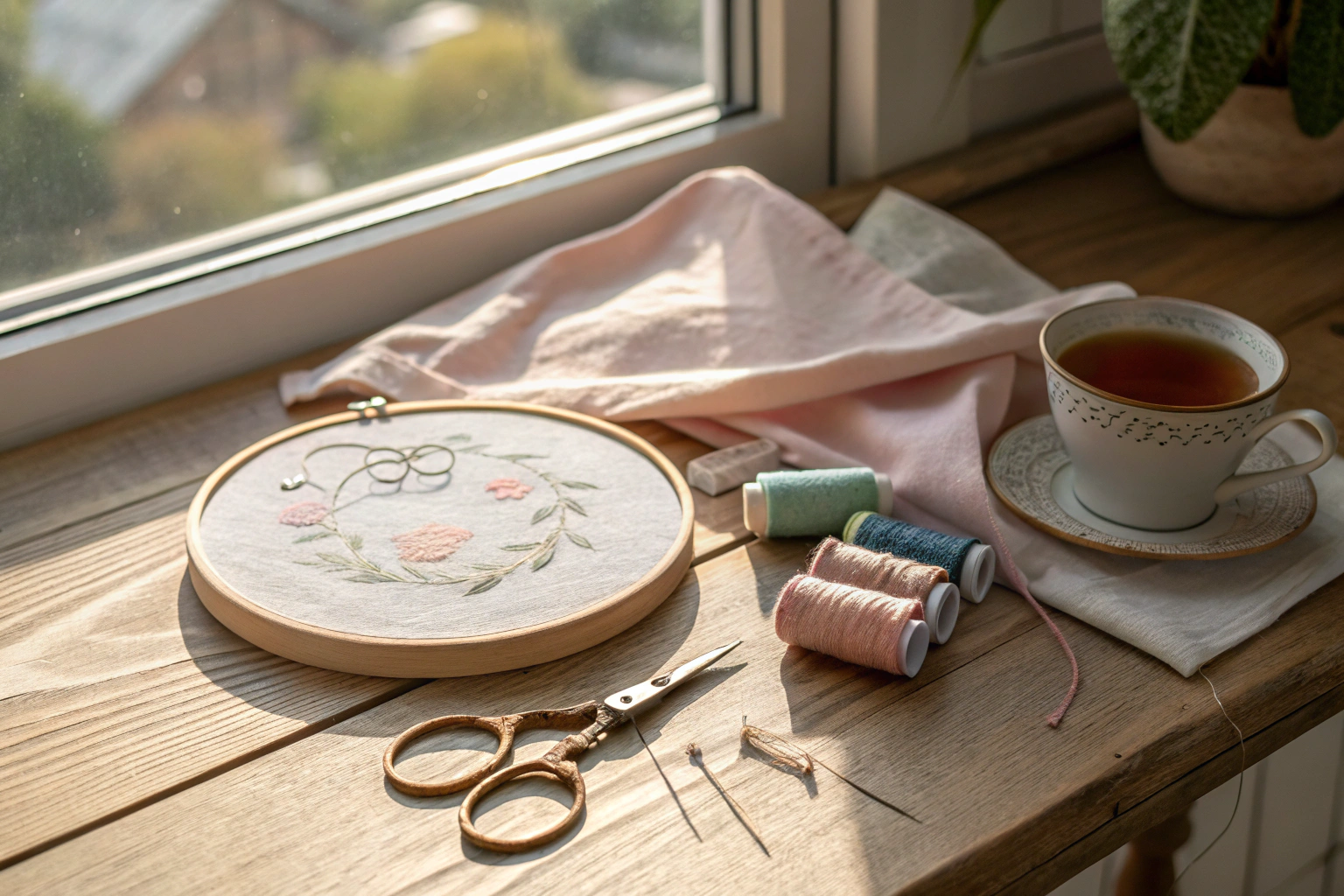
- Fabric scraps or old clothing (cotton works best for beginners)
- Embroidery needles size 22-26 (larger eye for easier threading)
- Cotton embroidery floss or thread in colors that speak to you
- Small embroidery hoop 4-6 inches (optional but helpful)
- Sharp fabric scissors for clean cuts
- Thimble if you prefer finger protection
- Natural lighting or good lamp for comfortable stitching
The beauty of working with repurposed materials extends beyond cost savings—it connects us to sustainable living practices and adds layers of meaning to our work. That beloved shirt that no longer fits becomes a canvas for meditation. Vintage fabric from thrift stores carries stories and history into our contemplative practice. Even thread scraps from other projects find new purpose in slow stitching explorations.
When selecting materials, trust your intuitive responses to color, texture, and weight. The fabrics that draw your attention often carry exactly the energy your creative spirit needs. Natural fibers like cotton, linen, and wool offer superior tactile experiences that enhance the sensory meditation aspects of slow stitching.
Basic stitches for beginners: simple techniques with profound impact
The fundamental stitches of slow stitching require no prior needlework experience yet offer infinite possibilities for mindful exploration. Each basic technique serves as both a building block for creative expression and a gateway into meditative states through repetitive, focused movement.
- Running Stitch: Pass needle in and out in even intervals – creates meditative rhythm
- Straight Stitch: Single lines of varying lengths – perfect for expressive mark-making
- French Knot: Wrap thread around needle twice, pull through – adds texture and focus
- Backstitch: Work backwards to create solid lines – builds patience and precision
The running stitch forms the foundation of most slow stitching practices because its rhythmic in-and-out motion naturally synchronizes with breathing patterns. As you develop consistency in stitch length and spacing, your mind settles into the peaceful repetition, often achieving meditative states within minutes of beginning.
French knots offer a different type of mindfulness experience, requiring focused attention and gentle precision as you wrap the thread around your needle. Many practitioners find these textural elements particularly grounding during anxious moments, as the technique demands complete present-moment awareness.
Each stitch type contributes unique benefits to your mindfulness practice. Straight stitches encourage expressive freedom and emotional release, while backstitches cultivate patience and methodical thinking. The key is exploring how different techniques affect your mental state and choosing stitches that support your current emotional needs.
Creating your first slow stitching project
Your inaugural slow stitching project should prioritize the meditative experience over any specific visual outcome. This beginner-friendly approach removes performance pressure while establishing healthy creative habits that will support your long-term practice.
- Set intention: Choose a word or feeling to focus on during stitching
- Prepare fabric: Cut 6×6 inch square from old clothing or fabric scrap
- Begin with breath: Take three deep breaths before making first stitch
- Create simple lines: Use running stitch to make gentle, flowing lines
- Add texture: Scatter French knots where they feel right
- Practice presence: When mind wanders, gently return attention to needle and thread
- Close mindfully: End with gratitude for time spent in creative meditation
The intention-setting ritual that begins each session transforms ordinary needlework into sacred practice. Whether you focus on cultivating patience, processing grief, or simply enjoying present-moment awareness, this initial commitment guides your creative choices and deepens the mindfulness benefits.
As you work through your first project, notice how your relationship with imperfection evolves. Those slightly uneven stitches and wandering lines that might have frustrated you in other contexts become beautiful expressions of human authenticity in slow stitching. This shift in perspective often extends beyond the craft table into daily life, fostering greater self-acceptance and creative confidence.
Permission to play: embracing creative freedom in slow stitching
The most transformative aspect of slow stitching lies in its radical permission to play, experiment, and create without rules or expectations. This creative freedom directly challenges the perfectionism that keeps many of us trapped in cycles of creative paralysis and self-judgment.
My own journey from rigid perfectionism to joyful experimentation began when I stopped viewing "mistakes" as failures and started seeing them as design opportunities. That crooked line became a river. Those uneven French knots transformed into a field of wildflowers. What I initially perceived as errors revealed themselves as the most interesting and authentic elements of my work.
This shift from control to flow represents a fundamental mindfulness principle: learning to work with what arises rather than forcing predetermined outcomes. When we release attachment to perfection, we create space for genuine self-expression and unexpected beauty to emerge through our unique creative voice.
The practice of embracing imperfection in slow stitching gradually rewires our relationship with failure and success in all areas of life. Students consistently report increased confidence, reduced anxiety around creative tasks, and greater willingness to take risks in their personal and professional endeavors after developing this playful approach to making.
Integrating slow stitching into your daily routine
Sustainable mindfulness practice requires seamless integration into existing routines rather than adding another burden to already busy schedules. Slow stitching's portability and flexibility make it uniquely suited for modern lifestyle demands while providing consistent opportunities for present-moment awareness throughout the day.
- Morning ritual: 10 minutes of stitching with coffee creates peaceful start
- Lunch break meditation: Keep small project in desk drawer for midday reset
- Commute companion: Stitch on public transport (avoid during driving)
- Evening wind-down: Replace screen time with 15 minutes of mindful stitching
- Weekend sessions: Longer 30-60 minute sessions for deeper practice
- Travel practice: Pack small kit for hotel rooms and waiting areas
The key to successful habit formation lies in linking your stitching practice to established daily activities rather than creating entirely new time blocks. When slow stitching becomes your go-to response to waiting periods, transition moments, or stress spikes, it naturally weaves into the fabric of your life without requiring major schedule adjustments.
My personal routine has evolved to include brief stitching sessions during morning coffee, longer contemplative periods on weekend afternoons, and travel projects that transform airport delays into opportunities for creative meditation. This flexibility ensures consistent practice regardless of life's inevitable schedule disruptions.
Beyond the basics: creative slow stitching projects for mindfulness
As your slow stitching practice matures, more complex projects offer opportunities to deepen both technical skills and mindfulness benefits. These advanced explorations maintain the core principles of process-over-product while introducing new creative challenges that support continued growth and engagement.
- Mandala circles: Repetitive patterns that deepen meditative focus
- Nature studies: Botanical subjects that encourage mindful observation
- Abstract landscapes: Emotional expression through color and texture
- Gratitude samplers: Daily stitching practice with meaningful words
- Seasonal celebrations: Projects that honor natural cycles and transitions
- Memory cloths: Textile journals capturing significant life moments
Mandala projects particularly excel at creating sustained meditative states through their repetitive, symmetrical patterns. The circular format naturally draws attention inward while the repetitive stitching rhythms induce calm focus that can last for hours. Many practitioners report profound insights and emotional breakthroughs during extended mandala sessions.
Nature-inspired projects connect slow stitching to mindful observation practices, encouraging deeper attention to seasonal changes, botanical details, and natural color relationships. These studies often become gateways to broader environmental awareness and appreciation for the natural world's inherent imperfection and beauty.
Slow stitched hellebores: a special project
Hellebores hold particular significance in my slow stitching practice because their resilient winter blooming mirrors the quiet strength that emerges through contemplative needlework. These subtle, often overlooked flowers teach profound lessons about finding beauty in challenging seasons and trusting natural timing for growth and expression.
Creating hellebore-inspired pieces begins with mindful observation rather than rushing to stitch. I spend time sitting quietly with the flowers, noticing their drooping heads, delicate petal variations, and muted color palettes. This contemplative observation phase often proves as meditative as the actual stitching process.
The translation from observation to textile art requires letting go of literal representation and trusting intuitive responses to color, texture, and form. My hellebore pieces rarely look exactly like the flowers that inspired them, but they capture something more essential—the quiet dignity and understated grace that these winter bloomers embody.
Working with botanical subjects in slow stitching deepens our connection to natural cycles and seasonal awareness while providing endless inspiration for contemplative practice. Each flower, leaf, or seed pod offers unique lessons in patience, impermanence, and natural beauty.
The sustainable aspect: mindful making with purpose
The intersection of slow stitching and sustainable living represents a natural evolution of mindfulness practice into conscious consumption and environmental stewardship. When we approach making with genuine appreciation for materials and processes, we inevitably develop greater awareness of our consumption patterns and environmental impact.
| Fast Fashion/Mass Crafts | Slow Stitching Practice | Environmental Impact |
|---|---|---|
| New materials always | Repurposed fabrics | Reduces textile waste |
| Quick consumption | Mindful creation | Extends material lifespan |
| Disposable mindset | Treasured handmade | Builds appreciation |
| Global shipping | Local sourcing | Lower carbon footprint |
| Chemical processes | Natural materials | Healthier for maker and environment |
Upcycling through slow stitching transforms discarded clothing and fabric scraps into meaningful art while reducing textile waste. This practice naturally extends the lifespan of materials that might otherwise end up in landfills, creating beauty from what consumer culture considers disposable.
My own sustainability journey through slow stitching has radically changed my relationship with clothing purchases, craft supplies, and material possessions generally. When you spend hours mindfully stitching with repurposed materials, you develop profound appreciation for the resources, labor, and environmental costs embedded in every textile item.
The slow fashion principles that emerge from this mindful making practice—quality over quantity, repair over replacement, appreciation over consumption—create ripple effects that extend far beyond the craft table into all areas of conscious living.
Common challenges and how I overcame them
Every slow stitching practitioner encounters obstacles that can derail their mindfulness practice if not addressed with compassion and practical strategies. Understanding these common challenges and having concrete solutions prevents temporary setbacks from becoming permanent abandonment of this beneficial practice.
- Challenge: Perfectionism paralysis → Solution: Set timer for ‘good enough’ practice
- Challenge: Losing mindful focus → Solution: Return attention to breath and needle
- Challenge: Inconsistent practice → Solution: Link stitching to existing daily habit
- Challenge: Comparing to others → Solution: Cover social media, focus on personal journey
- Challenge: Feeling unproductive → Solution: Reframe as essential self-care time
- Challenge: Running out of ideas → Solution: Keep inspiration journal of colors and textures
Perfectionism remains the most persistent obstacle for new practitioners, often manifesting as analysis paralysis before beginning or harsh self-criticism during the creative process. I've found that setting gentle time boundaries—committing to stitch for just 10 minutes without judgment—helps bypass perfectionist tendencies and establishes momentum for continued practice.
The challenge of maintaining mindful focus during stitching mirrors difficulties encountered in traditional meditation practice. When I notice my mind wandering to worries or distractions, I gently guide attention back to the physical sensations of needle piercing fabric and thread sliding through material. This tactile anchor proves more accessible than breath-focused meditation for many practitioners.
Comparison with other artists' work, particularly on social media platforms, can undermine confidence and creative joy. I've learned to curate my online environment carefully, unfollowing accounts that trigger competitive feelings and instead following makers who celebrate process, imperfection, and personal growth over technical achievement.
Creative ways to use your slow stitched art
The contemplative energy invested in slow stitching creates pieces that carry special significance beyond their visual appeal. How we choose to display, share, or use these mindfully created textiles can extend their positive impact and reinforce the values underlying the practice.
- Framed wall art: Display pieces that bring daily mindfulness reminders
- Meditation altar: Create sacred space with meaningful stitched elements
- Mindful gifts: Share handmade pieces that carry intention and love
- Clothing embellishment: Transform ordinary garments into personal statements
- Book covers: Protect journals with stitched fabric covers
- Table runners: Bring contemplative beauty to dining experiences
- Pillow covers: Add handmade comfort to relaxation spaces
Framing and displaying slow stitched pieces serves as daily visual reminders of mindfulness principles and creative capacity. Unlike mass-produced art, these handmade textiles carry the energy of contemplative practice and personal growth, making them powerful anchors for maintaining mindful awareness throughout busy days.
Creating meditation altars or sacred spaces with slow stitched elements deepens the spiritual dimensions of the practice while providing focal points for continued contemplative work. Many practitioners find that pieces created during significant life transitions or emotional processing hold particular power when incorporated into daily meditation practice.
Gifting handmade pieces extends the mindfulness benefits beyond the maker to recipients who receive not just beautiful objects but tangible expressions of time, attention, and care. The slow fashion principles embedded in these gifts often inspire recipients to reconsider their own consumption patterns and creative practices.
The integration of slow stitched elements into functional items—clothing embellishments, book covers, table linens—brings mindfulness reminders into everyday activities while honoring the practical textile traditions that inspired this contemplative practice. These functional applications ensure that the time invested in mindful making continues to serve daily life in meaningful ways.
Frequently Asked Questions
Slow stitching is a mindful hand-sewing practice that emphasizes the process over perfection, using simple stitches to create textured fabrics or art pieces. It encourages taking time to enjoy each stitch, often incorporating recycled materials for sustainability. Unlike fast-paced sewing, it focuses on relaxation and creativity without pressure for quick results.
Slow stitching promotes mindfulness by encouraging practitioners to focus on the present moment, paying attention to the rhythm of each stitch and the feel of the fabric. This repetitive action helps quiet the mind, reducing distractions and fostering a sense of calm similar to meditation. Many find it a therapeutic way to unwind and connect with their creative side.
To start slow stitching, you’ll need basic materials like fabric scraps, embroidery floss or thread, needles, and scissors. Optional items include an embroidery hoop for stability and embellishments like beads or buttons for added texture. These supplies are inexpensive and often sourced from recycled items, making it accessible for beginners.
Simple slow stitching projects for beginners include creating textured patches for mending clothes, making small embroidered bookmarks, or stitching abstract fabric collages. You can start with basic running stitches on scrap fabric to form patterns or motifs like flowers. These ideas allow experimentation without complexity, building confidence over time.
Yes, slow stitching can help alleviate anxiety and stress by providing a focused, repetitive activity that diverts attention from worries and promotes relaxation. The tactile nature of handling fabrics and threads engages the senses, leading to a meditative state that lowers cortisol levels. Many practitioners report improved mood and reduced tension after sessions.
Slow stitching differs from regular sewing by prioritizing the enjoyable, unhurried process rather than efficiency or flawless outcomes, often resulting in artistic rather than functional pieces. While mending focuses on repairing items quickly, slow stitching embraces imperfections and creativity for mindfulness. It doesn’t require patterns or machines, making it more accessible and therapeutic.