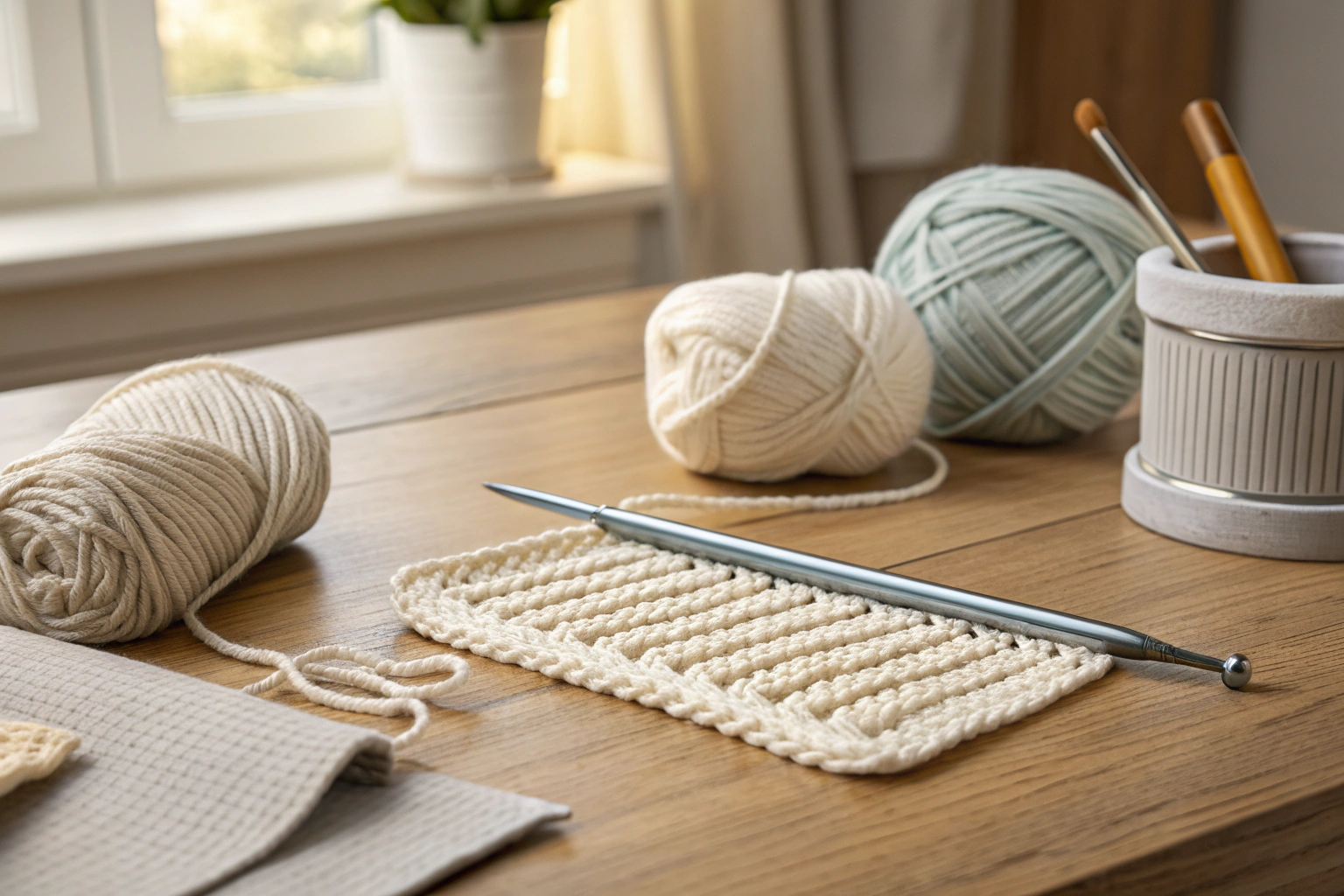
Back loops only crochet (abbreviated BLO) is a simple technique where you insert your hook under only the back loop of each stitch from the previous row, rather than both. This method creates a visible horizontal bar on the front of your work, resulting in a stretchy, ribbed fabric. While identifying the correct loop can be a slight hurdle for newcomers, it’s one of the easiest ways to add professional-looking texture and flexibility to almost any crochet project.
Key Benefits at a Glance
- Creates Visible Texture: Working in the back loop only is a fast and effective way to produce beautiful, stretchy ribbing ideal for hat brims, sweater cuffs, and borders.
- Enhances Fabric Stretch: This technique gives the finished fabric significantly more elasticity and flexibility, making it a perfect choice for comfortable, fitted garments.
- Easy to Master: It’s a beginner-friendly skill that dramatically alters the look of basic stitches without requiring you to learn complex new stitch patterns, offering a big impact for little effort.
- Improves Drape and Flexibility: By using only one loop, the resulting fabric is lighter and less stiff than standard crochet, creating a beautiful drape for blankets, scarves, and shawls.
- Versatile Across Patterns: This method is compatible with nearly any crochet stitch—from single to treble crochet—allowing you to easily incorporate texture into a wide variety of designs.
Purpose of this guide
This guide is for crocheters of any skill level, from beginners wanting an easy way to elevate their work to experienced makers seeking new textures. It solves the common problem of creating stiff fabric by introducing a simple technique for adding stretch and ribbing. You will learn how to correctly identify the back loop, execute the stitch step-by-step, and see how it transforms your projects. By following this advice, you can avoid frequent mistakes like creating uneven tension, enabling you to achieve consistent, professional-looking results with confidence.
Introduction
After fifteen years of teaching crochet workshops, I’ve discovered that back loops only crochet is perhaps the most transformative technique beginners can master. This simple modification to basic crochet stitches opens up a world of textural possibilities that can elevate your projects from amateur to professional-looking in just one row. When you work in the BLO crochet method, you’re not just creating fabric – you’re adding dimension, stretch, and visual interest that makes every piece more engaging.
The beauty of crochet texture techniques like back loops only lies in their accessibility. You don’t need special tools or advanced skills to achieve stunning results. By simply changing where you insert your hook, you transform ordinary single crochet into ribbed, stretchy fabric that rivals knitted textures. This technique has become a cornerstone of my teaching because it demonstrates how small adjustments in crochet techniques can yield dramatic improvements in finished projects.
What is back loops only crochet
Back loops only crochet fundamentally changes how you approach every stitch by working exclusively through the back portion of each stitch’s top loops. Unlike standard crochet where your hook passes through both the front and back loops simultaneously, this technique isolates the back loop to create distinctive horizontal ridges and enhanced fabric elasticity.
When you examine a standard crochet stitch from above, you’ll see what appears to be a “V” shape. This V consists of two strands – the front loop (closest to you) and the back loop (farthest from you). In BLO crochet, you deliberately skip the front loop and work only through the back strand, leaving the front loops unworked and creating the signature textured appearance.
“The back loop creates a distinct ridge on the surface of the crochet fabric and is often used for decorative effects, such as ribbing. In 2025, 83% of survey respondents reported using BLO techniques in at least one project for added texture.”
— The Spruce Crafts, February 2025
The resulting crochet texture resembles knitted ribbing, with raised horizontal lines running across your work. This technique works with any basic crochet stitch – single crochet, double crochet, half double crochet – making it incredibly versatile for both beginners and experienced crocheters. The ribbed crochet effect naturally adds stretch to your fabric, making it perfect for items that need to fit snugly or expand, like hat bands, cuffs, or waistbands.
| Aspect | Regular Crochet | Back Loops Only |
|---|---|---|
| Texture | Smooth, flat | Ribbed, textured |
| Stretch | Minimal | Enhanced elasticity |
| Appearance | Standard V-stitches | Raised horizontal lines |
| Difficulty | Basic | Beginner-friendly |
- Back loop crochet creates natural ribbing and stretch
- Works with any basic crochet stitch
- Produces distinctive horizontal texture lines
- Essential technique for professional-looking edges
Many beginners practice back-loop techniques right after they master their foundation chain. If you need a refresher on chains, start here: How to Start a Crochet Chain.
The anatomy of a crochet stitch
Understanding crochet stitch anatomy is crucial for mastering back loops only technique. Each completed crochet stitch creates a small horizontal bar at the top, which forms the foundation for your next row. This bar consists of two distinct strands that create the characteristic V-shape when viewed from above.
The front loop sits closest to you as you work, while the back loop extends away from you toward the back of your work. Think of it like a tiny bridge – the front loop is the side you’re standing on, and the back loop is the far side you’re reaching toward. This simple visualization helps many of my workshop students immediately identify which loop to target.
When working standard crochet, your hook naturally scoops up both strands of this V-stitch simultaneously. However, for back loops only crochet, you must consciously adjust your hook placement to catch only the back strand. The unworked front loops remain visible on the surface of your work, creating the raised texture lines that make this technique so appealing.
For additional context, see the crochet overview which covers fundamental stitch components.
What you’ll need
Starting your back loops only crochet journey requires minimal supplies, making this technique accessible for crocheters at any budget level. The key is selecting materials that will clearly show your stitch definition while being forgiving enough for practice.
- Medium weight yarn (worsted weight recommended for beginners)
- Size H/8 (5.0mm) crochet hook
- Scissors
- Yarn needle for weaving in ends
- Stitch markers (optional but helpful)
Yarn selection significantly impacts your learning experience. Worsted weight yarn in light colors like cream, pale yellow, or light gray provides the best stitch visibility for beginners. Avoid dark colors or highly textured yarns initially, as they can make it difficult to distinguish individual loops. Cotton or cotton blend yarns work exceptionally well because they hold their shape and clearly show texture definition.
Your crochet hook choice affects both comfort and results. An H/8 (5.0mm) aluminum hook provides good grip and smooth yarn flow, while the size creates stitches large enough to easily identify front and back loops. As you gain confidence, you can experiment with different hook materials like bamboo or ergonomic handles for extended crafting sessions.
Mastering the back loops only crochet technique
Learning how to crochet in back loops only requires developing muscle memory for the modified hook placement while maintaining consistent tension throughout your work. The technique itself is straightforward, but achieving even, professional results takes practice and attention to detail.
“By working in the back loop only, crocheters can achieve flexibility in fabric and leave unworked front loops for joining or decorative detail; 76% of BLO users prefer this method for creating ribbed bands on hats and accessories.”
— Craft Yarn Council, April 2024
The BLO technique fundamentally changes your relationship with each stitch. Instead of the automatic motion of catching both loops, you must deliberately target only the back loop with precise hook placement. This conscious action initially feels awkward, but becomes second nature with consistent practice.
Success with this technique relies heavily on proper single crochet foundation skills. If you’re comfortable creating even single crochet stitches in both loops, transitioning to back loops only becomes a matter of adjusting your hook angle and maintaining awareness of loop placement throughout each row.
- Create a foundation chain of 20 stitches for practice
- Work one row of single crochet in both loops
- Turn your work and chain 1
- Identify the back loop of each stitch
- Insert hook through back loop only
- Complete single crochet as normal
- Continue across row working only in back loops
Crochet beginning stitches
Creating your practice swatch establishes the foundation for learning back loops only technique. Start with a foundation chain of 20 stitches using worsted weight yarn and an H/8 hook. This length provides enough stitches to develop rhythm without becoming overwhelming for practice sessions.
Back-loop fabric works beautifully with textured HDC rows. For a beginner-friendly stitch that pairs well with BLO, try: Mastering the HDC Crochet Stitch.
Work your first row in standard single crochet, inserting your hook through both loops of each chain stitch. This baseline row gives you familiar territory to work from and creates the proper stitch structure for practicing back loop identification. Keep your tension even and count your stitches to ensure you have exactly 20 single crochets plus your turning chain.
Determine where to insert the hook
Proper crochet hook placement for back loops only requires developing a reliable identification system. Hold your work so the stitches from your previous row are clearly visible, with the V-shaped tops of each stitch facing you. The back loop appears as the strand farthest from your body, running horizontally across the back edge of each stitch.
A helpful identification trick involves tilting your work slightly toward you. The front loops will appear more prominent and closer, while the back loops recede slightly. This visual separation makes targeting the correct loop much easier, especially when you’re still developing muscle memory for the technique.
Practice inserting your hook through several back loops without completing the stitches first. This dry run helps establish the correct angle and hook position before adding yarn manipulation to the process. Pay attention to how your hook naturally wants to slide under the back loop – this smooth entry indicates proper placement.
Continue crocheting in the back loop only
Maintaining the back loop technique across multiple rows requires consistent tension management and careful attention to your work’s orientation after each turn. When you flip your work to begin a new row, the back loops from your previous row become the target for your current row’s stitches.
The key to success lies in establishing a steady rhythm that allows you to identify and target each back loop without hesitation. Work slowly initially, checking each stitch placement before completing the crochet motion. Your turning chain should maintain the same tension as your working stitches to keep edges even and prevent pulling or bunching.
After completing several rows, you’ll notice the distinctive horizontal ridges forming on both sides of your work. The front of your piece shows the unworked front loops as raised lines, while the back displays the traditional crochet texture. This double-sided effect makes back loops only crochet particularly appealing for reversible items like scarves or cowls.
Common mistakes and how to avoid them
- Accidentally working in front loops – always check loop orientation before inserting hook
- Inconsistent tension causing uneven texture – maintain steady yarn tension throughout
- Skipping stitches when turning – count stitches at end of each row to verify
The most frequent error beginners make involves losing track of which loop they’re targeting, especially when tension varies or lighting conditions change. Develop the habit of pausing before each stitch to visually confirm you’re approaching the back loop from the correct angle. If your pattern starts looking irregular, stop and examine your last few stitches to identify where the technique broke down.
Inconsistent tension creates uneven texture definition and can make loop identification more difficult. If your stitches become too tight, the loops compress together and become harder to separate. Conversely, loose stitches create floppy fabric that doesn’t showcase the ribbed texture effectively. Practice maintaining moderate, even tension that allows easy hook insertion while creating defined stitch structure.
Projects that shine with back loops only crochet
Crochet projects that incorporate back loops only technique benefit from the enhanced texture, stretch, and professional appearance this method provides. The textured crochet surface adds visual interest while the increased elasticity improves fit and function in wearable items.
| Project Type | Benefits | Best Applications |
|---|---|---|
| Ribbed Edges | Stretch, professional finish | Cuffs, waistbands, hat brims |
| Textured Panels | Visual interest, dimension | Blanket sections, pillow covers |
| Amigurumi Details | Defined features, structure | Facial features, clothing details |
| Scarves | Drape, warmth retention | Winter accessories, wraps |
Ribbed crochet applications extend far beyond simple edging. The technique excels in any project where you want to combine stretch with structure, such as fitted sweater bodies, snug-fitting hats, or form-fitting accessories. The horizontal texture lines also create visual breaks in solid-colored items, adding interest without requiring color changes or complex stitch patterns.
Amigurumi artists particularly appreciate back loops only crochet for creating realistic clothing details, facial features, and structural elements. The raised texture lines can simulate fabric weaves, create definition between body sections, or add dimensional details that bring characters to life.
Ribbing and edges
Crochet ribbing created through back loops only technique provides superior stretch and recovery compared to standard crochet edges. This elasticity makes it ideal for any garment opening that needs to grip comfortably without binding – cuffs, necklines, waistbands, and hat brims all benefit from this enhanced flexibility.
If you love the look of crochet ribbing, you might also enjoy knitting ribbing, which creates similar elasticity. Learn the basics here: Knit Ribbing Mastery.
The professional appearance of back loop ribbing rivals traditional knitted ribbing while remaining accessible to crocheters who haven’t mastered complex stitch combinations. Single crochet worked in back loops only creates tight, defined ribbing perfect for sweater cuffs, while half double crochet in back loops produces a more relaxed ribbed texture suitable for casual fabric applications.
When designing ribbed edges for blanket borders, back loops only crochet creates a substantial, finished appearance that frames the main body beautifully. The technique prevents edges from curling or flaring while adding textural interest that enhances the overall design.
Textured patterns
Textured crochet patterns incorporating back loops only technique create sophisticated surface interest without requiring advanced stitch knowledge. The horizontal ridges formed by unworked front loops can be arranged in various patterns – alternating with regular rows, creating geometric sections, or combining with color changes for striped effects.
Fabric created entirely in back loops only develops a unique character that’s neither fully crochet nor knit in appearance. This hybrid quality makes it particularly appealing for modern home décor items like pillow covers, wall hangings, or contemporary blanket designs where texture takes precedence over traditional crochet aesthetics.
Pattern designers increasingly incorporate back loops only sections to create visual breaks in complex designs. These textured panels provide rest areas for the eye while maintaining the overall design flow, making them valuable tools for both beginning and advanced pattern writers.
Ways to use this technique
Creative applications of back loops only crochet extend well beyond traditional ribbing and edging uses. Technique variations allow you to incorporate this method into virtually any project type, from decorative crochet elements to functional amigurumi details.
- Alternate back loop and front loop rows for basket weave texture
- Use in amigurumi to create clothing seams and details
- Combine with color changes for striped ribbing effects
- Apply to border rounds for dimensional edging
Crochet applications for this technique continue expanding as designers discover new ways to exploit its textural properties. The raised horizontal lines can simulate architectural details in home décor pieces, create realistic textures in pictorial crochet, or add subtle dimension to otherwise flat surfaces.
Amigurumi construction benefits enormously from strategic back loops only placement. Using this technique for clothing seams creates realistic garment details, while applying it to facial features adds definition and character. The stretch properties also help with stuffing and shaping three-dimensional forms.
Scarf projects showcase back loops only crochet particularly well because the technique creates reversible fabric with interesting texture on both sides. This double-sided appeal eliminates concerns about which side shows when the scarf shifts during wear.
Front loop variations
Front loop crochet creates the complementary technique to back loops only, working exclusively through the front strands of each stitch. This crochet variation produces similar textural effects but with the raised ridges appearing on the opposite side of the work.
Combining front loop and back loop techniques in the same project creates sophisticated pattern effects. Alternating rows of each technique produces a basket weave appearance, while using them in geometric arrangements can create plaid or checkered effects without color changes.
Gauge considerations become important when mixing front loop and back loop techniques, as the different methods can produce slightly different row heights. Always create test swatches when planning projects that combine these technique variations to ensure consistent proportions throughout your finished piece.
Combining back loops only with different stitches
Back loops only crochet adapts beautifully to various crochet stitches, each producing unique textural effects and practical applications. Understanding how different stitches behave when worked in back loops only expands your design possibilities significantly.
| Stitch Type | Effect with BLO | Best Use |
|---|---|---|
| Single Crochet | Tight ribbing | Edges, bands |
| Double Crochet | Loose texture | Body panels |
| Half Double Crochet | Medium stretch | Transitional areas |
| Slip Stitch | Minimal height | Joining, edging |
Advanced techniques emerge when you begin mixing stitch heights within back loops only sections. Creating gradual transitions from single crochet through half double crochet to double crochet, all worked in back loops only, produces flowing, dimensional effects perfect for sculptural pieces or fitted garment shaping.
Stitch combinations using back loops only technique can simulate complex textural patterns without requiring intricate stitch sequences. Simple alternations between single and double crochet in back loops only create wave-like textures, while strategic placement of taller stitches can form geometric patterns or pictorial elements.
Double crochet worked in back loops only creates an open, stretchy fabric with pronounced horizontal ridges. This combination works exceptionally well for lightweight scarves, summer tops, or any project where you want maximum drape with textural interest.
Slip stitch in back loops only produces minimal height changes while maintaining the ribbed texture effect. This technique excels for joining rounds in amigurumi while preserving surface texture, or for creating subtle textural transitions in flat work.
Tips for perfecting your back loops only technique
Advanced crochet techniques for back loops only focus on achieving consistent results while maintaining the flexibility and stretch that make this method so appealing. Professional-level execution requires attention to tension management, stitch counting, and strategic application within larger projects.
- Keep consistent tension – too tight restricts stretch, too loose loses definition
- Count stitches regularly to maintain even edges
- Practice on swatches before starting projects
- Use stitch markers to track pattern repeats in complex designs
Tension control becomes critical when working extended sections in back loops only, as the modified hook placement can unconsciously affect your yarn grip. Practice maintaining your normal working tension while adjusting only your hook angle and loop targeting. Consistent tension ensures even stretch properties throughout your finished piece.
Professional finishing techniques for back loops only projects include careful attention to starting and ending points. When transitioning from regular crochet to back loops only sections, maintain consistent stitch height and spacing to prevent visible boundaries. Similarly, blocking back loops only fabric requires gentle stretching that preserves the ribbed texture while encouraging even stitch definition.
Gauge swatching becomes essential when incorporating back loops only technique into fitted projects. The increased stretch and modified stitch structure can significantly affect finished measurements compared to standard crochet. Always work substantial gauge swatches and measure them both relaxed and gently stretched to understand the fabric’s behavior.
Slip knot placement and foundation chain tension affect how well back loops only technique integrates with your starting edge. Ensure your foundation provides adequate stretch to complement the elastic properties of back loop fabric, preventing puckering or restriction at the base of your work.
Frequently Asked Questions
Crocheting in back loops only (BLO) means inserting your hook solely into the back loop of the stitch, which is the loop farthest from you when viewing the top of the fabric. This technique leaves the front loop free, creating a distinct ridge or textured effect in the finished project. It’s a common method to add elasticity and visual interest without changing yarn or hook size.
To crochet into back loops only, hold your work with the front facing you and insert the hook under the back loop of the stitch, ignoring the front loop. Yarn over and pull through as you would for a standard stitch, completing it normally. Practice on a swatch to ensure even tension, as this method can alter the fabric’s drape.
Back loop only crochet creates a ribbed texture with prominent horizontal lines, giving the fabric a more three-dimensional appearance. It enhances stretchiness, making it ideal for items like cuffs or brims that need flexibility. The free front loops can also be used for additional decorative elements in advanced patterns.
Back loop crochet is commonly used for creating ribbed edges on hats, socks, and sweaters to provide a snug fit. It’s also practical for making textured blankets or scarves that require extra warmth and elasticity. Additionally, this technique works well in amigurumi for seamless joins and shaping.
The back loop is the part of the “V” shape at the top of the stitch that is farthest from you when holding the work. Tilt the fabric slightly to see the two loops clearly, with the front loop closer and the back one behind it. Identifying it becomes easier with practice, especially in well-lit conditions or using stitch markers.