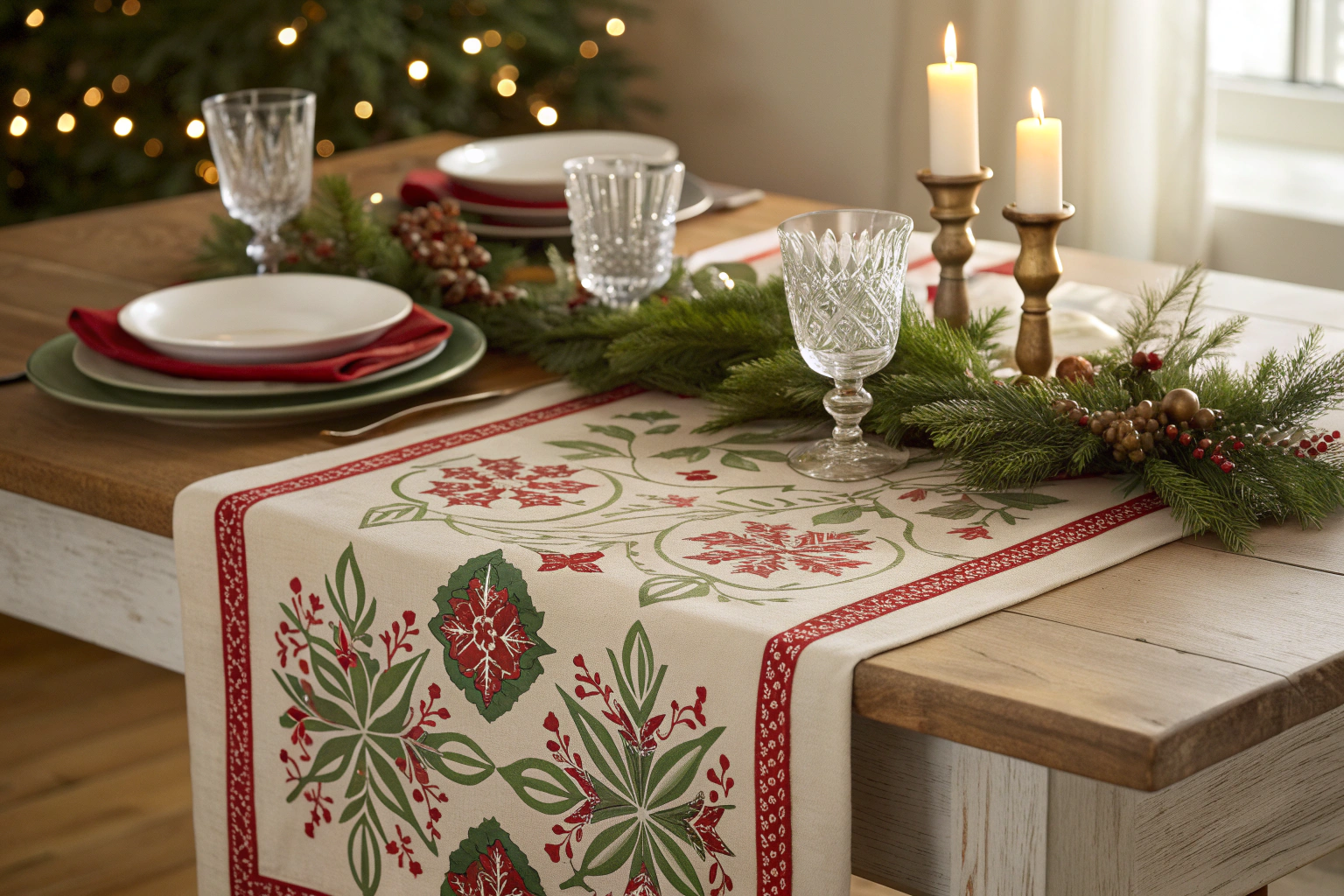
A christmas table runner pattern is a set of instructions used to sew, quilt, or crochet a decorative fabric strip for a dining table during the holiday season. These patterns guide crafters on fabric cuts, assembly, and finishing touches, helping create a custom piece to match your decor. They range from simple designs for beginners to intricate projects for experienced sewers, offering a festive way to personalize your home for a low cost.
Key Benefits at a Glance
- Cost Savings: Create a unique, high-quality table runner for a fraction of the cost of store-bought versions.
- Perfect Customization: Easily adjust the pattern’s length and width to perfectly fit any table, from small side tables to large dining tables.
- Beginner-Friendly: Many patterns are designed for novice sewers, featuring simple shapes and straightforward instructions for a quick, rewarding project.
- Handmade Gifts: Craft a thoughtful and personalized gift for friends and family that adds a special homemade touch to their holiday celebrations.
- Sustainable Crafting: Use up fabric scraps from other projects or upcycle old textiles to create an eco-friendly and beautiful holiday decoration.
Purpose of this guide
This guide is for anyone looking to add a personal, handmade touch to their holiday decor, from beginner crafters to experienced sewers. It solves the problem of finding clear, reliable instructions for creating a beautiful Christmas table runner. You will learn how to select the right pattern for your skill level, choose appropriate fabrics, and follow step-by-step directions to complete your project. We’ll also cover common mistakes to avoid, like inaccurate measurements, to ensure you create a professional-looking runner you can use for years to come.
Introduction
A beautiful Christmas table runner can transform your entire holiday dining experience from ordinary to absolutely magical. After creating dozens of festive table runners over the past fifteen years, I've discovered these handcrafted pieces are the secret to creating that perfect holiday atmosphere your guests will remember long after the season ends. In this comprehensive guide, I'll share my favorite patterns, techniques, and insider tips to help you create stunning Christmas table runners that will become treasured holiday traditions.
Why I love Christmas table runners as holiday projects
My journey with Christmas table runners began somewhat accidentally during my first year of marriage. Faced with a bare dining table and a tight budget, I decided to try making my own holiday decor. That first simple striped runner took me just one weekend to complete, but the joy it brought to our holiday decor was immeasurable. The way it anchored our festive table setting and created such a warm, cozy atmosphere convinced me that handmade Christmas decor was something truly special.
What I love most about Christmas table runners is their perfect balance of impact and manageability. Unlike full-sized quilts that can take months to complete, a table runner offers immediate gratification while still providing that satisfying sense of creating something beautiful with your own hands. They make incredible handmade Christmas decor pieces that guests always notice and compliment, yet they're small enough to complete between Thanksgiving and Christmas without stress.
Over the years, these projects have become central to my holiday crafting routine. There's something deeply satisfying about creating festive dining pieces that bring Christmas cheer to every meal throughout the season. Whether I'm making them as gifts for family gatherings or updating my own holiday decor, table runners have proven to be the perfect size for experimenting with new techniques while creating something genuinely useful and beautiful.
My favorite Christmas table runner styles and techniques
After years of exploring different approaches, I've developed a deep appreciation for the variety of techniques available for creating Christmas table runners. Each method offers its own unique appeal and challenges, making the craft endlessly interesting. My personal preferences have evolved significantly over time, and I now find myself drawn to techniques that balance visual impact with achievable construction methods.
- Traditional Patchwork – classic pieced designs using time-honored quilt blocks
- Appliqué – decorative elements applied to a background fabric for dimensional effects
- Foundation Paper Piecing – precise geometric patterns with sharp points and perfect seams
- Embroidery Embellished – combines machine or hand sewing with decorative stitching
- Modern Minimalist – clean lines and simple shapes for contemporary holiday decor
The beauty of Christmas table runner patterns lies in their adaptability. I've found that even traditional techniques can be refreshed with contemporary fabric choices, while modern approaches can incorporate classic Christmas motifs for timeless appeal. My students are often surprised to learn how different the same basic technique can look when executed with varying fabric selections and seasonal patterns.
What excites me most about teaching these techniques is watching crafters discover their personal style preferences. Some gravitate toward the precision of foundation paper piecing, while others fall in love with the organic nature of appliqué work. Each technique offers different opportunities for incorporating decorative accents and creating that perfect table centerpiece for your holiday celebrations.
Traditional quilted Christmas patterns I recommend
Traditional quilting patterns hold a special place in my heart, particularly when adapted for Christmas table runners. The classic blocks that have been beloved by quilters for generations take on new life when executed in festive Christmas fabric combinations. My go-to traditional patterns include Log Cabin blocks arranged in seasonal settings, various star patterns that echo the Christmas star, and simple nine-patch variations that showcase beautiful holiday prints.
When working with traditional patterns, I always emphasize the importance of fabric selection in achieving that authentic holiday feel. The classic red and green color palette remains popular for good reason – it instantly evokes the warmth and tradition of Christmas celebrations. However, I've also had great success with burgundy and gold combinations, or even cream and deep forest green for a more sophisticated approach to seasonal colors.
The rustic charm of traditional quilted runners comes from their connection to handmade traditions that span generations. These patterns work beautifully in homes with traditional decor, but I've been pleasantly surprised by how well they complement modern spaces when the fabric choices lean toward contemporary holiday prints. The key is understanding how the scale and style of your chosen Christmas motifs will interact with the geometric nature of traditional quilt blocks.
My approach to appliqué Christmas table runner designs
Appliqué work has become one of my absolute favorite techniques for Christmas table runners because it allows for such creative freedom in incorporating beloved holiday symbols. Whether I'm working with poinsettia motifs, Christmas trees, or delicate snowflake designs, appliqué gives me the ability to create truly dimensional and eye-catching seasonal embellishments.
My preferred approach combines machine appliqué for efficiency with selective hand embroidery details that add that special handmade touch. I've found that fusible web products have revolutionized appliqué work, making it much more accessible to beginners while still allowing for beautiful results. The key is choosing the right weight of fusible web for your specific Christmas motifs – heavier elements like tree shapes need different support than delicate snowflake details.
One of my most challenging appliqué projects was a runner featuring a complete winter village scene with multiple Christmas trees, tiny houses, and intricate snowflake patterns scattered throughout. That project taught me the importance of planning the layering order carefully and using temporary spray adhesive to position elements before final stitching. The result became a family treasure that my daughter specifically requested for her first apartment, proving that the extra effort invested in detailed appliqué work creates pieces that truly become heirloom Christmas decor.
Modern and minimalist holiday runners in my collection
My exploration of modern and minimalist Christmas table runners began when my daughter moved into her first contemporary apartment. Her clean, modern decor called for holiday pieces that maintained the winter theme without overwhelming her carefully curated space. This challenge pushed me to experiment with geometric designs, unexpected color palettes, and simplified Christmas motifs that could complement modern home decoration.
Some of my most successful modern runners feature large-scale snowflake patterns in metallic silver on crisp white backgrounds, or geometric Christmas trees created through precision piecing in sophisticated color combinations. I've also experimented with asymmetrical designs that create visual interest through placement rather than complex piecing. These contemporary approaches have been surprisingly well-received by younger family members who previously showed little interest in handmade holiday decor.
The key to successful modern Christmas table runners lies in restraint and intentional design choices. Rather than filling every inch with Christmas motifs, these pieces rely on clean lines, strategic use of negative space, and carefully chosen accent elements. I've found that metallic threads and subtle texture variations can add the perfect elegant touch without overwhelming the minimalist aesthetic that makes these pieces so appealing for contemporary dining table settings.
My experience with wool and textured table runners
Discovering wool appliqué completely transformed my approach to creating Christmas table runners with rich texture and dimensional appeal. The first wool runner I created featured simple star shapes in various textured wools, and I was amazed by how the natural variations in the wool created such visual interest without any additional embellishment. The cozy atmosphere that wool pieces bring to holiday decor perfectly captures that rustic charm I love in winter decorating.
Working with wool requires different techniques than cotton fabrics, and I had to learn to embrace the organic edges and slight irregularities that give wool appliqué its distinctive character. I've developed relationships with several wool suppliers who provide hand-dyed pieces in gorgeous seasonal colors that you simply can't achieve with commercial cotton fabrics. The preparation process of felting and cutting wool pieces has become a meditative part of my holiday crafting routine.
My most treasured wool runner features a winter forest scene with layered trees in various shades of green wool, accented with tiny wool stars and a subtle snow texture created through careful placement of cream and white wool pieces. This piece has become our family's signature Christmas table runner, appearing on our dining table every year since I completed it. The way wool ages and softens with use only adds to its appeal – it truly becomes more beautiful with each holiday season.
How I match patterns to skill levels
Throughout my years of teaching Christmas table runner workshops, I've learned that matching the right pattern to a crafter's skill level is crucial for creating a positive and successful experience. I always encourage my students to be honest about their current abilities while still challenging themselves to grow. The goal is finding that sweet spot where a project feels achievable but still teaches new skills and techniques.
| Skill Level | Appropriate Techniques | Time Commitment | Project Complexity |
|---|---|---|---|
| Beginner | Simple piecing, straight-line quilting | 2-4 hours | Basic shapes, minimal seams |
| Intermediate | Basic appliqué, simple paper piecing | 5-10 hours | Multiple techniques, moderate precision |
| Advanced | Complex piecing, detailed appliqué, intricate quilting | 10+ hours | Precision work, multiple skills combined |
I remember one student who insisted on starting with an advanced appliqué pattern featuring intricate Christmas motifs despite having minimal sewing experience. The frustration and disappointment she experienced could have turned her away from crafting entirely. Now I spend considerable time in initial consultations helping crafters understand that building skills progressively creates much more enjoyable and successful experiences.
My philosophy centers on ensuring that every crafter completes their first Christmas table runner with a sense of pride and accomplishment. This means sometimes steering ambitious beginners toward simpler patterns that will build their confidence and teach fundamental techniques. I've found that crafters who master basic skills thoroughly are much more likely to tackle challenging projects successfully in the future, creating a positive cycle of skill development and creative satisfaction.
My top beginner friendly Christmas table runner patterns
When working with beginning sewers, I always emphasize patterns that build confidence while teaching essential skills. My most successful beginner patterns focus on straight seams, simple shapes, and forgiving construction methods that still result in beautiful Christmas cheer. These projects typically incorporate seasonal colors and basic Christmas motifs without requiring complex cutting or precision piecing.
- Simple Strip Runner – alternating holiday fabric strips with coordinating borders
- Basic Nine-Patch – traditional blocks in festive colors with sashing between
- Rail Fence Pattern – easy three-strip blocks arranged for visual movement
- Christmas Charm Squares – pre-cut squares sewn together with minimal cutting
- Holiday Log Cabin – traditional block with Christmas fabric placement for seasonal appeal
The most important advice I give beginners is to choose fabrics from the same collection or color family to ensure coordination without the stress of complex color matching. I often recommend starting with pre-cut fabric bundles specifically designed for handmade crafts, as these eliminate the intimidation factor of fabric selection while guaranteeing beautiful results.
“For our 2024 Christmas Table Runner we are using strips of fabric. I am using up fabric that has been sitting in my stash for quite some time now, and I decided it’s time to use some of it up.”
— Alanda Craft, October 2024
Source link
Beginners can follow the strip sewing tutorial using holiday fabrics for quick results.
Common beginner mistakes I address include not maintaining consistent seam allowances, rushing the pressing process, and choosing fabrics with insufficient contrast. I always encourage new crafters to embrace small imperfections as part of the handmade charm, while teaching techniques that minimize common errors. The joy on a beginner's face when they complete their first successful table runner reminds me why I love teaching these family gatherings projects.
Intermediate Christmas table runner designs I've mastered
Intermediate patterns represent that exciting phase where crafters can begin incorporating multiple techniques and more complex design elements into their festive dining projects. These patterns typically combine basic piecing with simple appliqué elements, or introduce precision techniques like foundation paper piecing in manageable doses. The goal is expanding skill sets while creating more sophisticated holiday table decorations.
“Two charm-pack friendly table runners in this easy to follow pattern. Six pages of step by step instructions with many diagrams. Runner sizes, 18 1/2″ x 41 …”
— Quilt in a Day, October 2025
Source link
My favorite intermediate patterns include runners with alternating pieced and appliqué blocks, simple star patterns that require precise points, and designs incorporating both machine and hand stitching elements. These projects typically take a weekend to complete and teach valuable skills like accurate seam matching, basic appliqué techniques, and simple quilting patterns that add texture without overwhelming complexity.
One pattern that consistently challenges and delights intermediate crafters features Christmas trees created through foundation paper piecing combined with simple appliqué stars and hand-embroidered details. This design teaches three different techniques within one project, creating opportunities for skill development while producing a stunning gift idea that recipients treasure. The combination of techniques keeps the work interesting and prevents the boredom that can set in with repetitive construction methods.
Advanced holiday table runners that have challenged my skills
Creating advanced Christmas table runners has pushed me to develop skills I never imagined I'd master. These projects often become centerpiece heirloom Christmas decor pieces that showcase the full range of quilting and appliqué techniques. My most challenging advanced runner featured intricate foundation paper-pieced star blocks combined with detailed wool appliqué elements and custom quilting patterns that took over forty hours to complete.
The advanced patterns I gravitate toward typically combine multiple complex techniques within a single project. One memorable piece required precision curved piecing for wreath motifs, detailed appliqué work for poinsettia flowers, and intricate quilting that followed the contours of each design element. These projects demand significant time investment and advanced planning, but the results are truly spectacular pieces that become conversation starters at every holiday gathering.
What I've learned through creating advanced pieces is that the journey is often more valuable than the destination. Each complex project teaches new problem-solving skills and pushes technical abilities to new levels. The advanced runner I created for a quilting competition taught me advanced color theory, precision construction techniques, and the patience required for truly detailed work. While not every crafter needs to attempt these challenging projects, they represent the pinnacle of what's possible with dedication and skill development.
Quick weekend projects from my collection
Sometimes the need for a beautiful Christmas table runner arises with little advance planning. Whether it's unexpected guests, a last-minute gift need, or simply the desire to refresh holiday decor quickly, I've developed a collection of patterns specifically designed for weekend completion. These efficient patterns focus on maximum visual impact with streamlined construction methods.
- Use pre-cut fabric bundles to eliminate cutting time
- Choose patterns with straight-line quilting only
- Select coordinating fabrics from the same collection for foolproof color matching
- Prepare all materials in advance for uninterrupted sewing time
- Focus on simple binding techniques that can be machine-finished
My go-to weekend patterns include simple strip runners with dramatic fabric combinations, charm square arrangements that create complex-looking designs through strategic placement, and basic appliqué designs using fusible web for speed. The key to successful weekend projects lies in careful preparation and realistic expectations about finishing details.
I remember one Thanksgiving when my sister called Wednesday evening asking if I could create a table runner for her holiday dinner the next day. Using my fastest weekend pattern and working through the evening, I completed a beautiful striped runner in autumn colors that became the centerpiece of her festive design. That experience taught me the value of having quick patterns ready for such emergencies and reinforced my belief that handmade pieces add irreplaceable Christmas cheer to family gatherings.
My essential materials and tools for Christmas table runners
Quality materials make an enormous difference in both the construction process and the finished appearance of Christmas table runners. After years of experimenting with different products, I've identified specific brands and types that consistently deliver superior results. My material selections balance quality with cost-effectiveness, ensuring that every project meets my standards without breaking the budget.
- Fabrics: 100% cotton quilting fabrics, metallic accents, specialty holiday prints
- Batting: low-loft cotton or cotton-poly blend for table runners
- Cutting Tools: rotary cutter, self-healing mat, quilting rulers
- Sewing Essentials: quality thread, sharp needles, seam ripper
- Pressing: steam iron, pressing cloths for delicate fabrics
- Embellishments: coordinating buttons, beads, metallic threads for accents
The foundation of any successful table runner project begins with selecting appropriate Christmas fabric that will maintain its beauty through years of holiday use. I always choose 100% cotton quilting fabrics for their durability, ease of care, and consistent behavior during construction. For table linens that will see regular use, the investment in quality fabric pays dividends in longevity and continued beauty.
My tool collection has evolved significantly over the years, with certain items proving indispensable for efficient and accurate work. A sharp rotary cutter with fresh blades makes cutting precise strips and shapes much easier, while a large cutting mat provides adequate space for laying out pattern pieces. Quality rulers designed specifically for quilting ensure accurate measurements and clean cuts that contribute to professional-looking finished pieces.
How I select the perfect holiday fabrics
Fabric selection can make or break a Christmas table runner project, and I've developed a systematic approach to choosing fabrics that work beautifully together while capturing the desired holiday spirit. My process begins with identifying the overall style I want to achieve, whether traditional, modern, or somewhere in between. This initial decision guides every subsequent fabric choice and ensures cohesive results.
For a crisp, professional finish on your runner’s edges, consider using double-fold bias tape—especially on curves or if you want a pop of contrasting color.
Traditional red and green color schemes remain timelessly elegant, but I've expanded my palette to include sophisticated alternatives like burgundy and gold, navy and silver, or even cream and forest green. The key is maintaining sufficient contrast between fabrics while ensuring they harmonize within the chosen color family. I often start with one focal fabric that captures the desired mood, then build the palette around that central piece.
When building my fabric stash, I focus on collecting high-quality pieces that can be mixed and matched across multiple projects. This approach allows for spontaneous creativity while ensuring that any combination will produce pleasing results. I particularly seek out fabrics with different scales of pattern – combining large-scale Christmas motifs with smaller coordinating prints and solid or near-solid fabrics for visual balance.
My signature holiday star table runner a step by step tutorial
This star pattern has become my signature Christmas table runner design because it combines traditional appeal with manageable construction techniques. I've refined this pattern over multiple holiday seasons, incorporating feedback from workshop students and my own observations about what makes the construction process smooth and enjoyable. The finished runner measures approximately 16 inches by 48 inches, perfect for most standard dining tables.
If you’re sewing your runner by machine, ensure your thread tension is balanced—too tight, and your quilted stars will pucker; too loose, and stitches may unravel with use.
- Gather materials and prepare workspace with all tools within reach
- Cut fabric pieces according to pattern specifications using rotary cutting techniques
- Piece individual star blocks using accurate seam allowances
- Add sashing strips and borders to create the runner top
- Layer batting between runner top and backing fabric
- Quilt the layers using your preferred quilting method
- Trim excess batting and backing, then apply binding for professional finish
The beauty of this pattern lies in its versatility – the same basic construction can be executed in traditional Christmas fabric for classic appeal, or in contemporary colors for a more modern aesthetic. I typically use five different fabrics: a main Christmas motif print, two coordinating smaller prints, a solid or near-solid for contrast, and a complementary fabric for the binding.
These resources offer step-by-step guidance on constructing runners from fabric strips, including cutting 6½" x WOF blue strips and adding white sashing at 1½" x 10½" for a 41½" top before quilting and binding.
Throughout the construction process, I emphasize the importance of consistent pressing after each seam. This seemingly simple step makes an enormous difference in the final appearance and ease of assembly. I've found that taking time for proper pressing actually speeds up the overall construction process by ensuring pieces fit together perfectly and seams lay flat for accurate quilting.
How I customize patterns to match my holiday decor
Customization transforms basic patterns into unique pieces that perfectly complement specific home decoration styles and color schemes. My approach to customization begins with carefully analyzing the existing holiday decor to identify key colors, patterns, and style elements that the table runner should echo or complement. This analysis guides every design decision from fabric selection to finishing details.
One of my most successful customizations involved adapting a traditional star pattern for a family with a rustic cabin aesthetic. Instead of typical Christmas fabric, I chose deep forest greens, warm browns, and cream fabrics with subtle woodland motifs. The result maintained the festive design intent while perfectly matching their natural holiday decor theme. This project taught me that successful customization requires understanding the underlying design principles rather than simply following patterns exactly.
I've also learned to consider the practical aspects of how each table runner will be used. Runners destined for formal dining require more sophisticated fabric choices and refined construction details, while those intended for everyday family use during the holidays can incorporate more playful elements and casual styling. Understanding the intended use helps guide customization decisions that enhance both beauty and functionality.
How I size table runners perfectly every time
Proper sizing ensures that table runners enhance rather than overwhelm the dining table and surrounding decor. My sizing formula accounts for table length, desired overhang, and the visual proportions that create the most pleasing appearance. Through years of experience, I've developed guidelines that consistently produce professional-looking results regardless of table size or shape.
| Table Length | Recommended Runner Length | Drop on Each End |
|---|---|---|
| 48 inches | 60-72 inches | 6-12 inches |
| 60 inches | 72-84 inches | 6-12 inches |
| 72 inches | 84-96 inches | 6-12 inches |
| 84 inches | 96-108 inches | 6-12 inches |
The most common sizing mistake I see involves making runners too short for the table, which creates an awkward appearance and fails to provide the visual anchor that makes table runners so effective as decorative accents. I learned this lesson the hard way when I created a runner for my mother's dining table without measuring carefully – the finished piece looked lost on her large table and failed to create the intended impact.
For round or oval tables, I adapt these guidelines by ensuring the runner extends at least six inches beyond the table edge in all directions where it hangs. Unusual table shapes sometimes require custom pattern modifications, but the same basic proportional principles apply. I always recommend measuring twice and cutting once, particularly when investing time and materials in a special Christmas table runner project.
My approach to creating seasonal table runner sets
Creating coordinated sets of Christmas table runners allows for variety throughout the holiday season while maintaining visual cohesion in holiday decor. My approach involves planning three to five related designs that share common elements like color palette or design motifs while offering different visual emphasis. This strategy keeps the table setting fresh and interesting without requiring complete redecoration.
The most successful runner sets I've created share a consistent color scheme but vary in pattern complexity and focal elements. For example, one set might include a simple striped runner for everyday use, a star pattern for special dinners, and an appliqué design featuring Christmas trees for Christmas Eve dinner. The shared color palette ensures they work together while the varying designs provide options for different occasions and moods.
Planning runner sets requires more initial investment in materials and time, but the long-term satisfaction and versatility make this approach worthwhile. I often work on set pieces simultaneously, which allows for efficient use of materials and ensures consistent construction quality across all pieces. The ability to change runners throughout the season keeps the holiday decor feeling fresh and prevents the visual fatigue that can occur with static decorations.
How I care for and store my holiday runners
Proper care and storage ensure that handmade Christmas table runners remain beautiful for many holiday seasons. My care routine begins during construction, using quality materials and construction techniques that will withstand regular use and cleaning. Understanding the specific care requirements of different fabrics and embellishments helps preserve the investment of time and materials that goes into each piece.
- DO: Spot clean spills immediately to prevent permanent staining
- DON’T: Use harsh chemicals that can fade delicate holiday prints
- DO: Store flat or carefully rolled to prevent permanent creases
- DON’T: Fold runners for long-term storage as creases become permanent
- DO: Consider fabric protection spray for runners that see heavy use
- DON’T: Expose to direct sunlight for extended periods to prevent fading
My storage system involves large flat drawers where runners can lay completely flat, separated by acid-free tissue paper to prevent color transfer and fabric interaction. For runners that must be stored in smaller spaces, I roll them around large tubes covered with muslin to prevent creasing while maintaining the fabric integrity. Each piece is labeled with construction details and care instructions for future reference.
I learned the importance of proper storage the hard way when I discovered that one of my first table runners had developed permanent creases from being folded in a storage box. Now I treat each handmade piece as the investment it represents, taking time for proper care that ensures years of continued beauty. The extra effort required for proper storage pays dividends when each runner emerges from storage looking as beautiful as when it was first completed.
Why I give Christmas table runners as heartfelt gifts
Handmade Christmas table runners make exceptional gifts because they combine practical utility with personal sentiment in ways that purchased items simply cannot match. The time, thought, and skill invested in creating each piece communicates care and affection more powerfully than any store-bought alternative. Recipients understand that they're receiving something truly unique that was created specifically for them.
When designing runners as gifts, I consider the recipient's home decor style, color preferences, and lifestyle to create pieces that will be used and treasured. A young couple might receive a modern geometric design in contemporary colors, while grandparents might prefer traditional patterns in classic Christmas fabric. This personalization makes each gift meaningful and ensures it will complement the recipient's existing holiday decorations.
The most rewarding aspect of giving handmade table runners is seeing how they become part of recipients' holiday traditions. I've received photos of my runners gracing family gatherings years after gifting them, often becoming the centerpiece around which other holiday decor is arranged. These pieces often outlast the giver, becoming family heirlooms that carry memories and love across generations. The knowledge that my handmade crafts will continue bringing Christmas cheer to family gatherings long after I'm gone provides deep satisfaction and purpose to my creative work.
Creating holiday traditions through my handmade table runners
Over the years, my Christmas table runners have become integral to our family's holiday traditions in ways I never anticipated when I created that first simple striped piece. Each runner holds memories of the holiday seasons when it graced our table, becoming a tangible connection to celebrations past while anchoring new memories being created. The act of choosing which runner to use for specific occasions has become part of our holiday ritual.
For detailed Christmas patterns, explore festive quilting options.
My most treasured runner features a winter village scene that took me three months to complete during my daughter's senior year of high school. That piece has appeared on our Christmas Eve dinner table every year since, becoming the backdrop for family photos and the centerpiece around which we gather for our traditional Christmas Eve meal. When my daughter moved into her own home, she specifically requested that runner for her first independent Christmas celebration, understanding its role in maintaining family connections across distance.
The process of creating Christmas table runners has taught me that handmade items possess a special power to anchor memories and create continuity across time. These pieces become witnesses to our family's growth and change, remaining constant while everything else evolves. I encourage everyone to begin their own tradition of creating handmade holiday decor, understanding that the true value lies not just in the finished pieces, but in the memories created during their construction and the traditions they help establish for future generations.
Frequently Asked Questions
To make a Christmas table runner, start by selecting festive fabric like cotton prints with holiday motifs and cutting it to your desired size, typically 14-18 inches wide and long enough to overhang your table by 6-12 inches on each end. Sew the pieces together with batting in between for quilting, adding decorative elements like appliqué or embroidery for a personalized touch. Finish by binding the edges and pressing for a polished look, making it a fun DIY project for the holidays.
For a Christmas table runner, you’ll need cotton or linen fabric in holiday colors like red, green, or white, along with matching thread and batting for added thickness. Additional materials include scissors, a sewing machine, pins, and optional embellishments such as ribbons or beads. Choose washable fabrics to ensure durability for repeated use during festive seasons.
The best designs for Christmas table runners include classic motifs like snowflakes, reindeer, or evergreen trees, often in patchwork or quilted styles for a cozy feel. Modern options feature minimalist geometric patterns with metallic accents, while traditional ones incorporate holly berries and Santa Claus figures. Select designs that complement your table decor for a unified holiday aesthetic.
A Christmas table runner should ideally be about one-third the width of your table and long enough to overhang by 6-12 inches on each end for an elegant drape. Measure your table’s length and add the desired overhang to determine the exact size, ensuring it fits rectangular or oval tables well. This length enhances the festive display without overwhelming the space.
For Christmas table runners, low-loft cotton or polyester batting is commonly used to provide a subtle thickness without bulk, making it easy to quilt. Choose batting that’s heat-resistant if the runner will be near hot dishes, and opt for natural fibers for a more eco-friendly option. Always pre-wash the batting to prevent shrinkage after sewing.
Personalize a Christmas table runner pattern by adding monograms, family names, or custom appliqué shapes like initials or favorite holiday symbols using fabric scraps. Incorporate unique colors or prints that match your home decor, and experiment with embroidery for added detail. This customization turns a standard pattern into a cherished heirloom piece.