
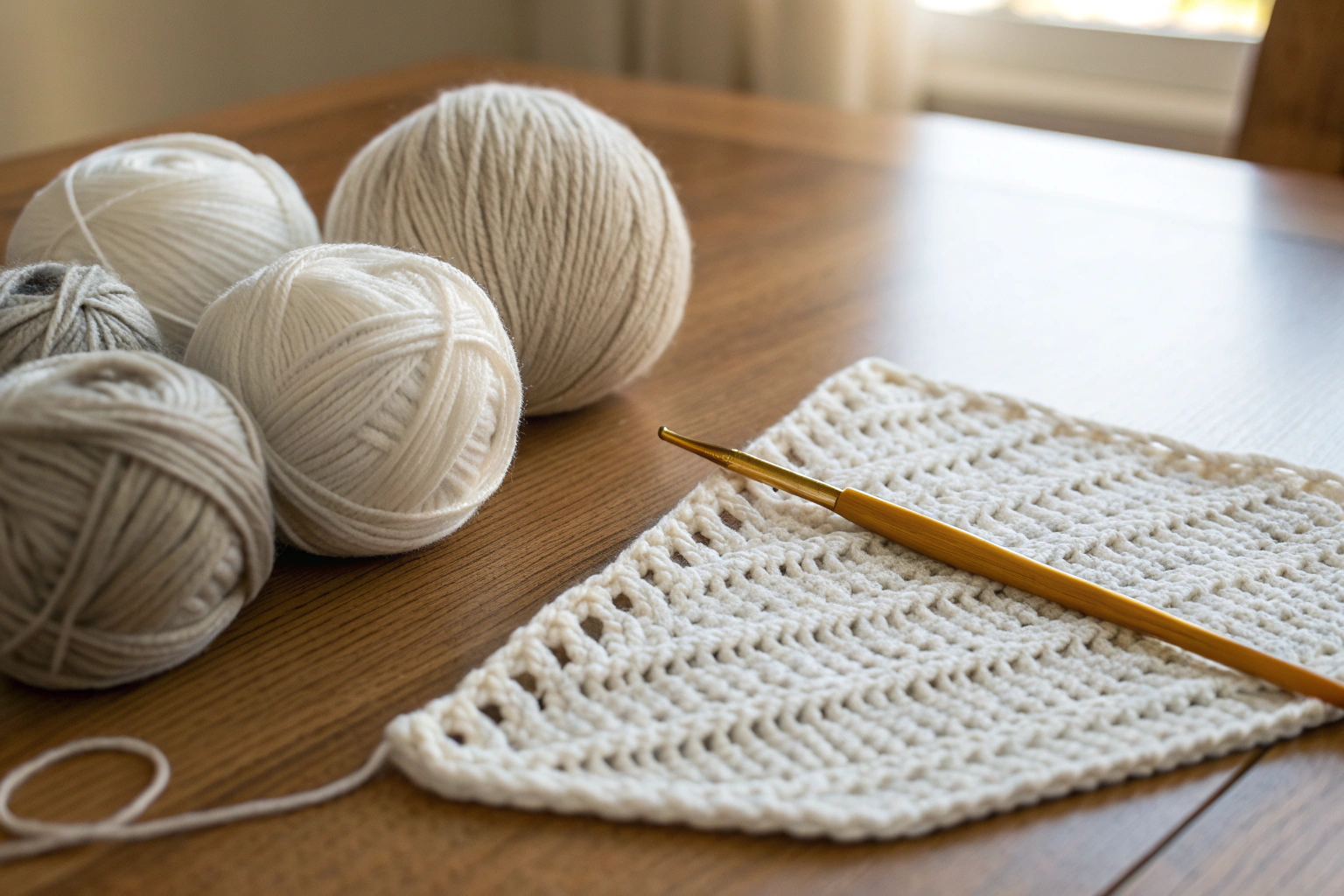
Knowing how to decrease crochet is a fundamental technique for reducing the number of stitches in a row or round. This process, often abbreviated as “dec” or “sc2tog” (single crochet two together), is essential for shaping projects like amigurumi, hats, and clothing. By working two stitches together into one, you can create tapered edges, curves, and a professional, fitted finish, transforming flat panels into three-dimensional objects and avoiding the frustration of a misshapen project.
Key Benefits at a Glance
- Create Shape and Form: Easily shape projects like hats, sleeves, and toys by reducing the stitch count for a tapered, professional finish.
- Achieve Pattern Accuracy: Correctly follow patterns to ensure your project matches the intended design and size, avoiding frustrating mistakes and wasted time.
- Prevent Unwanted Gaps: Use invisible decrease techniques, especially in amigurumi, to create a smooth, solid fabric without unsightly holes.
- Unlock Complex Projects: Master decreases to move beyond basic scarves and into creating intricate items like garments, socks, and detailed toys.
- Work with Confidence: Once you learn the simple mechanics, you can decrease stitches quickly and consistently, improving your overall project speed and enjoyment.
Purpose of this guide
This guide helps crocheters of all levels, from beginners learning to shape their first hat to experienced crafters wanting to refine their technique. It solves the common problem of creating bulky or gappy decreases that can detract from a finished project’s appearance. Here, you will find a clear explanation of how to perform a standard single crochet decrease, when to use it, and tips for making your decreases look seamless. By mastering this skill, you can avoid common mistakes and confidently create beautiful, well-fitted items with proper shaping.
Introduction
After fifteen years of teaching crochet and completing countless projects, I've learned that mastering decrease techniques is what separates confident crocheters from those who struggle with shaping. Whether you're creating your first amigurumi character or designing a fitted sweater, understanding how to decrease properly transforms flat fabric into three-dimensional masterpieces.
Crochet decreases are the foundation of project shaping, allowing you to reduce stitch counts systematically to create curves, tapers, and dimensional forms. From the crown of a hat to the tip of an amigurumi nose, decreases work hand-in-hand with increases to sculpt fabric into the shapes your patterns demand.
The projects that rely most heavily on decrease techniques include amigurumi figures, fitted garments, hats, and decorative elements requiring precise shaping. Without solid decrease skills, these projects can appear lumpy, misshapen, or simply won't fit properly. Today, I'll walk you through every decrease technique you need to create professional-looking, well-shaped crochet projects.
Understanding crochet decreases: the foundation of project shaping
A crochet decrease is a technique that reduces the total number of stitches in a row or round by combining two or more stitches into one. The primary purpose is creating shaped fabric that curves, tapers, or forms three-dimensional structures rather than remaining flat.
When you execute a decrease, you're essentially pulling multiple stitches together at their tops while maintaining individual bases. This creates a controlled reduction in fabric width while preserving the structural integrity of your work. The effect on fabric varies depending on the decrease type and placement, but all decreases create some degree of fabric draw-in or cupping.
Understanding decreases requires grasping their relationship to increases. While increases add stitches to expand fabric, decreases remove stitches to contract it. Most shaped projects use both techniques strategically – increases for expanding sections like amigurumi bodies, decreases for tapering areas like hat crowns or sleeve cuffs.
| Decrease Type | Abbreviation | Best For | Difficulty |
|---|---|---|---|
| Single Crochet Decrease | sc2tog | Amigurumi, tight shaping | Beginner |
| Half Double Crochet Decrease | hdc2tog | Garments, medium drape | Intermediate |
| Double Crochet Decrease | dc2tog | Decorative, loose fabric | Intermediate |
| Invisible Decrease | inv dec | Professional amigurumi | Advanced |
The key to successful shaping lies in understanding how decreases affect your project's dimensions. Each decrease removes one stitch from your total count, but the visual impact depends on the stitch height and fabric tension. Single crochet decreases create tight, controlled shaping perfect for amigurumi, while double crochet decreases produce more dramatic fabric changes suitable for flowing garments.
Decrease terminology and pattern reading
Pattern reading becomes much easier once you understand the standard abbreviations for decrease techniques. Most patterns use consistent notation, though some designers may include variations or additional clarifications.
If pattern instructions feel confusing, it may help to review how chains, loops and stitch anatomy work. Start with this foundation: How to Start a Crochet Chain.
- sc2tog = single crochet 2 together
- hdc2tog = half double crochet 2 together
- dc2tog = double crochet 2 together
- inv dec = invisible decrease
- dec = general decrease notation
When you encounter "sc2tog" in a pattern, you're being instructed to work into two separate stitches but complete them as one stitch. The "2tog" portion tells you how many stitches to combine – though you might occasionally see "3tog" or even "4tog" for more dramatic shaping.
Some patterns spell out decreases fully, especially in beginner-friendly designs. You might see "single crochet decrease" or "work 2 single crochet together" instead of the abbreviation. International patterns may use different terminology, so always check the abbreviation key provided with your pattern.
Pay attention to pattern context when encountering decrease instructions. The surrounding text often provides crucial placement information like "decrease evenly around" or "decrease at beginning and end of row." These details significantly impact your project's final shape and fit.
How many times to decrease
Calculating decrease frequency requires understanding your project's target dimensions and current stitch count. The mathematical approach ensures even shaping and prevents the lumpy, uneven appearance that comes from random decrease placement.
- Count total stitches in current round
- Determine target stitch count for next round
- Calculate difference to find decreases needed
- Divide remaining stitches by decreases for spacing
- Mark decrease positions before starting
For example, if you have 24 stitches and need to decrease to 18 stitches, you need 6 decreases. Dividing 18 by 6 gives you 3, meaning you'll work 2 regular stitches, then 1 decrease, repeating around the round. This systematic approach creates even shaping without visible decrease lines.
Hat crowns typically decrease by 6-8 stitches per round, while amigurumi projects might decrease more gradually depending on the desired shape. Garment shaping often requires more subtle decreases – perhaps 2-4 stitches per row to create gentle curves rather than sharp angles.
Project dimensions directly influence decrease frequency. Rapid decreases create cone or pointed shapes, while gradual decreases produce gentle curves. Understanding this relationship helps you modify patterns or create your own designs with predictable shaping outcomes.
The standard single crochet decrease (sc2tog)
The single crochet decrease forms the foundation of most shaping techniques, particularly in amigurumi and tight-fabric projects. This technique combines two single crochet stitches into one, reducing your stitch count by one while maintaining fabric stability.
Proper hook insertion is crucial for clean decreases. You'll work into two separate stitches but complete them as a single unit, creating a controlled reduction that doesn't compromise fabric integrity. The standard method produces a visible decrease line, which can be decorative in some projects or problematic in others.
- Insert hook in first stitch, yarn over and pull through (2 loops on hook)
- Insert hook in next stitch, yarn over and pull through (3 loops on hook)
- Yarn over and pull through all 3 loops
- One stitch decreased, continue pattern
The key to successful sc2tog execution lies in maintaining consistent tension throughout the process. Don't pull too tightly when drawing through the final loops, as this can pucker the fabric and create uneven shaping. The completed decrease should lie flat against your work with a slight lean toward the second stitch.
Visual cues help ensure correct execution. You should see the tops of both original stitches pulled together, creating a subtle "V" shape at the decrease point. If you notice gaps or loose loops, your hook insertion might be too shallow or your tension inconsistent.
Single crochet decreases work best in projects requiring tight shaping control. Amigurumi pieces benefit from the firm fabric structure, while garment edges gain stability from the controlled stitch reduction. The technique also works well for decorative shaping in home decor items like baskets or plant holders.
The invisible decrease technique
The invisible decrease revolutionizes amigurumi construction by eliminating the visible decrease line that can interrupt smooth shaping. This advanced technique works through front loops only, creating a seamless join that maintains the rounded appearance crucial for professional-looking stuffed projects.
Invisible decreases look even cleaner when your basic stitches have consistent tension. If you need help achieving even loops, try: Mastering the HDC Crochet Stitch.
Understanding when to choose invisible over standard decreases depends on your project goals and skill level. Amigurumi pieces benefit most from invisible decreases, particularly in areas where visible decrease lines would detract from the overall appearance – like faces, bodies, or decorative elements.
| Standard Decrease | Invisible Decrease |
|---|---|
| Works through both loops | Works through front loops only |
| Visible decrease line | Nearly invisible join |
| Faster execution | More precise placement |
| Good for beginners | Professional finish |
The invisible decrease technique requires inserting your hook through the front loop only of the first stitch, then through the front loop only of the next stitch. Yarn over and pull through both loops, then yarn over and pull through the two loops on your hook. This creates a decrease that blends seamlessly into the surrounding fabric.
Mastering invisible decreases takes practice, but the results justify the effort. Your amigurumi pieces will have smoother curves and more professional appearance. The technique particularly shines in projects requiring multiple decrease rounds, like hat crowns or amigurumi heads, where visible decrease lines would create unwanted texture.
Practice invisible decreases on swatches before incorporating them into important projects. The technique requires more precision than standard decreases, and mistakes are harder to correct once you've continued working. Start with contrasting yarn colors to clearly see your hook placement, then progress to matching colors as your confidence builds.
Troubleshooting single crochet decreases
Common decrease problems usually stem from hook insertion errors or tension inconsistencies. Understanding these issues and their solutions prevents frustration and improves your overall shaping results.
- Holes appearing: Check hook insertion depth
- Uneven tension: Maintain consistent yarn grip
- Lost stitch count: Use stitch markers
- Puckering fabric: Avoid pulling too tight
Holes around decrease points indicate shallow hook insertion or skipped loops. Ensure your hook passes completely through each stitch, catching both the front and back loops (unless working invisible decreases). Double-check that you're working into actual stitches rather than spaces between stitches.
Uneven tension creates lumpy, unprofessional-looking decreases. Maintain consistent yarn grip and hook position throughout the decrease process. If you tend to tighten up during complex techniques, consciously relax your grip and work at a steady, comfortable pace.
Lost stitch counts plague many crocheters working decrease rounds. Place stitch markers before beginning decrease rounds, marking both the round start and each decrease position. Count stitches after completing each round to catch errors early when they're easier to correct.
Fabric puckering usually results from pulling too tightly during the final yarn over. The completed decrease should lie flat against your work without drawing in surrounding stitches. If puckering occurs, try using a slightly larger hook for decrease rounds or consciously loosening your tension.
How to decrease in half double crochet (hdc2tog)
Half double crochet decreases bridge the gap between single crochet's tight control and double crochet's dramatic shaping. This technique works particularly well in garments where you need moderate fabric reduction without the bulk of taller stitches.
The hdc2tog process involves working into two stitches simultaneously while managing the yarn overs required for half double crochet construction. This creates a slightly taller decrease than sc2tog but maintains better fabric drape than double crochet decreases.
- Yarn over, insert hook in first stitch
- Yarn over, pull through (3 loops on hook)
- Yarn over, insert hook in next stitch
- Yarn over, pull through (5 loops on hook)
- Yarn over, pull through all 5 loops
Managing five loops on your hook requires practice and confidence. Don't rush the final pull-through – work deliberately to ensure all loops pass through cleanly. If loops slip off your hook, you'll need to restart the entire decrease, which can be frustrating mid-project.
Half double crochet decreases excel in sweater construction, particularly for armhole shaping and waist decreases. The moderate height creates smooth shaping lines without the abrupt changes that single crochet decreases can produce in flowing fabrics. Blanket borders also benefit from hdc2tog for gentle edge shaping.
The visual bulk of half double crochet decreases sits between single and double crochet techniques. This makes hdc2tog ideal for projects requiring visible shaping elements – like decorative decrease lines in shawls or structured elements in bags and accessories.
Double crochet decrease techniques (dc2tog)
Double crochet decreases create the most dramatic stitch reduction, making them perfect for projects requiring significant fabric changes or decorative shaping elements. The technique manages multiple yarn overs while combining two tall stitches into one.
Understanding the visual bulk of double crochet decreases helps determine appropriate applications. The completed decrease creates a pronounced gathering effect that can be decorative in shawls and wraps or functional in garment construction where you need substantial fabric reduction.
The dc2tog technique follows the same principle as shorter decreases but accommodates the additional yarn overs required for double crochet construction. You'll work into two stitches, managing the yarn overs for each, then complete them together in the final step.
| Stitch Type | Yarn Overs | Loops to Manage | Best Applications |
|---|---|---|---|
| Single Crochet | None | 3 maximum | Tight shaping, amigurumi |
| Half Double Crochet | 1 per stitch | 5 maximum | Moderate shaping, garments |
| Double Crochet | 1 per stitch | 7 maximum | Dramatic shaping, decorative |
| Treble Crochet | 2 per stitch | 9 maximum | Special effects, lace |
Double crochet decreases work beautifully in lace patterns where the gathering effect creates intentional design elements. Shawl construction often incorporates dc2tog for shaping the curved edges, while the technique also appears in decorative medallions and motifs.
Tension control becomes even more critical with taller stitches. The multiple yarn overs and increased loop management can lead to uneven decreases if you're not consistent. Practice maintaining steady tension throughout the entire process, particularly during the final pull-through.
Decreasing in treble and taller stitches
Treble crochet and taller stitch decreases follow the same fundamental principles as double crochet decreases but require managing additional yarn overs and loops. These techniques appear primarily in lace work and decorative applications where dramatic shaping creates design elements.
The relationship between stitch height and decrease complexity means taller stitches require more careful execution. Each additional yarn over increases the number of loops you'll manage simultaneously, demanding greater hook control and tension consistency.
Working treble decreases involves yarn over twice before inserting into the first stitch, then repeating for the second stitch before completing all loops together. This creates up to nine loops on your hook simultaneously, requiring confidence and steady hands.
Special considerations for taller stitch decreases include hook size selection and yarn choice. Slippery yarns can make loop management difficult, while hooks that are too small may not accommodate all the loops comfortably. Consider using slightly larger hooks for complex decreases, adjusting back to pattern size for regular stitches.
Troubleshooting common decrease problems
Decrease problems typically fall into predictable categories with straightforward solutions. Understanding these common issues and their fixes prevents project frustration and improves your overall crochet confidence.
“The most common fix is to use a different sized hook. Here’s the same simple 4 round solid granny square again, made 4 times, each with a different sized hook. I finger blocked each one as I normally do for measurement. It can really make a difference as you can see.”
— Shelley Husband Crochet, March 2024
Source link
Hook size significantly impacts decrease appearance and fabric behavior. If your decreases create excessive fabric bunching, try a larger hook for decrease rounds. Conversely, if decreases appear loose or sloppy, a smaller hook might provide better control.
“If your gauge swatch is smaller than desired, or has more stitches and rows per inch than the designer’s sample, you’ll need to increase your hook size. Vice versa, decreasing hook size can fix a gauge swatch that is bigger than desired, or has fewer stitches and rows per inch than listed in the crochet pattern.”
— Salty Pearl Crochet, January 2024
Source link
- DO: Count stitches after each decrease round
- DON’T: Skip the yarn over in taller stitches
- DO: Use stitch markers for decrease placement
- DON’T: Pull yarn too tight during execution
- DO: Practice on swatches before project work
Gauge issues affect decrease behavior just as they impact regular stitches. Tight gauge can make decreases difficult to execute cleanly, while loose gauge may produce sloppy-looking decreases that don't provide adequate shaping. Always work a gauge swatch including decrease techniques before starting important projects.
Stitch identification problems plague crocheters working in rounds, particularly when fatigue sets in during long decrease sequences. Use contrasting stitch markers to identify decrease positions and round beginnings. This prevents the frustration of realizing you've decreased in the wrong locations after completing several rounds.
Yarn choice impacts decrease success more than many crocheters realize. Fuzzy yarns can make stitch identification difficult, while slippery yarns may not hold decreases securely. Consider these factors when selecting yarns for heavily shaped projects, particularly amigurumi that requires precise decreasing.
Strategically placing decreases in your projects
Strategic decrease placement transforms amateur-looking projects into professional pieces with smooth, intentional shaping. Understanding placement principles helps you execute pattern instructions correctly and modify designs to suit your preferences.
The relationship between decrease placement and final project shape follows predictable rules. Decreases placed at regular intervals create symmetrical shaping, while clustered decreases produce more dramatic curves or angles. This knowledge helps you read patterns more effectively and troubleshoot shaping issues.
- Place decreases at side seams for garments
- Distribute evenly for circular amigurumi shaping
- Use spiral decreases for smooth cone shapes
- Mark decrease points before starting rounds
- Consider fabric drape when choosing decrease type
Garment construction benefits from decreases placed at natural body curves – side seams, underarms, and waist points. This placement creates flattering shaping that follows body contours rather than fighting them. Avoid placing decreases at center front or back unless the pattern specifically requires it for design purposes.
Amigurumi shaping relies on evenly distributed decreases to maintain rounded forms. Clustering decreases creates flat spots or angular shapes that can ruin the three-dimensional effect. Use the mathematical approach discussed earlier to ensure even spacing throughout decrease rounds.
Project dimensions change predictably based on decrease frequency and placement. Rapid decreases create pointed shapes like hat crowns or amigurumi noses, while gradual decreases produce gentle curves suitable for garment waist shaping or decorative elements.
Understanding fabric behavior helps you choose appropriate decrease types for specific applications. Single crochet decreases provide tight control for structured projects, while double crochet decreases create flowing lines in draped fabrics. Match your decrease choice to your project's intended drape and structure for best results.
For a thorough understanding of how to decrease stitches in crochet, refer to the crochet basics and detailed guides from Craft Yarn Council>.
When your project includes shaping and color changes at the same time, transitions can get tricky. Learn seamless color techniques here: How to Switch Colors in Crochet.
Frequently Asked Questions
To do a decrease in crochet, you combine two or more stitches into one to reduce the stitch count and shape your project. For a basic decrease, insert your hook into the first stitch, yarn over and pull up a loop, then insert into the next stitch, yarn over and pull up another loop, and finally yarn over and pull through all loops on the hook. This technique is essential for creating tapered shapes in items like hats or amigurumi.
Decrease in crochet refers to the process of reducing the number of stitches in a row or round to shape the fabric or create contours. It involves working multiple stitches together as one, which helps in forming items like sleeves, necks, or stuffed toys. Understanding decreases is key for advancing from flat pieces to three-dimensional projects.
To do a single crochet decrease (sc2tog), insert your hook into the first stitch and pull up a loop, then insert into the next stitch and pull up another loop, leaving three loops on the hook. Yarn over and pull through all three loops to complete the decrease. This method merges two stitches into one, commonly used for shaping in crochet patterns.
A regular single crochet decrease (sc2tog) works through both loops of each stitch, which can create a visible slant or bump in the fabric. An invisible decrease, however, is worked only through the front loops of the stitches, resulting in a smoother, less noticeable join that’s ideal for seamless projects like amigurumi. The invisible method helps maintain a clean appearance without distorting the texture.
Common mistakes when decreasing in crochet include not counting stitches accurately, leading to uneven shaping, and pulling yarn too tightly, which can cause puckering. Another error is confusing decrease types, like using a regular sc2tog instead of an invisible one for smooth finishes. Always check your pattern and practice consistent tension to avoid these issues and achieve professional results.