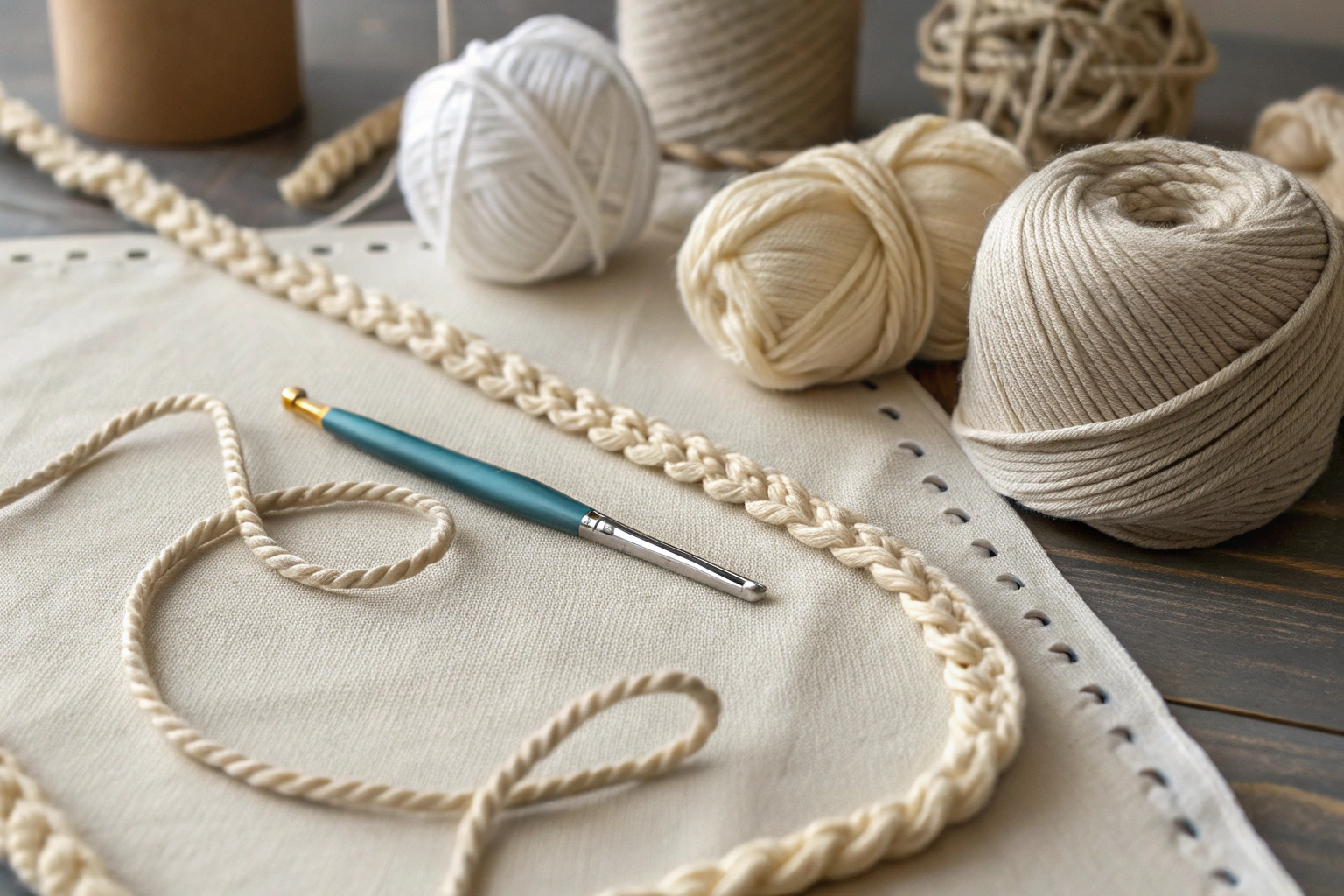
Learning how to reverse single crochet, often called the crab stitch, is a simple finishing technique to create a sturdy, decorative border on crochet projects. Instead of working from right to left (for right-handers), you work in the opposite direction without turning your work. This creates a neat, twisted cord-like edge that adds a professional touch, although it can feel awkward at first due to the backward motion.
Key Benefits at a Glance
- Durable Edge: It creates a firm, non-stretchy border that prevents blankets, dishcloths, and cuffs from losing their shape over time.
- Professional Finish: The stitch produces a beautiful, rope-like texture that instantly elevates the look of handmade items, giving them a clean, store-bought quality.
- Fast to Master: While the backward motion feels unusual, it uses the same mechanics as a standard single crochet, making it a quick technique for beginners to learn for finishing projects.
- Stops Curling: Applying a crab stitch border is an effective way to flatten and stabilize edges that tend to roll or curl, ensuring your finished piece lays flat.
- Versatile Application: This border works well on nearly any project, from afghans and garments to potholders and bags, making it a go-to finishing stitch.
Purpose of this guide
This guide is for crocheters of any skill level who want to add a polished, durable finish to their projects. It solves the common problem of flimsy or curling edges by providing a step-by-step explanation of the reverse single crochet stitch. You will learn the correct hand and hook movements, how to maintain even tension for a smooth result, and how to troubleshoot common mistakes like working too tightly. Mastering this stitch will enable you to create professional-looking pieces with edges that are both beautiful and built to last.
Introduction
When I first encountered reverse single crochet fifteen years ago, I'll admit I was intimidated. The technique seemed backward—literally—and my muscle memory fought against every stitch. But once I mastered this intermediate skill, it transformed how I finished my crochet projects. That rope-like, twisted edge created by reverse single crochet elevates even the simplest pieces from homemade to professional.
Also known as the crab stitch, reverse single crochet might feel awkward at first, but it's surprisingly accessible once you understand the fundamentals. If you're comfortable with regular single crochet, you already have the foundation you need. The mechanics remain the same; only the direction changes. Through clear, step-by-step instruction, you'll discover how this technique can become your go-to finishing method for creating polished, decorative edges.
- Master the reverse single crochet technique with step-by-step guidance
- Learn to create professional rope-like edges on any project
- Troubleshoot common mistakes with proven solutions
- Discover creative applications beyond basic edging
- Build confidence with beginner-friendly practice projects
What is reverse single crochet
Reverse single crochet, commonly called crab stitch, is a decorative crochet technique that creates a distinctive rope-like, textured edge. Unlike regular single crochet where you work from left to right, reverse single crochet requires working from right to left—essentially crocheting backward. This directional change produces the signature twisted appearance that makes edges look professionally finished.
The technique gets its "crab" nickname because, like a crab walking sideways, you're moving in the opposite direction from normal crochet flow. When I first learned this stitch, I used it to finish a baby blanket, and the transformation was remarkable. What had been a simple granny square blanket suddenly looked like something from a boutique shop. The raised, corded edge added both visual interest and structural stability to the border.
What makes reverse single crochet particularly valuable is its versatility. It works beautifully on straight edges, curved necklines, and even around corners with practice. The stitch creates a firm, non-rolling edge that lies flat and maintains its shape through washing and wear. I've used it on everything from dishcloths to sweater hems, and it consistently delivers that polished, professional appearance that sets handmade items apart.
Reverse single crochet vs regular single crochet
The fundamental difference between reverse single crochet and regular single crochet lies in the working direction, though the basic stitch mechanics remain identical. While regular single crochet flows naturally from left to right for right-handed crocheters, reverse single crochet requires working from right to left. This directional change initially feels counterintuitive—I remember my first attempts feeling like I was trying to write backward.
Understanding the difference between front and back loops makes reverse crochet much easier. If you’d like to review stitch anatomy, see: Back Loops Only Crochet.
The hook position and yarn placement also differ significantly. In regular single crochet, you insert the hook from back to front and manipulate the yarn from front to back. Reverse single crochet flips this: the hook goes from front to back, and the working yarn moves from back to front. These reversed mechanics create the distinctive twisted, rope-like texture that makes this technique so desirable for finishing work.
| Aspect | Regular Single Crochet | Reverse Single Crochet |
|---|---|---|
| Working Direction | Left to Right | Right to Left |
| Hook Position | Back to Front | Front to Back |
| Yarn Position | Front to Back | Back to Front |
| Final Appearance | Flat, uniform | Rope-like, textured |
| Difficulty Level | Beginner | Intermediate |
| Common Use | Main fabric | Decorative edging |
Despite these differences, the learning curve isn't as steep as you might expect. Since you're already familiar with the basic single crochet motion—yarn over, pull through, yarn over, pull through both loops—you're simply applying these same movements in a different direction. My students often have their "aha" moment within the first few stitches once they stop fighting the backward motion and embrace it.
The mechanics of a reverse single crochet stitch
Understanding the physical mechanics of reverse single crochet helps demystify why this stitch creates its unique appearance. The key lies in how the hook insertion and yarn manipulation work together to twist the stitch in the opposite direction from normal crochet flow. When you insert the hook from front to back—opposite to regular single crochet—you're immediately setting up the twist that characterizes this technique.
The yarn positioning creates the rope-like texture that makes reverse single crochet so distinctive. As you bring the working yarn from back to front around the hook, then pull it through the stitch, the yarn naturally spirals in the opposite direction from regular crochet. This creates a raised, corded appearance that stands proud of the fabric surface. I often tell my students to think of it as creating a tiny rope with each stitch.
The combination of reversed hook insertion and backward yarn wrapping compresses the stitches more tightly than regular single crochet. This compression contributes to the firm, stable edge that reverse single crochet provides. The stitches lock together in a way that prevents rolling and creates excellent stitch definition. When I examine my finished edges under good lighting, I can see how each stitch interlocks with its neighbors to form that continuous rope-like border.
Reverse single crochet stitch symbol
In crochet patterns and diagrams, reverse single crochet appears with the abbreviations rsc or crab st, both referring to the same technique. Pattern designers may use either abbreviation, so familiarity with both helps when following various instructions. Some international patterns might use different symbols, but these two abbreviations are standard in most English-language patterns.
When working from charts or stitch diagrams, reverse single crochet typically appears as a modified single crochet symbol with directional indicators showing the right-to-left working direction. Understanding these symbols improved my pattern reading significantly—I could visualize the finished edge before starting the project. This preview helped me plan color changes and determine whether the reverse single crochet would complement the overall design.
The standardized abbreviations also make it easier to search for patterns featuring this technique. When I'm looking for projects that showcase beautiful edging work, searching for "rsc" or "crab st" in pattern databases yields excellent results. These symbols serve as a shorthand that connects technique knowledge to practical application in real projects.
Essential tools and materials
Success with reverse single crochet starts with having the right tools, though the requirements are refreshingly simple. The basic supplies mirror what you'd use for any crochet project, with a few specific considerations that can make the learning process smoother. Having taught this technique for years, I've found that the right tool choices can significantly impact a beginner's success and confidence.
The foundation of good reverse single crochet work lies in choosing appropriate materials for your skill level and project goals. While you don't need specialized equipment, certain combinations of hook sizes and yarn weights create better learning experiences and more satisfying results. I always encourage my students to set themselves up for success by selecting forgiving materials that showcase the technique's beauty without fighting against their developing skills.
- Crochet hook (same size as project or one size larger)
- Yarn (medium weight recommended for beginners)
- Scissors for cutting yarn
- Tapestry needle for weaving ends
- Stitch markers (optional but helpful)
- Good lighting for detailed work
Optional tools can enhance your reverse single crochet experience, particularly when you're learning. Good lighting becomes crucial for seeing stitch definition, especially when working with darker yarns or fine threads. Stitch markers help track your progress and identify potential problems before they become major issues. I keep a small pair of scissors dedicated to my crochet work—having sharp, precise cutting tools makes finishing work much cleaner.
Choosing the right hook and yarn
Hook selection for reverse single crochet follows a slightly different approach than regular crochet projects. I typically recommend using the same hook size as your main project, or going up one size larger for the edging round. The larger hook accommodates the tighter stitch formation that naturally occurs with reverse single crochet, preventing the edge from becoming too tight and causing the fabric to pucker or curl.
Yarn choice significantly impacts both the learning experience and final appearance of your reverse single crochet edge. Medium-weight yarns, particularly worsted weight acrylics or cotton blends, provide excellent stitch definition while remaining forgiving for beginners. The yarn's twist and fiber content affect how clearly the rope-like texture shows—tighter twisted yarns enhance the corded appearance, while loosely spun yarns may obscure the technique's distinctive characteristics.
| Project Type | Hook Size | Yarn Weight | Best For |
|---|---|---|---|
| Practice Samples | H/8 (5mm) | Worsted Weight | Learning technique |
| Garment Edges | Same as project | Match project | Consistent appearance |
| Home Decor | One size larger | Cotton/Acrylic | Defined edge |
| Delicate Items | Steel hook | Thread/Lace | Fine detail work |
For your first attempts, I strongly recommend using a light-colored, smooth yarn in worsted weight. Light colors make it easier to see your stitches and identify mistakes, while smooth textures allow the hook to glide easily through the work. Avoid fuzzy yarns like mohair or highly textured novelty yarns until you're comfortable with the basic technique—these can obscure stitch definition and make it difficult to see what you're doing.
Step by step guide to reverse single crochet
Learning reverse single crochet requires patience with yourself as your hands adapt to working in the opposite direction from normal crochet flow. The technique is intermediate level, not because the individual steps are complex, but because it challenges your muscle memory and requires conscious attention to direction and hand positioning. I always tell my students that feeling awkward initially is completely normal—even experienced crocheters need time to adjust to the reversed motion.
The key to mastering reverse single crochet lies in breaking down the process into manageable steps and practicing each element until it becomes second nature. Unlike learning your first crochet stitches, you already understand the basic mechanics of yarn manipulation and hook control. This existing foundation makes the learning curve much gentler than starting from scratch, though the directional change will initially feel counterintuitive.
Expect your first attempts to feel slow and deliberate. This is exactly how the learning process should unfold. Rushing through the steps or trying to work at normal speed too quickly often leads to tension problems and uneven stitches. I've found that students who embrace the slower pace during learning ultimately achieve better, more consistent results than those who try to force speed too early in the process.
Starting your reverse single crochet
Beginning reverse single crochet requires careful attention to your starting position and hand placement. Position your work with the right side facing you—this is crucial for achieving the correct appearance. Your hook should be in your dominant hand, and you'll be working from right to left along the edge, which feels opposite to your normal crochet rhythm. I often have students mark their starting point with a stitch marker to help maintain orientation.
The initial hook insertion sets the foundation for the entire technique. Insert your hook from front to back through the first stitch to your right, not left as you would in regular crochet. This front-to-back insertion immediately begins creating the twist that characterizes reverse single crochet. Your non-dominant hand should hold the work steady while managing yarn tension, similar to regular crochet but adjusted for the reversed direction.
- Position work with right side facing you
- Insert hook from front to back in first stitch
- Yarn over from back to front
- Pull yarn through stitch (2 loops on hook)
- Yarn over again from back to front
- Pull through both loops on hook
- Move to next stitch to the right
Hand positioning becomes especially important when starting. Your yarn-holding hand needs to adjust to feeding yarn from a different angle, and your hook hand must adapt to the reversed motion. I recommend practicing the motion without yarn first, just moving through the hand positions and directional changes. This dry run helps build the new muscle memory without the added complexity of managing yarn tension and stitch formation.
Working the stitch consistently
Maintaining consistent tension while working reverse single crochet presents unique challenges because you're fighting against your established muscle memory. The backward motion naturally feels tighter than regular crochet, and many beginners compensate by loosening their grip too much, creating loose, sloppy stitches. Finding the right tension balance takes practice, but the results are worth the effort.
Crab stitch borders pair beautifully with neat, even HDC rows. If you’re still building confidence with your basic stitches, try: Mastering the HDC Crochet Stitch.
Rhythm becomes crucial for achieving even stitches throughout your reverse single crochet edge. I encourage students to establish a steady, deliberate pace rather than trying to match their normal crochet speed. The rope-like texture of reverse single crochet actually helps disguise minor tension variations, but consistent rhythm creates the most professional-looking results. Count your movements if necessary: insert, yarn over, pull through, yarn over, pull through both loops, move right.
- Keep yarn tension slightly looser than regular crochet
- Maintain consistent hand position throughout
- Work at a steady, unhurried pace
- Check stitch height regularly for evenness
- Practice on swatches before working on projects
Stitch height consistency often challenges beginners because the reversed motion can create uneven loops. Pay attention to how far you pull each loop through—maintaining consistent loop sizes creates uniform stitch heights. I often demonstrate this by working several stitches very slowly, showing students how the size of each loop affects the final stitch appearance. Practicing on sample swatches allows you to focus on consistency without worrying about ruining a project.
Finishing your reverse single crochet edge
Properly finishing your reverse single crochet edge ensures the rope-like texture continues seamlessly to the end and secures your work effectively. The final stitch requires the same attention to tension and positioning as the rest of your edge—resist the temptation to rush through the finish. A poorly executed final stitch can unravel or create an obvious weak point in your otherwise beautiful edge.
When you reach the end of your round or row, complete the final reverse single crochet stitch fully before considering how to fasten off. The finishing method depends on your project type: for continuous rounds, you might slip stitch to join; for linear edges, a simple cut and pull-through secures the work. I always work the complete final stitch before making joining or fastening decisions—this ensures the edge maintains its consistent appearance throughout.
Weaving in ends requires special attention with reverse single crochet because the dense, twisted texture can make it challenging to hide yarn tails effectively. Work your tapestry needle through several stitches in the direction that matches the rope-like twist, then reverse direction and weave back through different stitches. This back-and-forth weaving secures the end without creating bulk or visible lines in your finished edge.
Video tutorial reference
Supplementing written instructions with video demonstrations can significantly accelerate your reverse single crochet learning process. When watching tutorials, focus specifically on hand positioning and the directional flow of the work—these elements are often clearer in video format than in still images or written descriptions. I recommend watching several different instructors to see various approaches and find the teaching style that resonates best with your learning preferences.
Pay particular attention to how experienced crocheters manage their yarn tension and maintain consistent rhythm in video demonstrations. The smooth, flowing motion of practiced hands can help you visualize the goal for your own technique development. Don't worry if your initial attempts don't match the fluid motion you see in videos—that smoothness comes with practice and muscle memory development.
Look for videos that show common mistakes and corrections rather than just perfect execution. These troubleshooting segments often provide the most valuable learning opportunities because they address the real challenges you'll encounter. I've found that watching mistake correction helps students recognize and fix their own issues more quickly than just seeing perfect technique demonstrations.
“To make a reverse single crochet (also called a crab stitch), insert your hook into the next stitch to the right (for right-handers), yarn over, pull up a loop (2 loops on hook), yarn over again, and pull through both loops on the hook. The result is a tightly twisted corded edge for your project.”
— Better Homes & Gardens, February 2024
Common mistakes and troubleshooting
Even experienced crocheters encounter challenges when learning reverse single crochet, and recognizing common mistakes helps normalize the learning process while providing clear paths to improvement. The most frequent issues stem from tension problems, directional confusion, and incorrect hook positioning—all completely fixable with awareness and practice. I've made every one of these mistakes myself and have guided countless students through the same learning challenges.
Understanding why these mistakes happen helps prevent them from becoming ingrained habits. Most errors occur because our muscle memory fights against the reversed technique, causing us to revert to familiar motions at crucial moments. The good news is that once you recognize these patterns, correction becomes much easier. I always remind students that mistakes are part of learning—they indicate you're challenging yourself and developing new skills.
| Problem | Cause | Solution |
|---|---|---|
| Stitches too tight | Working with regular tension | Loosen grip and use larger hook |
| Uneven edge | Inconsistent stitch height | Count yarn overs and maintain rhythm |
| Wrong direction | Muscle memory from regular SC | Mark starting point and work right to left |
| Twisted stitches | Incorrect hook insertion | Always insert from front to back |
| Loose loops | Yarn too loose | Maintain gentle but firm tension |
The key to successful troubleshooting lies in identifying problems early and making small adjustments rather than trying to fix major issues after completing significant work. I encourage students to check their work frequently, especially during the first few projects. Taking time to examine your stitches every few inches allows you to catch and correct problems before they affect the entire edge.
Working with the right side facing
Proper fabric orientation is absolutely critical for reverse single crochet success, yet it's one of the most commonly overlooked details. Working with the wrong side facing creates a completely different appearance and negates the technique's decorative purpose. I learned this lesson the hard way on my second reverse single crochet project—I was halfway around a blanket border before realizing my mistake, and the edge looked completely wrong.
The right side of your crochet fabric should always face you when working reverse single crochet. This orientation ensures the rope-like twist appears on the visible surface of your finished project. If you're unsure which side is the right side, look for the characteristic "V" shapes of your stitches—these should point toward you. On projects with clear right and wrong sides, such as garments or decorative items, this identification is straightforward.
- Always work with the right side of your project facing you
- Check fabric orientation before starting each row
- Look for the ‘V’ shape of stitches pointing toward you
- If unsure, test one stitch and check the appearance
When working in continuous rounds, maintaining proper orientation becomes automatic after the first few stitches. However, when adding reverse single crochet to existing projects or working back and forth in rows, double-check your orientation before beginning each new section. A simple test stitch can confirm you're positioned correctly—the rope-like texture should be forming on the side facing you.
“When working the reverse single crochet, commonly known as the crab stitch, crochet from left to right (for right-handed crafters) to produce a corded, decorative border—ideally suited for finishing off blankets and garments.”
— The Spruce Crafts, March 2024
Creative applications for reverse single crochet
Reverse single crochet extends far beyond basic edging applications, offering endless possibilities for creative enhancement in crochet projects. The technique's rope-like texture adds both visual interest and structural stability, making it valuable for functional as well as decorative purposes. Over the years, I've discovered applications ranging from traditional blanket borders to unexpected design elements that showcase the stitch's versatility.
The beauty of reverse single crochet lies in its ability to elevate simple projects into professional-looking pieces. A basic dishcloth becomes boutique-quality with a reverse single crochet border. A plain scarf transforms into a sophisticated accessory when finished with this textured edge. I've used this technique to rescue projects that seemed too plain or unfinished, and the results consistently exceed expectations.
- Blanket and afghan borders for professional finish
- Garment necklines and sleeve edges
- Dishcloth and washcloth borders
- Decorative trim on bags and purses
- Pillow edges for textural interest
- Scarf ends for polished appearance
- Coaster borders for durability
Consider reverse single crochet for any project where you want to add definition, prevent curling, or create visual separation between sections. The technique works beautifully on curved edges like necklines and armholes, though these applications require more advanced skills. Start with straight edges to build confidence, then gradually tackle more complex shapes as your technique improves.
Small projects perfect for practice
Beginning with manageable projects builds confidence while allowing you to perfect your reverse single crochet technique without the pressure of working on major pieces. Small projects also let you experiment with different yarn weights and hook sizes to discover your preferences. I always recommend starting with simple, straight-edged items that showcase the technique without adding complexity from shaping or pattern matching.
Many decorative edges also involve subtle shaping. When you’re ready to add decreases for dimension, read: Mastering Crochet Decreases.
Dishcloths make ideal first projects because they're quick to complete, useful when finished, and forgiving of minor imperfections. The cotton yarn typically used for dishcloths shows reverse single crochet beautifully, and the straight edges eliminate concerns about corner management. If your first attempts aren't perfect, you still have functional items for your kitchen or thoughtful handmade gifts.
- Start with a simple dishcloth – straight edges only
- Progress to a small square pillow cover
- Try a basic scarf with reverse SC on both ends
- Challenge yourself with a baby blanket border
- Advanced: Add reverse SC to a simple garment
Each project in this progression adds new challenges while building on previous successes. Pillow covers introduce working around corners, while scarves require maintaining consistent tension over longer edges. Baby blankets combine corner work with extended edge lengths, and garments present curved edges and fit considerations. This systematic approach ensures steady skill development without overwhelming jumps in complexity.
Tips for perfect reverse single crochet every time
Achieving consistently beautiful reverse single crochet results requires attention to several key factors that go beyond basic technique execution. These professional tips, developed through years of working with this stitch, can transform adequate results into exceptional ones. The difference between good and great reverse single crochet often lies in these subtle refinements that create polished, professional-looking edges.
Consistent practice with attention to detail produces the best results, but understanding how to adapt the technique for different materials and applications takes your skills to the next level. I've learned these refinements through trial and error on countless projects, and sharing them helps other crocheters avoid the learning curve I experienced. These tips address both technical execution and strategic planning for optimal results.
- Practice the motion without yarn first to build muscle memory
- Use a contrasting yarn color when learning to see mistakes clearly
- Work in good lighting to see stitch definition
- Take breaks to prevent hand fatigue and maintain consistency
- Count stitches regularly to catch errors early
- Block finished pieces to showcase the rope-like texture
Environmental factors significantly impact your reverse single crochet success. Good lighting becomes crucial for seeing stitch definition, especially when working with darker yarns or during evening crafting sessions. Hand fatigue affects tension control more dramatically with reverse single crochet than regular crochet because of the unnatural motion, so regular breaks help maintain consistency throughout longer edging projects.
Abbreviations and terminology reference
Understanding the language of reverse single crochet patterns empowers you to tackle more complex projects and follow instructions from various designers. Pattern terminology can vary slightly between designers and publications, but knowing the standard abbreviations and their variations helps you interpret instructions accurately. I keep a reference list handy when working from new patterns, especially those from international sources that might use different conventions.
Memorizing these abbreviations improves your pattern reading speed and reduces the chance of errors from misinterpreting instructions. When I first started following complex patterns, I would write out the full terms next to abbreviations until they became second nature. This translation process helped cement the terminology in my memory and made pattern reading much more fluid.
| Abbreviation | Full Term | Alternative Names |
|---|---|---|
| rsc | Reverse Single Crochet | Crab Stitch |
| crab st | Crab Stitch | Reverse Single Crochet |
| RS | Right Side | Public side of work |
| WS | Wrong Side | Back side of work |
| yo | Yarn Over | Yarn around hook |
| sl st | Slip Stitch | Used for joining/finishing |
Regional variations in terminology occasionally create confusion, but understanding the most common alternatives helps navigate patterns from different sources. British and American crochet terms differ in some areas, though reverse single crochet terminology remains fairly consistent internationally. When in doubt, look for pattern notes or glossaries that clarify the designer's specific terminology usage.
Frequently Asked Questions
A reverse single crochet stitch is a crochet technique worked in the opposite direction from standard crochet, moving from left to right for right-handed crocheters. It creates a twisted, rope-like edge that adds texture and durability to projects. This stitch is often used for finishing borders on items like blankets or garments.
Yes, reverse single crochet is commonly known as the crab stitch due to the sideways, crab-like motion used to create it. Both terms refer to the same technique, which produces a neat, rolled edge. It’s a popular choice for adding a professional finish to crochet projects.
To work a reverse single crochet, insert your hook into the stitch to the right of your current position, yarn over, and pull up a loop. Then, yarn over again and pull through both loops on the hook to complete the stitch. Repeat this process, working backwards across the row for a textured border.
Use reverse single crochet when you want a sturdy, non-curling edge on projects like scarves, dishcloths, or afghans. It’s ideal for borders that need to hold shape or add decorative detail without stretching. This stitch is especially useful in amigurumi or wearables for a polished look.
Reverse single crochet differs from regular single crochet primarily in direction; it’s worked left to right instead of right to left, resulting in a twisted appearance. While regular single crochet creates a flat fabric, reverse single crochet forms a bumpy, corded texture. This makes it better suited for edging rather than building main fabric.