
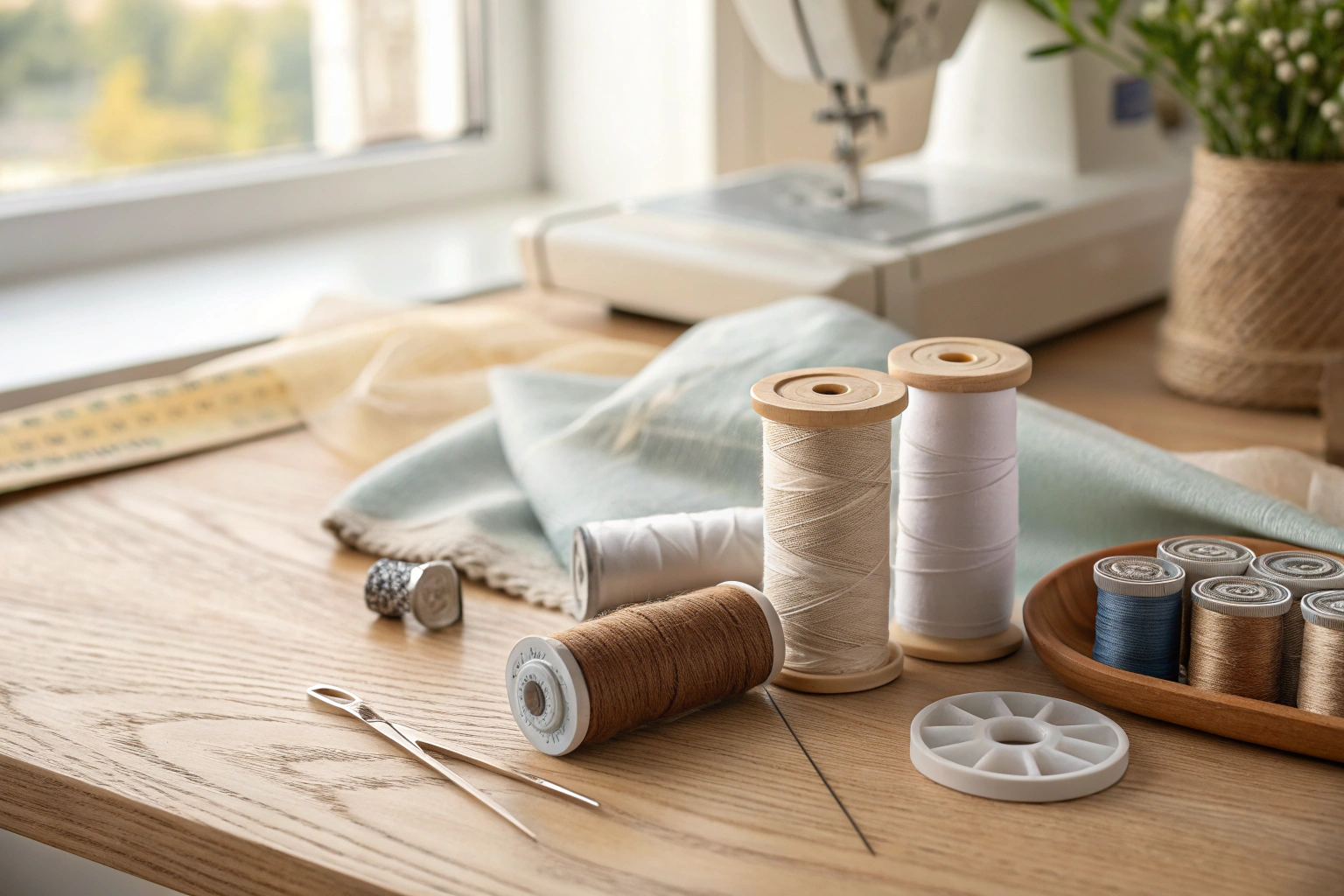
Learning how to thread a needle with a needle threader is a simple skill that saves time and prevents frustration, especially for those with vision challenges or shaky hands. This small tool uses a thin, flexible wire loop to easily pull thread through a needle’s eye. It is designed to make sewing and mending projects quicker and more accessible for everyone, eliminating the common struggle of aligning frayed thread with a tiny opening. This process works for hand-sewing and most sewing machine needles.
Key Benefits at a Glance
- Benefit 1: Saves significant time and reduces frustration, allowing you to start sewing projects faster.
- Benefit 2: Drastically minimizes eye strain by removing the need to focus on a tiny needle eye.
- Benefit 3: Makes sewing accessible for people with poor eyesight, arthritis, or unsteady hands.
- Benefit 4: Prevents the end of the thread from fraying during the threading process, ensuring a clean start.
- Benefit 5: Highly versatile, as most standard threaders work with various needle sizes and thread types, from silk to cotton.
Purpose of this guide
This guide is for anyone who sews—from beginners to experienced crafters—who wants a reliable and efficient way to thread needles. It solves the common problem of struggling with small needle eyes, which can slow down projects and cause unnecessary stress. Here, you will learn the simple, three-step process for using a standard needle threader. We will also cover tips to avoid common mistakes, such as breaking the fragile wire, so you can thread a needle correctly on the first try and get back to your creative work.
Introduction
After twenty years of teaching sewing classes, I've watched countless students struggle with what should be the simplest part of any project: threading the needle. The squinting, the multiple failed attempts, the frustrated sighs—I've seen it all. But here's what changed everything for me and my students: discovering the humble yet revolutionary needle threader.
I still remember my first encounter with this tiny tool. I was working on a delicate silk embroidery project, fighting with a particularly stubborn thread that kept fraying every time I tried to push it through the needle's eye. My grandmother, watching my struggle, quietly handed me what looked like a small metal loop attached to a diamond-shaped handle. "Try this," she said simply. Within seconds, I had threaded that needle perfectly. It was a revelation that transformed not just that project, but my entire approach to sewing.
The relationship between needle, thread, and sewing becomes effortless when you have the right needle threader in your toolkit. What once felt like a barrier to starting any hand sewing project becomes a quick, satisfying step that builds momentum rather than frustration. Through years of teaching students of all ages and abilities, I've learned that this simple tool is often the difference between someone falling in love with sewing or giving up before they truly begin.
If you’re new to hand sewing, mastering basic needle threading is your first step toward confident stitching: How to Thread a Needle.
- Needle threaders eliminate threading frustration and save time
- Wire loop threaders are the most versatile type for hand sewing
- Proper thread preparation is crucial for threading success
- Quality threaders like LoRan last longer and work better
- Emergency paper folding technique works when threaders aren’t available
My experience with needle threaders types and benefits
Over the years, I've collected dozens of different needle threaders, each serving a specific purpose in my sewing toolkit. The two main categories I work with are wire loop threaders for hand sewing and automatic needle threaders built into sewing machines. Understanding the differences between these types has been crucial for helping my students choose the right tool for their projects.
The wire loop threader remains my go-to choice for most hand sewing applications. This traditional design consists of a fine metal wire formed into a diamond-shaped loop, attached to a handle that's usually made of metal or plastic. The beauty of this design lies in its simplicity—the thin wire loop can fit through even the smallest needle eyes, while the handle provides enough grip for precise control.
Automatic needle threaders, found on many modern sewing machines, work on a completely different principle. These mechanical systems use a small hook or lever to catch the thread and pull it through the machine needle's eye. While incredibly convenient for machine sewing, they're limited to specific needle sizes and thread types that the manufacturer designed them to handle.
For a concise visual walkthrough of the same steps, you can check this short tutorial, and for broader background on threading tools and sewing techniques, see the needle threader overview.
In my teaching experience, I've found that students initially gravitate toward automatic threaders because they seem more sophisticated. However, the versatility and reliability of wire loop threaders quickly wins them over. These manual threaders work with any needle size, any thread type, and never break down or require calibration like their mechanical counterparts.
- Reduces eye strain and squinting
- Works with various needle sizes
- Speeds up project setup time
- Helps people with vision or dexterity challenges
- Prevents thread fraying from multiple attempts
The wire loop needle threader my go to choice
The classic wire loop needle threader has earned its place as my most-used sewing tool through decades of reliable performance. Its metal construction consists of a thin wire formed into a precise loop, attached to a distinctive diamond-shaped handle that provides both comfort and control. This traditional design has remained virtually unchanged for over a century because it simply works.
What makes this design so effective is the relationship between the wire thickness and the handle size. The metal wire must be thin enough to pass through the smallest needle eyes, yet strong enough to pull thread through without bending or breaking. The diamond-shaped handle, whether made of metal or reinforced plastic, gives your fingers the perfect grip point for precise maneuvering.
I've noticed that many needle manufacturers include a basic wire loop threader with their needle packets, which speaks to how essential this tool has become. These included threaders are functional but often lack the durability needed for regular use. The wire tends to be thinner and the handles are typically lightweight plastic that can crack under pressure.
| Feature | Basic Wire Loop | Premium Wire Loop |
|---|---|---|
| Price | $1-3 | $5-8 |
| Durability | 6-12 months | 2-5 years |
| Handle Material | Plastic | Metal or reinforced plastic |
| Wire Thickness | Thin | Thicker, more resilient |
| Best For | Occasional use | Regular use, teaching |
The tactile experience of using a quality wire loop threader is remarkably satisfying. The metal handle feels substantial in your hand, and the properly tensioned wire loop maintains its shape through hundreds of uses. When I demonstrate threading techniques in my classes, students immediately notice the difference between a flimsy included threader and a well-made tool.
Why I recommend LoRan and other sturdier needle threaders
After years of teaching children and beginners, I've learned that tool quality directly impacts learning success. This is why I consistently recommend LoRan needle threaders and other premium brands that prioritize durability over cost savings. The difference becomes immediately apparent in classroom settings where tools face heavy use and occasional drops.
LoRan threaders feature reinforced wire construction and ergonomic handles that withstand the enthusiastic handling that children and beginners often apply to their tools. I've watched basic threaders break within minutes of being distributed to eager young sewers, while LoRan threaders continue functioning smoothly throughout entire semester-long courses.
The durability factor becomes even more important when working with children who are still developing their fine motor skills. A bent or broken threader can derail an entire lesson and discourage a student from continuing with their project. Premium threaders like LoRan maintain their shape and function even when handled less than gently, providing consistent success that builds confidence.
In my professional teaching toolkit, I maintain a collection of different threader brands and styles. However, for classroom use and student recommendations, I've found that investing in quality threaders from established brands like LoRan, Dritz, and Colonial pays dividends in reduced frustration and extended tool life.
- Do invest in quality threaders for frequent use
- Do consider durability when teaching children
- Don’t expect cheap threaders to last with heavy use
- Don’t force bent wire loops – replace them
- Do buy multiple threaders for workshop settings
My step by step guide to threading a needle
The key to successful needle threading lies in understanding the precise interaction between the wire loop and the eye of the needle. After teaching this technique to thousands of students, I've refined the process into six clear steps that work consistently regardless of needle size or thread type. The secret is treating this as a deliberate, methodical process rather than rushing through it.
“Using a needle threader, ‘slide the wire loop through the eye of the needle and allow the needle to hang… Insert the thread tail through the wire loop by about 8" (15cm)… Pull the wire loop out from the eye of the needle and ensure the thread tail comes through with it.’”
— Easy Sewing for Beginners, April 2024
Source link
Hand positioning forms the foundation of successful threading technique. Your non-dominant hand should hold the needle steady, with your thumb and forefinger gripping the needle just below the eye. This creates a stable platform for the threading process while keeping your fingers clear of the working area.
- Prepare thread end with clean diagonal cut
- Hold needle steady with non-dominant hand
- Insert wire loop through needle eye from front to back
- Thread the prepared end through the wire loop
- Gently pull wire loop back through needle eye
- Remove threader and adjust thread length as needed
“Insert the wire loop on the needle threader through the eye of the needle… Insert your thread through the loop of wire on the needle threader… Pull the thread through the loop so that you have a tail of at least a few inches in length.”
— iFixit – How to Use a Needle Threader, January 2024
Source link
The critical moment occurs when pulling the wire loop back through the needle eye. This must be done with gentle, steady pressure to avoid thread breakage or wire bending. I teach my students to think of it as "coaxing" rather than "pulling"—the thread should follow the wire loop naturally without resistance.
How I prepare thread ends for easy threading
Thread preparation often determines whether threading succeeds on the first attempt or requires multiple frustrating tries. The condition of your thread end makes the difference between smooth insertion through the wire loop and tangled struggles that waste time and test patience.
Clean, sharp cuts make threading dramatically easier—always use dedicated fabric shears: Best Scissors for Cutting Fabric.
Sharp fabric scissors are essential for proper thread preparation. Paper scissors or dull fabric scissors create frayed, uneven cuts that make threading nearly impossible. I always demonstrate the difference by showing students a thread cut with proper scissors versus one cut with inappropriate tools—the contrast is immediately obvious.
The cutting technique matters as much as the tool quality. I teach a 45-degree angle cut that creates a sharp point while maintaining thread strength. This angled cut provides a precise tip that slides easily through the wire loop while preventing the thread from splitting or fraying during the process.
- Cut thread at 45-degree angle for sharp point
- Use sharp fabric scissors, not paper scissors
- Keep thread length under 18 inches to prevent tangling
- Apply thread wax for slippery or fuzzy threads
- Avoid pulling or stretching thread while cutting
Thread wax becomes particularly valuable when working with challenging threads like silk, metallic, or fuzzy cotton. A light coating of wax smooths the thread surface and prevents fibers from catching on the wire loop. However, I caution students against over-waxing, which can make threads slippery and difficult to control.
My technique for holding the needle and threader correctly
Proper hand positioning transforms needle threading from a frustrating guessing game into a controlled, precise operation. The key lies in creating stability with your non-dominant hand while maintaining fine motor control with your dominant hand. This two-handed approach eliminates the wobbling and misalignment that causes most threading failures.
Your grip on the needle should be firm but not tense, with your thumb and forefinger positioned just below the eye. This placement provides maximum stability while keeping your fingers clear of the threading area. I often tell students to imagine they're holding a small bird—secure enough that it won't fly away, gentle enough that they won't hurt it.
The threader requires a different grip entirely. Hold it like a pencil, with your dominant hand controlling the wire loop's movement. Your fingers should be positioned on the handle's diamond-shaped grip area, which provides natural finger placement and prevents slipping during the delicate maneuvering process.
Lighting and positioning play crucial supporting roles in successful threading. I always recommend positioning your work so that light comes from behind the needle, illuminating the eye clearly. This backlighting technique makes the needle eye appear larger and easier to target with the wire loop.
For students with arthritis or limited hand mobility, I've developed modified techniques that reduce strain while maintaining effectiveness. These adaptations include using larger-handled threaders, positioning the work on a stable surface, and employing magnification tools that reduce the precision required for accurate alignment.
Troubleshooting common issues I've encountered with needle threaders
After decades of teaching needle threading, I've encountered virtually every problem that can occur with needle threaders. The most common issues fall into predictable patterns: wire loop problems, thread breakage, and alignment difficulties. Understanding these failure points allows you to prevent problems before they occur and solve them quickly when they do arise.
Wire loop bending represents the most frequent threader failure I observe in my classes. This usually happens when students apply too much pressure while inserting the loop through the needle eye, or when they use a threader with a wire loop that's too thick for the needle size. The bent wire then catches on the needle eye, making insertion impossible and often damaging both tools.
| Problem | Cause | Solution |
|---|---|---|
| Wire loop won’t go through eye | Needle eye too small | Use thinner wire threader or larger needle |
| Thread breaks when pulling | Thread too thick or rough | Use thread wax or try thinner thread |
| Can’t see needle eye clearly | Poor lighting or small eye | Use magnifying glass and bright light |
| Wire loop bends easily | Cheap threader quality | Upgrade to premium threader |
| Thread slips off wire loop | Loop too smooth | Twist thread slightly before inserting |
Thread breakage during the pull-through phase frustrates many beginners who assume they're doing something wrong. In most cases, the problem stems from using thread that's too thick for the needle eye, or pulling too aggressively instead of using gentle, steady pressure. I teach students to think of the thread as delicate silk ribbon rather than sturdy rope—it requires finesse, not force.
- Never force a bent wire loop through needle eye
- Don’t use pliers to straighten bent wire – it weakens the metal
- Replace threaders showing wire fatigue before they break mid-project
How I extend the life of my needle threaders
The delicate metal wire loop represents the most vulnerable component of any needle threader, requiring careful handling and proper storage to maintain functionality. Over my years of teaching and personal sewing, I've developed storage and maintenance practices that have kept some of my threaders functional for over a decade.
Storage solutions must protect the wire loop from crushing and bending while keeping the tool easily accessible. I use a dedicated needle book with padded compartments that prevent threaders from knocking against each other or getting compressed under heavier tools. The key is ensuring each threader has its own protected space.
Temperature and humidity changes can affect the metal wire's flexibility and strength. I store my threaders in a climate-controlled environment, away from extreme temperature swings that can make the metal brittle. This is particularly important for vintage threaders with older metal alloys that may be more susceptible to environmental damage.
- Store in protective case or needle book
- Keep away from heavy items that could crush wire
- Clean wire loop gently with soft cloth
- Avoid dropping on hard surfaces
- Replace when wire shows signs of fatigue
Regular cleaning extends threader life by removing thread fibers and wax buildup that can accumulate on the wire loop. I use a soft cloth to gently wipe the wire, being careful not to apply pressure that could bend the delicate loop. This maintenance is particularly important when working with fuzzy threads or waxed threads that leave residue.
What I do when the wire loop breaks
Wire breakage is an inevitable reality for any frequently-used needle threader, and I've learned to approach these failures pragmatically rather than as emergencies. The key is recognizing the warning signs before complete failure occurs, allowing you to finish your current project with a backup tool.
Wire fatigue typically manifests as small kinks or curves in the loop before complete breakage occurs. I teach my students to inspect their threaders regularly, looking for any deviation from the wire's original smooth curve. These early warning signs indicate that replacement should happen soon, before the wire fails completely during a critical project moment.
Repair attempts using pliers or other tools almost always weaken the metal further, creating a tool that's more likely to break at an inconvenient time. I've found that bent or kinked wire loops never regain their original strength, even when they appear to be straightened successfully. The stress concentration at the bend point makes future failure inevitable.
Emergency fixes can provide temporary solutions when you're in the middle of a project and don't have replacement threaders available. I've successfully used small paperclips reformed into loops, though these makeshift tools lack the precision and durability of proper threaders. They work well enough to finish a current project but shouldn't be considered long-term solutions.
The economics of threader replacement versus repair strongly favor replacement in most situations. Quality threaders cost only a few dollars, while the time spent attempting repairs and the risk of project delays make replacement the sensible choice for anyone who sews regularly.
My advanced tips for different needle and thread combinations
Specialty sewing projects often require adaptations to standard threading techniques, and understanding these variations has been crucial for my work with embroidery, beadwork, and upholstery projects. Each combination of needle type and thread material presents unique challenges that require specific approaches to achieve consistent success.
Embroidery needles with multiple thread strands create the most common advanced threading challenge I encounter. The key is threading each strand individually rather than attempting to force multiple threads through the wire loop simultaneously. This approach prevents tangling and ensures each strand lies properly within the needle eye.
| Needle Type | Thread Type | Special Technique |
|---|---|---|
| Embroidery needle | Multiple strands | Thread one strand at a time |
| Beading needle | Beading thread | Use finest wire loop threader |
| Upholstery needle | Heavy thread | May need manual threading |
| Tapestry needle | Wool yarn | Compress yarn end before threading |
| Leather needle | Waxed thread | Clean wire loop after each use |
Beading needles present the opposite challenge—their extremely small eyes require the finest wire loop threaders available. I maintain a collection of extra-fine threaders specifically for beadwork, as standard threaders often have wire loops too thick for size 12 or smaller beading needles. The threading technique remains the same, but the precision required increases significantly.
Upholstery projects sometimes push beyond what needle threaders can handle effectively. Heavy upholstery threads and large needles may require manual threading techniques, but I still use threaders for the initial thread preparation and positioning. Even when the final pull-through must be done manually, the threader helps align everything properly.
My emergency methods when I don't have a needle threader
Workshop emergencies have taught me the value of backup threading techniques that work when proper tools aren't available. These situations arise more often than you might expect—threaders break mid-project, students forget their supplies, or you're sewing away from your usual workspace without your complete toolkit.
When tools aren’t available, knowing how to thread a needle manually becomes essential: How to Thread a Needle.
The folded paper technique represents the most reliable emergency method I've discovered through years of teaching and travel sewing. This approach transforms ordinary paper into a functional threading tool that works surprisingly well for most needle and thread combinations. While not as refined as a proper threader, it's remarkably effective in emergency situations.
- Fold thin paper in half to create sharp crease
- Trim folded edge to create narrow point
- Insert paper point through needle eye
- Thread through paper fold
- Pull paper back through eye with thread
Paper selection matters significantly for this technique's success. Smooth, thin paper like magazine pages or copy paper works best, while textured or thick paper creates too much bulk to fit through needle eyes. The paper must be strong enough to pull thread without tearing, yet thin enough to pass through small openings.
Other emergency techniques I've used include the spit method for thread stiffening, using hair as a threading guide for very fine work, and creating temporary loops from thin wire or twist ties. Each has its place in emergency situations, though none match the reliability and ease of proper needle threaders.
The folded paper technique I use in emergencies
The paper folding technique requires precise execution to create an effective DIY threading tool. The success of this alternative method depends on achieving a sharp, clean fold that can penetrate the needle eye while maintaining enough strength to pull thread through without tearing.
Paper selection forms the foundation of this technique's effectiveness. I prefer thin magazine paper or standard copy paper—thick enough to maintain structural integrity during use, but thin enough when folded to fit through standard needle eyes. Newspaper can work but tends to tear more easily, while cardstock is usually too thick when folded.
The folding technique itself requires precision. Create a sharp crease by running your fingernail along the fold line, then trim the folded edge at a slight angle to create a pointed tip. This pointed tip functions similarly to a wire loop, creating a pathway for the thread to follow through the needle eye.
Threading technique with paper differs slightly from wire loop threaders. Insert the pointed paper tip through the needle eye, then fold your thread over the paper's crease rather than threading it through a loop. The paper acts as a guide, carrying the thread through the eye as you pull it back through.
This emergency technique works best with smooth threads and larger needle eyes. Rough or fuzzy threads tend to catch on the paper fibers, while very small needle eyes may not accommodate the folded paper thickness. Despite these limitations, I've successfully used this method to complete projects when proper threaders weren't available.
How I teach children to thread needles
Teaching children needle threading requires adapting techniques to accommodate developing fine motor skills while maintaining the confidence-building success that keeps young sewers engaged. Through years of children's classes, I've learned that the right tools and realistic expectations make the difference between frustration and joy in early sewing experiences.
Fine motor skill development varies significantly among children, even within the same age group. I've found that needle threaders level the playing field, allowing children with different developmental stages to experience threading success. This early success builds confidence that carries through to more advanced sewing skills.
Age-appropriate expectations help both children and their parents understand realistic goals for threading skills. Very young children (ages 4-6) typically need adult assistance with the actual threading process but can learn to prepare thread ends and hold needles properly. Older children (ages 7-9) can master basic threader use with supervision, while children 10 and older usually achieve independent threading with quality tools.
For beginner-friendly sewing projects with kids, try these simple hand-sewing activities: Sewing Projects for Kids.
- Ages 4-6: Use large needles and thick thread with adult help
- Ages 7-9: Can use standard threaders with supervision
- Ages 10+: Ready for independent threading with quality tools
- Always provide good lighting and comfortable seating
- Celebrate small successes to build confidence
Tool selection becomes critical when working with children. I exclusively recommend premium threaders like LoRan for children's classes, as the durability prevents mid-lesson failures that can derail learning momentum. The investment in quality tools pays dividends in reduced frustration and sustained engagement throughout the learning process.
The learning environment must support success through proper lighting, comfortable seating, and minimal distractions. I arrange my children's classes with individual desk lamps, adjustable chairs, and organized tool stations that help young sewers focus on the task at hand rather than struggling with inadequate conditions.
My time saving tips for workshops and classes
Managing needle threading in group settings requires strategic preparation and organizational systems developed through years of teaching experience. The goal is eliminating threading bottlenecks that can derail class momentum while ensuring every student has the tools and skills needed for success.
Pre-threading needles for large classes has become one of my most valuable time-saving strategies. For classes with more than 12 students, I typically pre-thread at least half the needles needed for the session. This prevents the inevitable traffic jam that occurs when 20 students simultaneously need threading assistance.
| Class Size | Pre-threading Time | Individual Threading Time | Recommended Method |
|---|---|---|---|
| 1-5 students | 5 minutes | 2 minutes each | Teach individual threading |
| 6-12 students | 15 minutes | 5 minutes each | Mix of pre-threaded and teaching |
| 13-20 students | 25 minutes | 10+ minutes each | Mostly pre-threaded needles |
| 20+ students | 45 minutes | 15+ minutes each | All pre-threaded recommended |
Organization systems prevent chaos during threading instruction. I use color-coded containers for different needle sizes, clearly labeled stations for threaders and scissors, and individual workspace kits that give each student everything needed for independent work. This systematic approach reduces confusion and allows students to focus on learning rather than searching for tools.
Assistant preparation makes or breaks workshop success. I maintain a checklist that includes threading tool inventory, lighting setup verification, and backup supply organization. Having extra threaders, pre-cut threads, and emergency supplies readily available prevents minor issues from becoming major disruptions.
Why I believe needle threaders make sewing more accessible and enjoyable
The simple needle threader represents far more than just a convenience tool—it's a gateway that removes barriers and makes the joy of sewing accessible to people who might otherwise be excluded from this rewarding craft. Through my decades of teaching, I've witnessed how this humble tool transforms the sewing experience for students with vision challenges, arthritis, tremors, and other conditions that make traditional threading difficult or impossible.
Accessibility in sewing extends beyond physical challenges to include the psychological barriers that arise from repeated failure. When someone struggles to thread a needle for ten minutes before even beginning a project, the frustration can overshadow any joy they might find in the actual sewing process. Needle threaders eliminate this initial hurdle, allowing sewers to focus their energy and attention on the creative aspects of their work.
The efficiency gains from proper threading tools compound throughout any sewing session. Instead of losing momentum to threading struggles, sewers maintain their creative flow and accomplish more in each session. This increased productivity makes sewing feel more rewarding and encourages continued engagement with the craft.
Proper thread tension ensures your stitches stay secure—learn how to set it correctly: Thread Tension Guide.
Learning becomes more enjoyable when basic skills feel achievable rather than frustrating. I've watched students light up when they successfully thread their first needle with a threader—that moment of accomplishment creates positive associations that carry through to more advanced techniques. The confidence built through early success with proper tools creates a foundation for lifelong learning in sewing.
The democratizing effect of accessible tools cannot be overstated. Sewing has historically been a skill passed down through families, but needle threaders allow anyone to begin learning independently. Gift sewing kits that include quality threaders open doors for people who might never have considered sewing as a possible hobby or skill.
My personal sewing journey has been immeasurably enriched by embracing tools that enhance rather than complicate the process. The relationship between needle, thread, and sewing becomes harmonious when the right tools eliminate unnecessary friction. A properly threaded needle ready for sewing represents possibility—the beginning of something beautiful being created through the simple act of joining thread to fabric.
Frequently Asked Questions
To use a needle threader to thread a needle, start by inserting the thin wire loop through the eye of the needle. Then, pass the end of your thread through the wire loop, and gently pull the loop back out of the needle eye, which will draw the thread through it. This simple tool is especially helpful for small needles or when visibility is low, making sewing tasks much easier.
To use a needle threader wire loop, push the flexible wire loop through the needle’s eye until it comes out the other side. Insert the thread into the loop, then pull the wire back through the eye, carrying the thread along with it. Hold the needle steady to avoid bending the wire, ensuring a smooth threading process every time.
You should use a needle threader to save time and reduce frustration, especially if you struggle with fine motor skills or small needle eyes. It minimizes eye strain and makes threading quicker, which is ideal for frequent sewing or crafting. Overall, it’s an affordable accessory that enhances precision and efficiency in your projects.
Common types of needle threaders include the classic wire loop style attached to a small handle, automatic threaders built into sewing machines, and desk-mounted versions for hands-free use. There are also plastic or metal varieties, some designed for thick yarns or fine embroidery needles. Select one based on your specific sewing needs and the types of needles you use most often.
Common problems include the wire loop bending, the thread slipping out, or the threader not fitting the needle eye. To solve these, handle the threader gently to prevent bending, ensure the thread is cut cleanly and not frayed, and choose a threader compatible with your needle size. If issues persist, replacing the threader with a sturdier model can help maintain smooth operation.