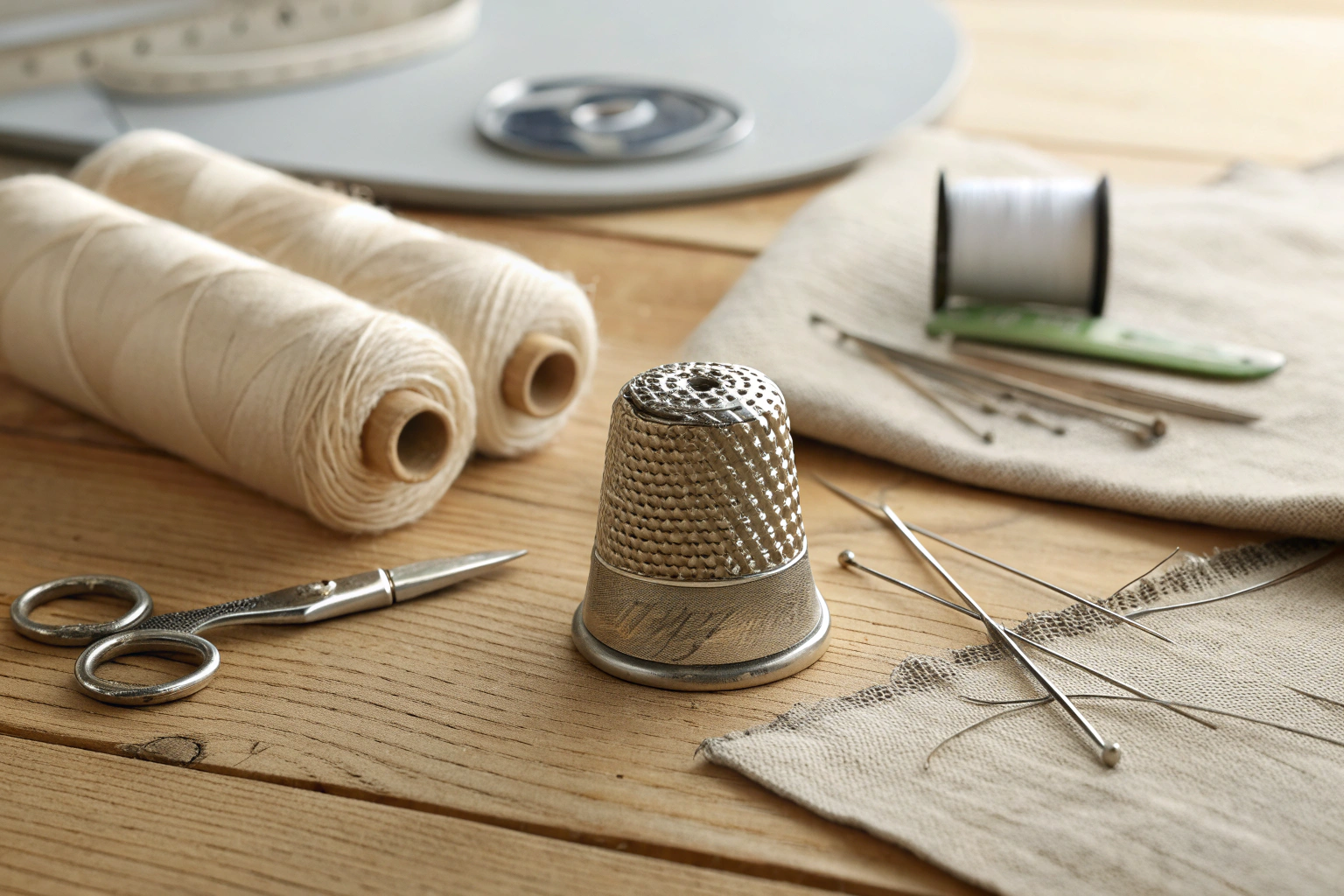
Learning how to use a thimble is a fundamental sewing skill that protects your finger from the sharp end of a needle as you stitch. This small, pitted cap, typically worn on the middle finger of your sewing hand, allows you to safely and firmly push the needle through thick or layered fabrics without pain. While many find them awkward at first, mastering the thimble is key to preventing injury and improving your hand-sewing technique, making your work faster and more comfortable.
Key Benefits at a Glance
- Protects Your Fingers: Acts as a vital safety shield, preventing painful pokes and calluses when pushing a needle through tough materials like denim, canvas, or leather.
- Increases Sewing Power: Enables you to apply steady, concentrated force, making it easier to push the needle through multiple layers of fabric without bending it or straining your hand.
- Enhances Stitching Speed: Once you are comfortable, using a thimble allows for a more rhythmic and efficient sewing motion, helping you complete projects faster.
- Improves Stitch Consistency: Provides a stable contact point for the needle, giving you greater control over stitch length and placement for a more professional-looking finish.
- Reduces Hand Fatigue: Minimizes strain on your finger joints and muscles during long sewing sessions, preventing discomfort and allowing you to sew for longer.
Purpose of this guide
This guide is designed for beginners, quilters, and embroiderers who want to learn how to use a thimble effectively. It addresses the common frustrations of sore fingers and clumsy handling that often cause sewers to abandon this essential tool. Here, you will find a clear, step-by-step approach to choosing the right type and size of thimble, positioning it correctly on your finger, and using the proper pushing motion. By avoiding common mistakes, you can build muscle memory and make the thimble a comfortable, indispensable part of your sewing kit for cleaner, faster results.
Introduction
I'll never forget the moment I reluctantly picked up my first thimble after years of stubbornly avoiding it. What started as skeptical compliance with my sewing instructor's advice transformed into an absolute game-changer for my hand sewing experience. That small metal cap didn't just protect my finger—it revolutionized my precision, speed, and enjoyment of needlework. In this guide, you'll discover why every sewist should embrace the thimble, how to choose and use one properly, and the techniques that will transform your sewing from frustrating finger-pokes to confident, professional-quality stitching.
Why I believe every sewist should use a thimble
For years, I dismissed thimbles as old-fashioned accessories that would only slow me down. I was convinced that my "tough" fingers could handle any sewing project without protection. That stubborn attitude changed dramatically during a weekend quilting retreat when I watched a master quilter effortlessly stitch through multiple fabric layers while I struggled with sore, pricked fingertips.
My "aha moment" came during a particularly challenging project—constructing a wool coat with multiple interfacing layers. Without a thimble, I found myself constantly pausing to nurse my tender middle finger, and my stitches became increasingly uneven as fatigue set in. The experienced seamstress beside me suggested I try her spare metal thimble, and within minutes, I understood what I'd been missing.
Thimbles are essential for secure hand sewing—especially when working with thick fabrics like denim: How to Hem Jeans.
- Protection from needle pricks and finger fatigue
- Increased control and precision in stitching
- Faster stitching through multiple fabric layers
- Ability to maintain consistent stitch tension
- Reduced hand strain during long sewing sessions
The protection a thimble provides extends far beyond simple needle pricks. During that coat construction project, I discovered that consistent pressure from the needle eye had been creating painful indentations and even small calluses on my fingertip. With the thimble distributing that pressure across its dimpled surface, I could maintain steady stitching for hours without discomfort.
More importantly, the thimble dramatically improved my stitch quality. The secure grip it provided allowed me to push the needle through thick layers with confidence, resulting in even, professional-looking seams. Projects that once left me with aching hands and irregular stitching became enjoyable, meditative experiences where I could focus on the craft rather than managing pain.
Needlework enthusiasts often resist thimbles because they fear losing tactile feedback, but I found the opposite to be true. The thimble actually enhanced my control by providing a stable, secure contact point with the needle. Whether working on delicate embroidery or sturdy canvas, the thimble became an extension of my finger that improved rather than hindered my connection to the work.
Types of thimbles finding my perfect match
Walking into a well-stocked sewing shop can be overwhelming when you're faced with dozens of thimble options. My personal collection has grown to include eight different thimbles, each serving specific purposes in my sewing projects. Understanding the three main material categories—metal, leather, and plastic—will help you make informed choices for your own toolkit.
For background on sewing tools, see this overview of sewing thimbles, and for hand-stitching context, the hand sewing article explains how thimbles fit into traditional techniques.
| Type | Best For | Pros | Cons |
|---|---|---|---|
| Metal | Heavy fabrics, precision work | Durable, excellent needle control | Can feel cold, less comfortable |
| Leather | Extended sewing sessions | Comfortable, flexible | Less precise, wears over time |
| Plastic | Beginners, light fabrics | Affordable, lightweight | Less durable, limited protection |
My first thimble was a basic brass model inherited from my grandmother, and it taught me the fundamental relationship between thimble and needle. However, as my sewing evolved, I discovered that different projects demanded different thimble characteristics. Heavy denim construction required the unwavering strength of my steel thimble, while delicate silk embroidery was best served by my soft leather version.
The key to building an effective thimble collection lies in understanding your sewing patterns and preferences. I've found that most sewists benefit from owning at least two thimbles: a sturdy metal version for heavy-duty work and a comfortable leather or plastic option for extended sessions. This approach ensures you're never compromising between protection and comfort.
Material matters how I compare metal leather and plastic thimbles
Metal thimbles represent the traditional choice for serious seamstresses, and my collection includes both vintage brass and modern stainless steel versions. The brass thimble I inherited has developed a beautiful patina over decades of use, while my steel thimble maintains its original luster despite heavy use on upholstery projects. Metal provides uncompromising durability—my oldest metal thimble has survived twenty years of regular use without showing significant wear.
- Metal thimbles: Best for quilting and heavy fabric work
- Leather thimbles: Ideal for embroidery and delicate work
- Plastic thimbles: Perfect for beginners and occasional use
The precision that metal thimbles offer comes from their rigid structure and finely crafted dimples. When working with fabric layers that require significant needle pressure, such as canvas or multiple denim seams, only my metal thimbles provide adequate support. The dimpled surface grips the needle securely, preventing slippage that could result in uneven stitches or finger injury.
Leather thimbles entered my collection when I began serious embroidery work. The flexibility of leather allows for more natural finger movement, which proves invaluable during detailed needlework requiring frequent angle changes. My favorite leather thimble, crafted from supple deer hide, has molded perfectly to my finger shape over months of use, creating a custom fit impossible to achieve with rigid materials.
However, leather's flexibility comes with trade-offs. The material gradually stretches and wears, requiring eventual replacement. Additionally, the softer surface provides less precise needle control, making leather thimbles less suitable for heavy-duty sewing tasks. I reserve my leather thimbles for projects where comfort outweighs the need for maximum control.
Plastic thimbles serve as excellent entry points for beginners and work well for light fabric applications. My collection includes several plastic options that I loan to students during sewing classes. These thimbles offer adequate protection for cotton and linen projects while allowing newcomers to experience thimble benefits without significant investment.
The limitations of plastic become apparent during demanding projects. The material can crack under pressure, and the molded dimples often lack the precision of metal alternatives. Despite these limitations, quality plastic thimbles serve important roles in any sewist's toolkit, particularly for travel or casual sewing sessions.
Specialty thimbles I use for different sewing techniques
Beyond basic material categories, specialized thimbles address specific sewing and needlework challenges. My quilting thimbles feature deeper dimples and reinforced tips designed to handle the repetitive needle pushing required for extensive quilting projects. The extra depth prevents the needle from slipping during the rocking motion essential to quality quilting.
- Quilting thimbles with deeper dimples for better needle grip
- Open-top thimbles for tactile feedback during embroidery
- Adjustable thimbles for varying finger sizes
- Coin thimbles for leatherwork and heavy materials
Open-top thimbles have revolutionized my embroidery practice by maintaining fingertip sensitivity while providing needle-eye protection. These specialized tools allow me to feel fine threads and delicate fabric textures while preventing the painful pressure points that develop during extended embroidery sessions. The open design also prevents moisture buildup during long stitching periods.
For leatherwork and sailmaking projects, I rely on coin thimbles—flat, disc-shaped protectors that distribute pressure across the entire fingertip. These robust tools handle the extreme forces required to push heavy needles through thick leather or canvas, tasks that would quickly damage traditional thimbles. The wide surface area prevents the concentrated pressure that can cause bruising during heavy-duty work.
Adjustable thimbles address the common problem of finger size variation throughout the day. My adjustable model features a flexible band that accommodates the natural swelling that occurs during extended sewing sessions, maintaining proper fit and comfort regardless of conditions. This adaptability makes adjustable thimbles excellent choices for sewists with arthritis or circulation issues.
How I choose the right size and fit
Proper thimble sizing forms the foundation of successful thimble use, yet it's the aspect most beginners get wrong. My own journey included purchasing three poorly fitting thimbles before discovering the importance of precise measurement and testing. A correctly fitted thimble should feel like a natural extension of your finger, providing protection without restricting movement or circulation.
For a comfortable fit, the thimble should stay on when you let your hand hang down and move your fingers, but not feel tight or pinch, and you should almost forget you are wearing it as you sew.
- Measure your middle finger at the widest point
- Try on thimbles in-store when possible
- Check that the thimble stays on without being too tight
- Wear for 15 minutes to test comfort
- Ensure you can bend your finger naturally
The relationship between sizing and comfort becomes critical during extended sewing sessions. A thimble that feels acceptable during a brief fitting can become painfully tight after an hour of use, while an overly loose thimble will slip and slide, defeating its protective purpose. I learned this lesson during a weekend quilting retreat when my poorly fitted thimble caused more discomfort than sewing without protection.
Temperature changes also affect thimble fit, particularly with metal versions. Cold metal thimbles can feel loose until they warm to body temperature, while hot workshop conditions can cause fingers to swell, making normally comfortable thimbles feel restrictive. Understanding these variables helps explain why many experienced sewists own multiple thimbles in slightly different sizes.
Finger anatomy varies significantly between individuals, making standardized sizing challenging. Some sewists have tapered fingers that require different sizing strategies than those with uniform finger width. Additionally, the dominant hand often differs slightly in size from the non-dominant hand, necessitating careful measurement of the actual sewing hand.
How I find my perfect fit
The middle finger of your dominant hand typically provides the best thimble placement, though some sewists prefer their index finger depending on their sewing style. I discovered my preference through experimentation—initially following traditional middle finger placement, then trying index finger positioning when working on detailed embroidery requiring different needle angles.
“You wear a traditional thimble (usually on your index or middle finger) to protect your finger from the eye-end of the needle.”
— Purl Soho, January 2024
Source link
- Test fit on your dominant hand’s middle finger
- The thimble should feel snug but not restrictive
- You should be able to wiggle your finger slightly
- Consider finger swelling throughout the day
My 15-minute comfort test has prevented numerous poor thimble purchases. During this test period, I perform typical sewing motions—grasping needles, manipulating fabric, and simulating stitching movements. A properly fitted thimble should feel secure throughout these activities without causing pressure points or restricting blood flow.
Finger flexibility remains crucial during thimble fitting. The thimble should allow natural finger bending without gaps appearing at the base or tip. I test this by making a gentle fist while wearing the thimble—any pinching or loosening indicates poor fit. The goal is finding the balance between security and freedom of movement.
Seasonal considerations affect thimble fit more than many realize. Summer heat can cause finger swelling, while winter cold leads to shrinkage. I maintain two sizes of my most-used thimbles to accommodate these variations, ensuring consistent comfort and performance regardless of environmental conditions.
The proper technique how I hold and use a thimble
Learning proper thimble technique requires unlearning natural finger positioning habits developed over years of non-thimble sewing. The thimble fundamentally changes how you interact with the sewing needle, shifting pressure from your sensitive fingertip to the protected, dimpled surface of the thimble.
To use a thimble for hand sewing, place it on the finger you use to push the eye end of the needle (usually the middle finger of your sewing hand), then use that finger to drive the needle through the fabric while your thumb and index finger guide it. As you stitch, hold the needle between thumb and index finger, keep the eye against the dimpled area of the thimble, and push with a small, controlled motion so the thimble takes the pressure instead of your fingertip.
“To begin hand sewing while using a thimble, you want to hold your needle between your thumb and index finger. You’ll push the eye end of the needle with the thimble on your middle finger.”
— Brooks Ann Camper, March 2024
Source link
- Place thimble on middle finger of dominant hand
- Position the needle tip against the thimble’s dimpled surface
- Use the thimble to push the needle through fabric
- Keep your wrist straight and relaxed
- Practice the rocking motion for smooth stitching
The relationship between thimble and sewing needle requires precise positioning for maximum effectiveness. The needle's eye should contact the thimble's dimpled area, not the smooth sides or rim. This contact point provides optimal control while preventing the needle from slipping during pressure application. I spent considerable practice time developing muscle memory for this precise positioning.
Hand sewing with a thimble demands a different rhythm than unprotected sewing. Instead of tentative, careful needle pushes, the thimble enables confident, consistent pressure application. The protective barrier allows for smooth, continuous stitching motions that improve both speed and stitch quality. This confidence transformation typically requires several practice sessions to fully develop.
Finger positioning extends beyond the thimbled finger to encompass your entire hand posture. The thumb and index finger maintain their traditional roles of guiding and stabilizing the needle, while the thimbled middle finger becomes the primary driving force. This three-finger coordination requires practice but ultimately provides superior control over needle placement and direction.
How I position my hands and fabric
Fabric positioning significantly impacts thimble effectiveness and overall sewing quality. Proper support prevents fabric shifting during needle insertion, allowing the thimble to work efficiently without fighting unstable material. I learned this lesson while attempting to hem a silk dress without adequate fabric support—the shifting material made precise thimble work nearly impossible.
- DO keep fabric flat and well-supported
- DO maintain consistent needle angle
- DON’T grip the needle too tightly
- DON’T rush the stitching motion
The relationship between thimble, sewing needle, and fabric requires careful angle management. The needle should enter the fabric perpendicular to the surface, with the thimble providing steady, controlled pressure from behind. Angled needle insertion can cause the thimble to slip or apply uneven pressure, resulting in poor stitch quality and potential finger discomfort.
Hand sewing posture affects thimble performance more than many realize. Maintaining straight wrists prevents strain while allowing natural thimble movement. Hunched shoulders or twisted hand positions interfere with the smooth rocking motion essential for efficient thimble use. I developed better posture awareness through mirror practice, watching my hand positioning during various stitching techniques.
Support for the non-sewing hand proves equally important. This hand holds and positions the fabric while providing resistance against the needle's penetration. Proper coordination between the thimble-driving hand and the fabric-supporting hand creates the stable foundation necessary for consistent, professional-quality stitching.
Common mistakes I made and how you can avoid them
My early thimble experiences included numerous frustrating mistakes that nearly convinced me to abandon thimble use entirely. The most significant error involved wearing the thimble on my index finger instead of my middle finger, based on misremembering my grandmother's instruction. This incorrect placement made effective sewing needle control nearly impossible and caused unnecessary strain.
Poor needle control often stems from incorrect threading—start with mastering this foundational skill: How to Thread a Needle.
- Wearing thimble on wrong finger reduces effectiveness
- Pushing with fingertip instead of thimble surface
- Choosing wrong size leads to discomfort and poor control
- Rushing practice prevents muscle memory development
Incorrect pressure application represents another common beginner mistake. Initially, I attempted to push the needle using my fingertip force while wearing the thimble, rather than utilizing the thimble itself as the pressure source. This technique negated the thimble's protective benefits while creating awkward, inefficient needle movement. Learning to trust the thimble as the primary driving force required conscious practice and patience.
Size selection errors plagued my early thimble purchases, leading to a collection of ill-fitting thimbles that remained unused. Too-tight thimbles caused circulation problems and finger fatigue, while oversized thimbles slipped during critical moments, allowing painful needle contact with my finger. These experiences taught me the critical importance of proper fitting and the value of in-person thimble testing.
Rushing the learning process created additional frustration and delayed skill development. Hand sewing with a thimble requires developing new muscle memory and coordination patterns that cannot be forced. Expecting immediate proficiency led to tension and poor technique that actually hindered progress. Accepting the learning curve and practicing patience ultimately accelerated my thimble mastery.
Practice exercises I use to master thimble skills
Developing thimble proficiency requires structured practice that gradually builds muscle memory and confidence. My personal practice routine evolved from simple needle manipulation exercises to complex hand sewing projects that challenged various aspects of thimble technique. Beginning with basic exercises prevents frustration while establishing proper foundational skills.
Build confidence with beginner-friendly hand stitches before tackling complex repairs: Hand Sewing Stitches.
- Start with simple running stitches on scrap fabric
- Practice backstitch for precision control
- Try blanket stitch for edge finishing
- Attempt fell seams for advanced technique
- Work on small projects like pot holders
My initial practice sessions focused on developing the basic thimble-to-sewing needle relationship without the pressure of creating finished products. Using scrap cotton fabric, I practiced simple running stitches while concentrating on proper thimble positioning and pressure application. These foundational exercises built confidence before progressing to more challenging techniques.
Sewing rhythm development represents a crucial aspect of thimble practice that many beginners overlook. Effective thimble use requires smooth, consistent needle movements rather than jerky, hesitant pushes. I developed this rhythm through repetitive practice, gradually increasing speed while maintaining precision and control. Metronome practice helped establish consistent timing.
Needlework projects provide excellent thimble practice opportunities while creating useful items. Simple embroidery samplers allow extended thimble practice while developing various stitch techniques. The combination of practical application and skill development makes these projects more engaging than pure exercise routines while building real-world competency.
Specific stitches I recommend for thimble practice
Hand sewing stitches vary significantly in their thimble requirements, making certain stitches ideal for developing specific aspects of thimble technique. The fell stitch, commonly used in waistband construction, requires precise thimble control to maintain consistent seam allowances while working through multiple fabric layers. This stitch taught me the importance of steady, controlled pressure application.
- Fell stitch: Perfect for waistband construction
- Blind hem: Develops precision and control
- French seam: Builds confidence with multiple layers
- Buttonhole stitch: Advanced thimble technique practice
Blind hemming provides excellent thimble practice while developing the delicate touch necessary for invisible stitching. The technique requires precise sewing needle placement and minimal fabric disturbance, skills that translate to improved overall needlework quality. My blind hem practice sessions significantly improved my thimble control and stitch consistency.
French seams challenge thimble users with multiple fabric layers and precise seam allowance requirements. The technique demands consistent pressure application while maintaining straight stitching lines, skills that develop through focused practice. Successfully completing French seams with thimble assistance builds confidence for tackling more complex sewing projects.
Buttonhole stitching represents advanced thimble technique requiring precise spacing, consistent tension, and complex needle manipulation. This challenging stitch pushes thimble skills to professional levels while creating functional garment elements. Mastering buttonhole stitching with thimble assistance indicates readiness for any hand sewing challenge.
My personal journey from thimble skeptic to advocate
My transformation from thimble skeptic to passionate advocate didn't happen overnight. For years, I stubbornly resisted using thimbles, convinced they would interfere with my sewing and make me feel clumsy. I associated thimbles with old-fashioned techniques that had no place in modern needlework. This resistance cost me countless hours of discomfort and resulted in inferior stitch quality that I didn't even realize I was accepting.
The turning point came during an intensive weekend workshop with a master seamstress who refused to let students proceed without proper thimble technique. Initially frustrated by this requirement, I grudgingly borrowed a thimble and attempted to follow her instructions. The first hour was admittedly awkward—my fingers felt clumsy, and I struggled with the unfamiliar sensations.
For durable hand-sewn patches on jackets or bags, proper technique is key: How to Sew on a Patch.
However, by the second day of the workshop, something remarkable happened. My stitches became noticeably more even, my fingers stopped aching, and I found myself actually enjoying the hand sewing process instead of enduring it. The protection the thimble provided allowed me to focus on technique and creativity rather than managing pain and discomfort.
“I finally understood what generations of sewists already knew—the thimble wasn’t an obstacle to overcome, but a tool that enhanced every aspect of hand sewing.”
Looking back at my pre-thimble sewing work, I can clearly see the difference in stitch quality and consistency. Projects I once considered well-executed now appear uneven and rushed. The thimble didn't just protect my fingers; it elevated the entire quality of my needlework by enabling the patience and precision that superior hand sewing requires.
My collection now includes eight different thimbles, each serving specific purposes in my sewing practice. What once seemed like an unnecessary complication has become an essential aspect of my craft. I've become that instructor who insists students learn proper thimble technique, knowing the transformation it will bring to their sewing journey.
How I care for my thimble collection
Proper thimble maintenance ensures longevity and continued effectiveness across different material types. My oldest metal thimble, inherited from my grandmother, remains fully functional after decades of use thanks to consistent care and proper storage. Each material—metal, leather, and plastic—requires specific maintenance approaches to preserve their protective qualities and extend their useful life.
| Material | Cleaning Method | Storage Tips |
|---|---|---|
| Metal | Mild soap and water, dry thoroughly | Store in dry location to prevent tarnish |
| Leather | Gentle brush, avoid water | Keep away from heat and direct sunlight |
| Plastic | Warm soapy water | Store with other sewing notions |
Metal thimbles require regular cleaning to prevent tarnish and maintain their protective surface. I clean my brass and silver thimbles monthly using mild soap and warm water, followed by thorough drying to prevent oxidation. The dimpled surfaces need special attention, as thread residue and finger oils can accumulate in the small depressions, reducing their effectiveness over time.
Leather thimbles demand gentler care due to their organic nature. I avoid water exposure, instead using a soft brush to remove accumulated thread fibers and debris. Conditioning treatments help maintain leather flexibility, though I apply these sparingly to avoid affecting the thimble's grip on needles. Proper storage away from heat sources prevents cracking and premature aging.
Plastic thimbles prove most forgiving in terms of maintenance but still benefit from regular cleaning. Warm soapy water effectively removes oils and residue without damaging the material. However, I inspect plastic thimbles regularly for stress cracks or wear that could compromise their protective function, replacing them when necessary to maintain safety and effectiveness.
My thimble storage system protects each piece while keeping them easily accessible during sewing sessions. Individual fabric pouches prevent scratching between metal thimbles, while maintaining separation from other sewing tools that could cause damage. This organized approach ensures my thimbles remain in optimal condition and readily available when needed for any hand sewing project.
Frequently Asked Questions
To use a thimble, slip it onto the middle finger of your dominant sewing hand, ensuring it fits snugly without slipping. Position the needle’s eye against the thimble’s dimpled surface and push it through the fabric using the thimble for leverage and protection. With practice, this tool prevents finger pricks and improves sewing efficiency.
A thimble is typically worn on the middle finger of the hand you use for sewing, as this finger often pushes the needle. Some people prefer the index finger or thumb based on their sewing style and comfort. Experiment to find what works best for you while ensuring protection during hand sewing.
A thimble works by providing a hard, protective barrier on your finger, allowing you to push a needle through tough fabric without injuring your skin. Its dimpled top grips the needle’s end, distributing pressure evenly for better control. This simple tool enhances safety and precision in hand sewing tasks.
The main purpose of a thimble is to protect your finger from needle pricks while hand sewing or quilting. It also helps apply more force to push the needle through thick materials without discomfort. Overall, it makes sewing safer and more efficient for beginners and experts alike.
You’ll know you’re using a thimble correctly if it stays securely on your finger without slipping and allows you to push the needle comfortably without pain. The needle should contact the thimble’s surface firmly, providing leverage without straining your hand. If sewing feels easier and your finger remains protected, it’s being used right.